.

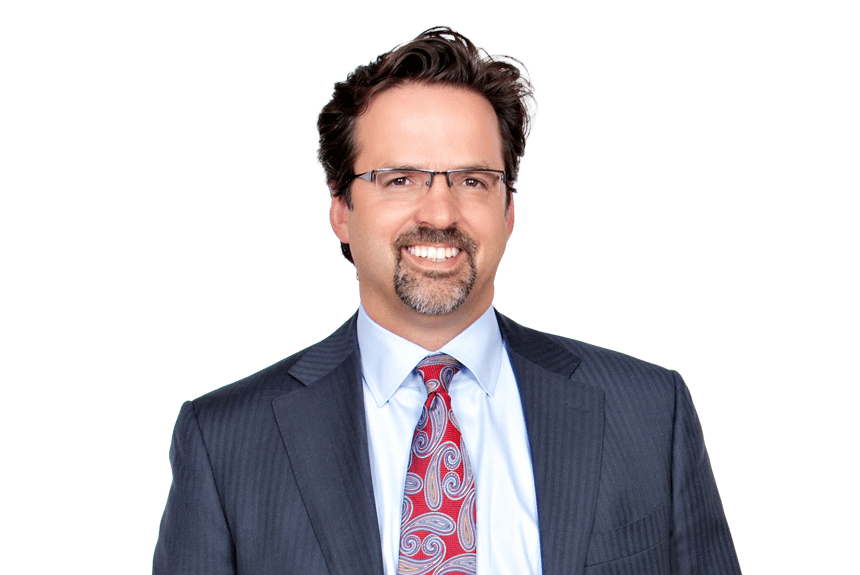
Mike is a seasoned first chair IP litigation trial attorney, a consulting and testifying consumer survey expert, and a recognized thought leader on cutting-edge issues involving trademarks, copyrights, and advertising.

IP Litigation Trial Practice

Mike Keyes is a “go to” intellectual property trial attorney with a vast reservoir of experience in cases involving trademarks, copyrights, and false advertising, including individual consumer and class action claims. Mike and his team have represented some of the world’s most recognized brands and companies in high-stakes litigation in numerous federal courts across the country including Washington, Oregon, California, Colorado, Minnesota, Illinois, New York, Massachusetts, Utah, and Florida. These disputes have encompassed a wide array of subject matters including medical diagnostics software, online games and apps, Google Ads, social media, e-books, consumer products, food and beverage, fashion, sports equipment, educational testing tools, and hospitality services.

Mike has served as lead or co-lead trial counsel in several high-profile IP cases. He was trial counsel in Chicago federal court for Kraft Foods in a highly publicized false advertising trial featured on ABC’s Good Morning America and covered by the likes of The Chicago Tribune and The New York Times. He represented Abercrombie & Fitch in a closely watched case in California federal court brought by Levi Strauss & Co. involving claims of unfair competition, trademark infringement, and dilution. The jury returned a unanimous verdict in favor of Abercrombie & Fitch on all claims. The case was profiled in the Daily Journal—California’s largest legal publication—as one of the Top 10 “Defense Wins” in California that year. Some of Mike’s other successes as lead trial counsel include obtaining final judgments and permanent injunctions on behalf of several clients including: a national hospitality chain, a consumer products company selling the No. 1 toy on Amazon.com, and the creator of Angry Birds.

His intellectual property clients have also included the likes of Hall of Fame Major League Slugger George Brett, Facebook, Foot Locker, Beats Electronics, LLC (Beats by Dr. Dre), TikTok, Viacom, Corona Beer, Target, Helly Hansen, the North Face, the Mayo Clinic, the University of Minnesota, Del Monte, and Carmex.

Consumer Survey Expert Practice

In addition to his extensive trial work, Mike is also a consulting and testifying consumer survey expert and leads Dorsey’s Consumer Insights Group. Mike brings a truly unique value proposition to his work as an expert. Not only does he have an advanced degree in Survey Research & Data Analysis, but he also has over two decades of practical experience as a trial lawyer in drafting and analyzing consumer surveys, as well as collaborating with, deposing, and cross-examining survey experts. Mike understands the critical importance of this type of evidence in litigation and excels at making it relatable and understandable to judges and juries.

Mike is a leading voice on consumer survey evidence, regularly presenting at national conferences and events hosted by the ABA, AIPLA, PLI, Strafford, and AAPOR (the American Association for Public Opinion Research). He publishes frequently on the topic of consumer surveys and maintains an active following on LinkedIn where hundreds of lawyers and survey experts alike subscribe to his publication Lanham Act Surveys for Lawyers. He also imparts his survey expertise to law students at the University of Washington Law School, where he serves as an affiliate instructor, teaching Advanced Trademark Law and IP Litigation Strategies. His insights on survey research have also been shared with students and faculty at esteemed law school institutions including the University of Notre Dame, Franklin Pierce Law Center, and Gonzaga University.

Mike is a certified mediator, an ADR panelist for the U.S. District Court for the Western District of Washington, a registered ADR panelist with the AIPLA, and was recently invited to join the WIPO Arbitration and Mediation Center’s ADR panel.

Lastly, Mike served on Dorsey’s Management Committee from 2019-2023 where he was the global head of Dorsey’s trial group.


Select Experience

Intellectual Property

  • Scotts v. Procter & Gamble, U.S. District Court for the Southern District of Ohio, (2024) (Cole, J.). Lead counsel defending Procter & Gamble against claims for infringement of Scotts’ Miracle-Gro trade dress.  Scotts’ motion for preliminary injunction was denied.
  • Grecco v. TikTok, Inc. U.S. District Court for the Central District of California, (2024) (Aenlle-Rocha, J.). Representing TikTok against claims of copyright infringement.
  • ICVA v. Anivive, U.S. District Court for the Central District of California, (2024) (Staton, J.). Obtained preliminary injunction against Defendants’ copying and inputting into artificial intelligence large language models standardized test for veterinary licensure.
  • Represented seller in the sale of one of the most popular user-created islands in Fortnite, one of the largest online multiplayer battle royale games in the video gaming sector, to a large video game developer headquartered in Europe.

Education

  • University of Connecticut (M.S., Survey Research & Data Analysis, 2023)
  • Gonzaga University School of Law (J.D., 1998)
    • magna cum laude; Best Oralist, National Moot Court Competition, Regional Finals 1997; Associate Editor Law Review 1997-1998
  • Columbia Law School (LL.M., 1999)
    • Harlan Fiske Stone Scholar
  • Loyola University, New Orleans (B.M., Piano Performance, 1993)
  • Tbilisi State Conservatoire, Former Soviet Republic of Georgia
    • Graduate Piano Student, 1993-1994

Bar Admissions

  • New York
  • Washington
  • California

Court Admissions

  • U.S. Court of Appeals for the Federal Circuit
  • U.S. Court of Appeals for the Second Circuit
  • U.S. Court of Appeals for the Sixth Circuit
  • U.S. Court of Appeals for the Ninth Circuit
  • U.S. District Court for the Central, Northern, Eastern, and Southern Districts of California
  • U.S. District Court for the Eastern and Western Districts of Washington
  • U.S. District Court for the Northern and Southern Districts of New York
  • U.S. District Court for the District of Idaho
  • U.S. District Court for the Northern District of Illinois
  • U.S. District Court for the Eastern District of Wisconsin

Clerkships

  • Washington Supreme Court, Honorable Chief Justice Gerry L. Alexander, 1999-2000

Professional Affiliations

  • Trustee of the King County Bar Foundation, 2018-present
  • Member, Law360 Intellectual Property Editorial Advisory Board, 2017 and 2018
  • Co-Chair, ABA Copyright Litigation Committee, 2006-2008
  • Washington State Bar Association IP Section, Chair, 2006; Chair-elect, 2005; Secretary-Treasurer, 2004
  • Co-founder, Spokane County Bar Association IP Section, 2003
  • Coach of National Appellate Advocacy Competition Team, Gonzaga University School of Law
  • Adjunct Professor of Law, “Internet and the Law,” “Trademark Law,” and “Legal Research & Writing,” Gonzaga University School of Law
  • Member, Copyright Society of the USA
  • Member, Supreme Court Historical Society

Charitable & Civic Involvement

  • Past Chair, Gonzaga Prep High School Board of Directors
  • Trustee, King County Bar Association Foundation
  • Guest Lecturer, University of Washington School of Law
  • Volunteer supervising attorney, University of Washington Entrepreneurial Law Clinic
  • Volunteer Pianist, Sacred Heart Parish
  • Volunteer Pianist, Compass Room & Rooftop
  • Past Board Member, Holy Names Music Center

Accolades

  • Best Lawyers in America®, Advertising Law, Commercial Litigation, Copyright Law, Intellectual Property Litigation, Patent Litigation, Patent Law, Trademark Law, Seattle, 2013-2027
  • Chambers USA, Intellectual Property: Trademark, Copyright & Trade Secrets, Washington, 2026
  • IAM/WTR Copyright 1000, “World's Leading Copyright Professionals," 2026
  • World Trademark Review 1000, "The World’s Leading Trademark Professionals," Leading Practitioner, 2017-2026
  • Washington Super Lawyers®, 2014-2026
  • Managing IP, IP STAR, 2016-2026
  • Best Lawyers® Lawyer of the Year, Trademark Law, 2025, 2027
  • Washington Super Lawyers®, "Top 100," 2021
  • JD Supra Readers’ Choice Awards, "Top Author," 2017
  • Washington Super Lawyers®, “Rising Stars,”2006-2008, 2011

Select Presentations

  • Panelist, “Daubert-Proofing Your Survey,” AIPLA, On-Line Webinar, July 2022
  • Panelist, "Making the Case With Tweets, Snaps and Facebook Posts," Federal Bar Association, Eastern District Conference and CLE, September 2018
  • Presenter, “2018 Global Law Innovation Summit”—Recent Cases & Controversies Under the Digital Millennium Copyright Act, the University of Washington School of Law, July 2018
  • Presenter, “Monkey, Music, and Much, Much More!—A Copyright Law Update,” King County Bar Association IP Section, Seattle, WA, June 2018
  • Presenter, “Extraterritorial Applications of the Lanham Act,” California Lawyers Association, June 2018
  • Moderator, "New Frontiers in Branding," The New Music Ecosystem sponsored by the University of Washington School of Law, May 2018
  • Panelist, Law Seminars International, “Consumer Protection: The Challenge of Achieving Regulation Compliance and Meeting Customer Expectations,” December 1, 2017
  • Presenter, American Bar Association Intellectual Property Law Books Webinar Series: "Copyright Litigation Strategies: From Soup to Nuts," September 19, 2017
  • Presenter, 43rd Annual ICLE  Intellectual Property Law Institute on Mackinac Island, MI, July 2017 
  • Presenter, International Trademark Association Meeting, "#TalkingIP: Optimizing Publishing Opportunities and Digital Platforms - INTA and Beyond," May 21, 2017 
  • Presenter, IP Section of the King County Bar Association, “From Pom-Poms to Rockstars: The Latest and Greatest Copyright Hits,” May 2017
  • Panelist, American Bar Association Intellectual Property Spring Conference, “Copyright at a Gallop,” April 2017 
  • Moderator, Copyright Society of the USA CLE, “Other People’s Footage: Copyright and Fair Use,” February 2017 
  • Presenter, International Trademark Association Annual Meeting, "Monetary Remedies in Trademark Cases,"  May 2016
  • Presenter, Washington State Bar Association IP Institute, “Copyright Case Law, the Year in Review,” March 2016
  • Panelist, American Bar Association sponsored webinar, “Designing Effective Consumer Surveys in Trademark Infringement and False Advertising Disputes,” November 2015
  • Co-Presenter with Dorsey & Whitney partner Sandy Edelman, Practicing Law Institute, “Designing Effective Consumer Surveys in Trademark Infringement and False Advertising Disputes,” July 2015
  • Panelist, American Bar Association Technology Symposium, “One Problem: Reconciling Advice of Employment, Intellectual Property, and Other Counsel,” March 2015
  • Presenter, Washington State Bar Association IP Institute, “Design and Use of Consumer Surveys in Lanham Act Cases—Recent Developments,” March 2014
  • Presenter, Practicing Law Institute, “Fundamentals of Copyright Law in the Data Era,” July 2013
  • Presenter, American Intellectual Property Law Association 2013 Spring Meeting, “Use of Non-Patent Literature During Patent Examination—Fair or Infringing?”, May 2013
  • Presenter, Practicing Law Institute, “Understanding Copyright in the Data Era,” July 2012
  • Presenter, Practicing Law Institute, University of Chicago, “Copyright Enforcement in the Data Era,” June 2012
  • Panelist, American Bar Association Intellectual Property Spring Conference, “Trollings, Take Downs, and Transfers: An Audiovisual Odyssey Through The World of Copyright,” March 2012
  • Presenter, Practicing Law Institute, “Understanding Copyright in the Data Era,” July 2011
  • Presenter, Practicing Law Institute, “Copyright Litigation,” July 2010
  • Panelist, American Bar Association Intellectual Property Law Spring Conference, “Of Courts and Copyists: The Year in Review,” April 2010
  • Panelist, American Bar Association Intellectual Property Law Spring Conference, “The Year in Copyright,” April 2009
  • Presenter, American Intellectual Property Law Association, "Recoveries in IP Litigation: Hotspots and Trends in Copyright, Trademark, and Patent Damages,” Webinar, April 2009
  • CLE Co-Chair, Intellectual Property Institute, Washington State Bar Association, featuring U.S. Court of Appeals for the 9th Circuit Chief Judge, The Hon. Alex Kozinski, October 2008
  • Presenter, American Bar Association Intellectual Property Law Spring Conference, “An Audiovisual Tour Through The Year in Copyright,” April 2008
  • Panelist, American Intellectual Property Law Association 2008 Mid-Winter Institute, “A Survey of Licensing Strategies One Year After MedImmune,” January 2008
  • Presenter, Washington State Bar Association Corporate Counsel Institute, “Trademark Law For General Counsel,” October 2007
  • Panelist, American Bar Association Intellectual Property Law Spring Conference, “Copyright in the Courts: Issues of First Impression,” April 2007
  • CLE Co-Chair, Intellectual Property Institute, Washington State Bar Association, March 2007
  • Presenter, “Copyright Law For The IP Attorney,” Idaho State Bar Association Intellectual Property Section, November 2006
  • CLE Chair, “Intellectual Property Developments: Litigation, Machination & Reformation,” Washington State Bar Association, September 2006
  • Presenter, “Spyware Resolution Debate,” ABA Intellectual Property Annual Meeting, 2006
  • Presenter, “Copyright & The World of Music,” Washington State Music Teachers Association Leadership Conference, 2005
  • Presenter, “Top Ten Trademark Tips,” Coeur d’ Alene Chamber of Commerce, 2005
  • Co-Presenter, “Protecting Your Artistic Creations in the Digital Age,” 2005
  • Co-Presenter, “Pitfalls for the Unwary: Recognition, Protection & Enforcement of IP Rights,” Emerald Education Group, 2004
  • Presenter, “Copyright Law & The World of Advertising,” Great Falls Advertising Federation, 2004

Firm Highlights

Insights

Observations on the SEC’s 2027 Examination Priorities

The SEC’s Division of Examinations (the “Division”) recently announced its examination priorities (“Exam Priorities”) for fiscal year 2027.1 Although many of the Division’s core areas of focus remain consistent with fiscal year 2026, the 2027 Exam Priorities include notable changes and refinements, which we discuss below, along with other key 2027 examination priorities. Dorsey Observations Renewed focus on economic conflicts of interest. After certain economic-incentive topics received less emphasis in the 2026 Exam Priorities2, the Division has again expressly identified economic conflicts as an examination focus. The 2027 Exam Priorities indicate that the Division will prioritize reviewing advisers’ fiduciary obligations relating to economic conflicts of interest raised by fee rebates, fee and expense calculations, cash management, quid pro quo arrangements, and deposits and withdrawals. Greater emphasis on private-fund practices. Building on the private-fund items in the 2026 Exam Priorities, the 2027 Exam Priorities indicate that the Division will assess private-fund disclosures and controls relating to investment allocations, leverage, affiliated service providers, and fees and expenses. The Division also identified investments in private companies through special purpose vehicles (“SPVs”) and loans provided by private funds and business development companies (“BDCs”) as products the Division will scrutinize. Advisers, particularly private-fund advisers, should evaluate whether their disclosures and compliance programs address these areas. Expanded focus on AI-related cybersecurity risks. While the 2026 Exam Priorities focused on advisers’ use of and representations regarding artificial intelligence (“AI”), the 2027 Exam Priorities specifically highlight AI-enabled cybersecurity threats, including AI-generated phishing and synthetic or “deepfake” voice and video used for social engineering. The shift signals that registrants should consider whether their cybersecurity policies and controls adequately address these evolving threats. New focus on proxy advisory firms. The 2027 Exam Priorities state that the Division will examine advisers that rely on proxy advisory firms, including how those advisers evaluate the firms’ recommendations, assess the bases for those recommendations, identify potential conflicts of interest, and determine whether that reliance satisfies applicable legal obligations. Advisers that rely on proxy advisory firms may wish to consider whether their compliance programs address these areas. Updated focus on Regulation S-P and Regulation S-ID. The 2026 Exam Priorities stated that the Division would engage firms during examinations regarding their progress in preparing incident response programs ahead of the compliance dates for the amendments to Regulation S-P and would examine compliance with the amended rule after those dates. The 2027 Exam Priorities indicate that examinations will focus on whether firms have developed, implemented, and maintained reasonably designed policies and procedures addressing administrative, technical, and physical safeguards to protect customer information and that, in accordance with the amended rule, staff will evaluate response program policies and procedures for unauthorized access to or use of customer information, including customer notification procedures and oversight of service providers. With respect to Regulation S-ID, the 2027 Exam Priorities indicate that examiners will assess whether firms are updating their Identity Theft Prevention Program to address emerging risks, such as those related to AI and stolen credentials. Advisers may wish to consider whether their compliance programs address these areas, as applicable. Summary of Other 2027 Examination Priorities Beyond the developments discussed above, many of the Division’s core examination priorities remain consistent with fiscal year 2026. These include investment adviser fiduciary obligations and compliance programs, examinations of never-examined and recently registered advisers, and cybersecurity and operational resiliency. The Exam Priorities are not exhaustive, and examinations will vary based on each registrant’s business, activities and risks. Advisers should consider the 2027 Exam Priorities in reviewing their compliance programs and preparing for potential examinations, including by: Reviewing risk disclosures and controls. The Division states that, when examining advisers to private funds, it will assess whether investment-related risk disclosures are consistent with fiduciary standards and whether compliance policies, procedures, and controls are designed to address both fund-level and investment-level risks. Reviewing disclosures on allocations, leverage, and affiliated service providers. The 2027 Exam Priorities identify disclosures related to certain investments and allocations, the use of debt and fund-level lines of credit, and the use of affiliated service providers as examples. Confirming the accuracy of fee and expense calculations. The Division states that it will assess the accuracy of fee and expense calculations at both the fund and investment levels, and it identifies fee rebates, cash management, quid pro quo arrangements, deposits, and withdrawals as areas in which economic conflicts of interest may affect the impartiality of advice. Reviewing recommendations of illiquid or hard-to-trade products. The Division states that it will prioritize advisers that recommend products that are difficult to trade, have unusual features, or are illiquid, including loans provided by private funds or BDCs and investments in private companies through SPVs. Confirming that the compliance program is implemented and reviewed. The Division states that it will review compliance program components such as marketing, valuation, and custody, as appropriate, and will typically analyze the annual compliance review. It will also focus on compliance practices when advisers have started advising new asset classes or clients or grown through mergers or acquisitions. 1 SEC Division of Examinations 2027 Examination Priorities. 2 See Dorsey’s Client Alert on the SEC’s fiscal year 2026 exam priorities.

Event/Resource

Corporate Counsel Symposium 2026 Materials Hub

Materials Symposium Agenda CLE & CPD Information Sessions 8:30 am - 9:30 am CT Session A: The Corporate Compass: Finding True North When Ethical Duties Conflict Philip Kaplan, Senior Legal Counsel, Howden Re Lucia Suljic, Vice President, Corporate Legal, Canon USA Nicole Stanton, Partner & Deputy General Counsel, Dorsey & Whitney LLP This panel addresses ethical obligations of in-house counsel, including balancing obligations and duties that may conflict with each other. How should a responsible in-house lawyer deal with those challenging situations? Rather than stick to an academic discussion, this panel will revolve around a series of practical scenarios that are designed to be realistic and timely, including situations where counsel is asked to represent both the company and an individual, how and when to disclose uncomfortable facts and inconvenient documents, issues involving changing firms and companies, and multijurisdictional practice. The panel will feature discussion from two experienced in-house lawyers and Dorsey’s Deputy General Counsel. Session B: Managing Rapid Regulatory Change in International Trade and Cross-Border Investment Nathan Brower, Executive Vice President, General Counsel, Nature’s Sunshine Greg Ogunsanya, Senior Vice President, General Counsel and Corporate Secretary, H.B. Fuller Kathryn Wood, Senior Vice President & General Counsel, DecoPac, Inc. Dave Townsend and Lawrence Ward, Dorsey & Whitney LLP This program is designed for attorneys advising on cross-border transactions, international trade, regulatory compliance, and corporate governance matters. Panelists will examine recent developments in U.S. trade and investment law and policy, as well as their impact on international collaborations, corporate compliance, and mergers and acquisitions. The discussion will explore how general counsel and in-house legal teams assess and manage evolving trade-related risks within their organizations. Particular focus will be given to developments during the first two years of the second Trump Administration, including changes in tariff policy, tariff refunds, export controls, economic sanctions, and national security reviews of foreign investment. Through a discussion of regulatory trends and practical case studies, attendees will gain a deeper understanding of the legal risks and compliance obligations associated with cross-border business activities, and hear about practical strategies for advising clients and managing compliance obligations in a rapidly changing trade and investment environment. 9:45 am - 10:45 am CT Session A: The Elon Musk Cases: What Tesla and Twitter Can Teach Your Board of Directors Loren Unterseher, Managing Partner, Oxbow Industries, LLC Shulamite White, Chief Legal Officer and Head of People, Motive Technologies Kirsten Schubert, Tom Swigert, and Jonathan Van Horn, Dorsey & Whitney LLP Recent cases involving Elon Musk and his businesses have had significant impact on principles governing board of directors’ fiduciary duties and corporate processes. This panel will examine recent litigation involving Elon Musk, Tesla, and Twitter, and its effects on the law governing the duties of directors and executives, including the executive compensation and director compensation processes, conflicts that may arise when a single executive has control over multiple businesses, and the ramifications of tweets or other public statements by an executive. Session B: All Eyes on DEI: Managing Diversity Efforts Amid Regulatory Scrutiny and Potential Litigation Maggie Dalton, Senior Commercial Attorney, Cargill; Board Co-Chair, Twin Cities Diversity in Practice Laura A. Vannelli, Legal Counsel, Mayo Clinic Susan Lorenc and Jack Sullivan, Dorsey & Whitney LLP The legal and regulatory landscape surrounding diversity, equity, and inclusion (DEI) initiatives has changed dramatically over the past two years. Law firms and legal departments are continuing to grapple with how to recruit, retain, and develop talent from a wide range of personal backgrounds, in a world where previously accepted recruiting and employment practices are facing increased scrutiny and litigation. This program will provide a practical overview of the current legal regime, including recent federal enforcement actions and litigation trends associated with DEI initiatives. Panelists will discuss practical ways in which organizations can pursue and retain legal talent and increase inclusion while minimizing legal, business, and reputational risk. 11:00 am - 12:00 pm CT Session A: Governance in an Age of Increasing Unpredictability James Chosy, Senior Executive Vice President and General Counsel, U.S. Bancorp Todd Hartman, Executive Vice President and Chief Legal and Risk Officer, Best Buy Co., Inc. Alan Rosselot, Associate General Counsel & Assistant Secretary, Delta Air Lines, Inc. Cam Hoang and Robert Rosenbaum, Dorsey & Whitney LLP More than ever, ensuring that boards are well-informed and forward-thinking is critical to a company’s success. Join our panel of corporate governance experts as they share their experiences advising boards through crisis and unpredictable events; capitalizing on, but also checking, disruptive technologies; and positioning the company to succeed in an environment of shifting government priorities. Session B: A Day in the Life of a Trademark, Copyright & Advertising Attorney: A Hypothetical Case Study Alexander Kim, Vice President and General Counsel, Binks Nate Whitaker, Chief Legal Officer and General Counsel, Crumbl Cathy Dahl and Tiffany Shimada, Dorsey & Whitney LLP What issues are companies facing daily while developing rights in intellectual property, protecting those rights, and staying in compliance with myriad potential issues related to advertising, social media, relationships with influencers, and environmental or governmental claims? This panel will feature two in-house counsel who are navigating these issues, utilizing a hypothetical case study, with the support of two Dorsey attorneys helping to develop a roadmap for meeting business objectives and minimizing the risk of claims. 12:00 pm - 1:15 pm CT Keynote Address Dr. Rebecca Heiss, Stress Physiologist Dr. Rebecca Heiss is a stress physiologist, author, and sought-after speaker who helps audiences transform fear and stress into fuel for greater performance and resilience. Her research has been recognized as “transformative” by the National Science Foundation, and she is the author of two books, Springboard and Instinct. Through her Fear(less) message, Rebecca inspires audiences with practical, science-based strategies to train our brains to work for us – not against us – and navigate change and uncertainty with greater confidence.

Insights

Minnesota Consumer-Fraud Enforcement: Disclaimers Won’t Cure Deception, and Penalties Can Add Up

Misleading advertising claims can lead to costly consequences. In State of Minnesota ex rel. Ellison v. Wall & Associates, Inc., No. A25-2064, 2026 WL 3118291 (Minn. App. Oct. 19, 2026), the Minnesota Court of Appeals recently affirmed a bench trial verdict against a tax-relief company and two executives for violations of the Minnesota Consumer Fraud Act (“MCFA”) and the Minnesota Deceptive Trade Practices Act (“MDTPA”). The decision, which affirmed a substantial restitution and civil penalty judgment, underscores the broad power of the Minnesota Attorney General to act against deceptive sales practices. The decision also offers practical lessons for businesses seeking to reduce liability risks in consumer-facing communications. Background Wall & Associates (“W&A”), a Virginia-based tax-relief company, marketed assistance to taxpayers seeking relief from outstanding federal and state tax liabilities, often with offers in compromise—agreements to settle tax liabilities for less than the amount owed. In its extensive advertising campaigns, W&A represented that its average client received a 90% reduction in their tax debt, that it was a local company with Minnesota offices, that it provided legal services, and that it would “Solve ALL Tax Problems.” In reality, W&A’s promises bore little resemblance to what many clients received. Most of W&A’s clients saw just a 9.5% reduction in federal tax debt and 1.2% in state tax debt. W&A had no permanent Minnesota offices. And W&A provided neither legal representation nor assistance with filing tax returns—those services required referrals to separate firms for an additional fee. All the while, W&A clients paid upfront and recurring fees, including during periods when W&A did no work on their cases. Minnesota Attorney General Keith Ellison sued W&A, its founder and owner Ernest Kenneth Wall, and its president and CEO Patrick Mark Yates, alleging violations of, among other laws, the MCFA and the MDTPA. Following a 12-day bench trial, the district court determined that W&A violated the MCFA and MDTPA through its false and embellished advertising. The district court also held Wall and Yates individually liable for those violations because they directed, participated in, and acquiesced in the violations. The district court ordered injunctive relief, $2.7 million in restitution (with Wall and Yates jointly and severally liable for $1.3 million), and civil penalties of $786,517 against W&A, $415,500 against Wall, and $207,750 against Yates. The district court also awarded over $2.5 million in attorneys’ fees and costs to the state. W&A, Wall, and Yates appealed to the Minnesota Court of Appeals, which affirmed the district court’s decision on October 19, 2026. Although W&A, Wall, and Yates challenged the judgment on numerous grounds, several highlights of the decision provide important takeaways for consumer-facing businesses. Individual Reliance Is Not Required for Statutory Liability W&A argued that Attorney General Ellison had to prove a causal nexus between each violation of the MCFA and MDTPA and the injury to a particular consumer to establish liability. In W&A’s view, this required proof that each injured consumer had personally relied on W&A’s false representation. The Court of Appeals rejected this argument based on the MCFA’s and MDTPA’s plain language, which requires no proof of actual deception or confusion by consumers. The Court of Appeals finally pointed to the Minnesota Supreme Court’s decision in State v. Minnesota School of Business, Inc., which held that when a defendant’s misrepresentations are directed at and affected “a broad group of consumers, proof of direct individual reliance is not required to establish a causal nexus between MCFA violations and the harm suffered by consumers.” 935 N.W.2d 124, 135 (Minn. 2019). The Court of Appeals affirmed, however, that a causal nexus is necessary to support an award of damages under the MCFA and MDTPA. In making that determination, district courts look to various factors, including whether the misrepresentations were “longstanding, pervasive, and widespread in communications directed to consumers,” whether the seller intended and understood that consumers would rely on the misrepresentations, and whether the information was of a kind on which consumers would typically rely. The Court of Appeals’ decision continues Minnesota School of Business’s broad interpretation of liability under the MCFA and the MDTPA. Coordinated marketing campaigns to a “broad group of consumers” may expose businesses to MCFA and MDTPA liability without customer-by-customer proof of injury. That said, a causal nexus remains an element of an MCFA and MDTPA claim, and businesses involved in litigation should build a clear record at trial and on appeal showing how each of the relevant factors bears on the causal-nexus inquiry. Contractual Disclaimers Are Not an Automatic Defense to a Misleading Pitch W&A next argued that disclaimers in its client contracts prevented consumers from claiming they had been misled by its advertising. Reiterating that individual reliance is not required under the MCFA and MDTPA, the Court of Appeals held that a contractual disclaimer does not necessarily defeat a claim based on a conflicting oral representation. And on the facts of this case, the Court of Appeals agreed with the district court that W&A’s contractual disclaimers were insufficient given the extensive misrepresentations by W&A and the unequal bargaining power between it and its customers. This holding confirms that contractual disclaimers are not a cure-all for misleading advertising or sales practices. Businesses should review the entire customer journey, including pre-contract representations, as those representations may survive a contractual disclaimer to the contrary. And if faced with litigation, businesses should build a strong record, both at trial and on appeal, showing why any disclaimer is effective in context. The State Has Broad Authority to Seek Restitution W&A also challenged Attorney General Ellison’s authority to seek restitution under the state’s parens patriae authority to protect residents’ collective interests, arguing that injury to only 228 Minnesotans did not affect a sufficiently substantial segment of the population. The Court of Appeals rejected a simple headcount approach, instead explaining that the state had a legitimate interest in protecting residents’ economic well-being as a whole. In any event, the Court of Appeals held that if restitution was not appropriate under the state’s parens patriae authority, then it would still be appropriate under the Attorney General’s enforcement powers under Minn. Stat. § 8.31. The decision reinforces that the broader and more sustained the deceptive advertising, the stronger the case for restitution to protect Minnesotans’ economic interests. Civil Penalties Accrue Per Violation, Not Per Defendant The Court of Appeals finally rejected W&A’s claim that the Attorney General’s enforcement powers under Minn. Stat. § 8.31 permit only civil penalties of up to $25,000 for each defendant. Rather, the Court of Appeals explained that penalties are limited to $25,000 per violation. Multiple violations can therefore produce substantially greater penalties. The Court of Appeals also rejected the argument that restitution made penalties unnecessary: repaying consumers does not eliminate the need to address gains from deceptive conduct and deter future violations. Final Takeaways Align every consumer-facing communication. Broad and extensive marketing campaigns can expose businesses to stronger enforcement standards under the MCFA and MDTPA, making it critical that consumer communications remain accurate and consistent from the first advertisement through the final sale. Plan for layered enforcement exposure. Penalties under the MCFA and MDTPA can add up quickly: W&A, Wall, and Yates ultimately faced more than $6 million in civil penalties, restitution, and attorneys’ fees. The decision continues a line of Minnesota cases recognizing the Attorney General’s broad consumer-protection authority. Details matter. Although the Attorney General’s enforcement power is broad, it is not boundless. As the Court of Appeals explained, issues of causation, the effectiveness of contractual disclaimers, and the availability of restitution and civil penalties all turn on the specific facts of the case. Effective advocacy at trial and on appeal is critical to developing the facts relevant to liability and damages.

News

Dorsey & Whitney Advises Beijing Xunzhong on Two Consecutive H Share Placings Raising HK$418.5 Million

International law firm Dorsey & Whitney LLP acted as Hong Kong legal advisors to Beijing Xunzhong Communication Technology Co., Ltd. (“Xunzhong”) as to Hong Kong law in connection with two consecutive placings of new H shares under general mandate (the “First Placing” and the “Second Placing”, respectively, and together, the “Placings”). Xunzhong’s H shares are listed on the Main Board of the Hong Kong Stock Exchange (Stock Code: 2597). Winbull Securities International (Hong Kong) Limited acted as sole overall coordinator and placing agent on both Placings. The First Placing of 11,190,000 new H shares at HK$28.20 each was completed on September 17, 2026, followed by the Second Placing of 3,550,000 new H shares at HK$29.00 each on October 30, 2026. The Placings raised approximately HK$315.56 million and HK$102.95 million in gross proceeds, respectively, or approximately HK$418.51 million in aggregate (approximately HK$415.96 million in aggregate net proceeds). Both Placings were conducted under the same general mandate granted by shareholders at Xunzhong’s 2025 annual general meeting, and each was completed within one week of the signing of its placing agreement. Completing placings in consecutive months is relatively uncommon in the Hong Kong market, and doing so called on the technical depth of Dorsey’s Hong Kong Capital Markets team. Working closely with Xunzhong to understand its business needs and prepare the transaction documents, the team addressed in quick succession the remaining capacity under the general mandate, disclosure of the use of proceeds and the maintenance of Xunzhong’s public float, enabling both Placings to be completed seamlessly. “We are pleased to have advised Xunzhong on both Placings,” said Rachel Han, Partner and Co-Head of Dorsey’s Asia Capital Markets practice. “We appreciate the trust placed in our team and the close collaboration among all parties involved. We look forward to supporting Xunzhong as it continues to execute its growth strategy and pursue future capital markets opportunities.” Xunzhong is principally engaged in cloud-based communications services and enterprise digitalization services in the PRC. As disclosed in its announcements, the net proceeds of the First Placing are allocated to developing Xunzhong’s new computing power operation services business, while those of the Second Placing will be used to integrate model-as-a-service (MaaS) and AI agent capabilities into its existing cloud communications platform-as-a-service (PaaS) platform and software-as-a-service (SaaS) products. Approximately 55% of the net proceeds of the Second Placing will be used for computing power equipment upgrades for the MaaS system, approximately 35% for MaaS, PaaS and SaaS platform upgrades, and approximately 10% for working capital and general corporate purposes. With a single MaaS platform and shared computing power supporting its PaaS and SaaS offerings, Xunzhong intends for its MaaS, PaaS and SaaS capabilities to complement and reinforce one another, and to address customer needs from multiple angles, from embedding AI in customer communications and business workflows to maintaining stable performance at scale and keeping customer data within controlled environments. Partner and Co-Head of Dorsey’s Asia Capital Markets practice Rachel Han and Of Counsel in the Capital Markets and Corporate Compliance group Carlton Ng, along with Associate Kristy Ting, led the Dorsey Hong Kong Capital Markets & Corporate Compliance group in advising Xunzhong on both Placings.