.

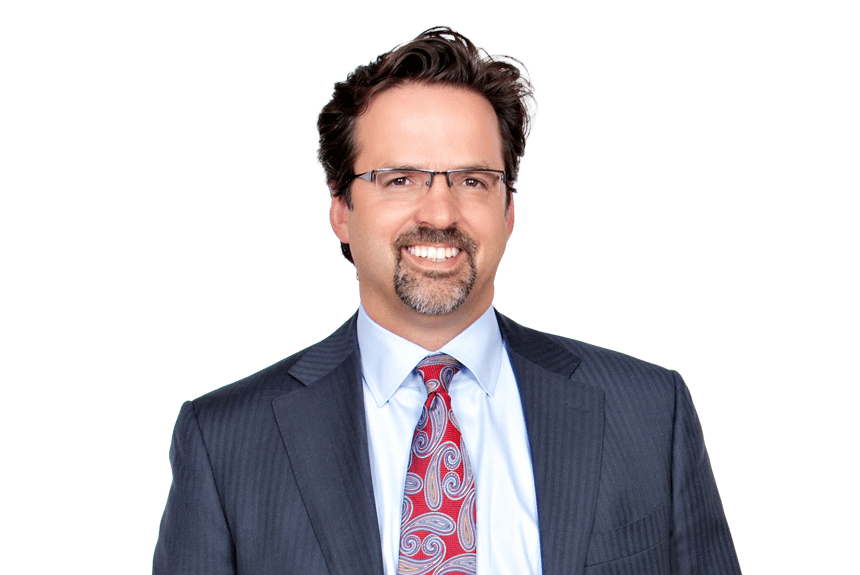
Mike is a seasoned first chair IP litigation trial attorney, a consulting and testifying consumer survey expert, and a recognized thought leader on cutting-edge issues involving trademarks, copyrights, and advertising.

IP Litigation Trial Practice

Mike Keyes is a “go to” intellectual property trial attorney with a vast reservoir of experience in cases involving trademarks, copyrights, and false advertising, including individual consumer and class action claims. Mike and his team have represented some of the world’s most recognized brands and companies in high-stakes litigation in numerous federal courts across the country including Washington, Oregon, California, Colorado, Minnesota, Illinois, New York, Massachusetts, Utah, and Florida. These disputes have encompassed a wide array of subject matters including medical diagnostics software, online games and apps, Google Ads, social media, e-books, consumer products, food and beverage, fashion, sports equipment, educational testing tools, and hospitality services.

Mike has served as lead or co-lead trial counsel in several high-profile IP cases. He was trial counsel in Chicago federal court for Kraft Foods in a highly publicized false advertising trial featured on ABC’s Good Morning America and covered by the likes of The Chicago Tribune and The New York Times. He represented Abercrombie & Fitch in a closely watched case in California federal court brought by Levi Strauss & Co. involving claims of unfair competition, trademark infringement, and dilution. The jury returned a unanimous verdict in favor of Abercrombie & Fitch on all claims. The case was profiled in the Daily Journal—California’s largest legal publication—as one of the Top 10 “Defense Wins” in California that year. Some of Mike’s other successes as lead trial counsel include obtaining final judgments and permanent injunctions on behalf of several clients including: a national hospitality chain, a consumer products company selling the No. 1 toy on Amazon.com, and the creator of Angry Birds.

His intellectual property clients have also included the likes of Hall of Fame Major League Slugger George Brett, Facebook, Foot Locker, Beats Electronics, LLC (Beats by Dr. Dre), TikTok, Viacom, Corona Beer, Target, Helly Hansen, the North Face, the Mayo Clinic, the University of Minnesota, Del Monte, and Carmex.

Consumer Survey Expert Practice

In addition to his extensive trial work, Mike is also a consulting and testifying consumer survey expert and leads Dorsey’s Consumer Insights Group. Mike brings a truly unique value proposition to his work as an expert. Not only does he have an advanced degree in Survey Research & Data Analysis, but he also has over two decades of practical experience as a trial lawyer in drafting and analyzing consumer surveys, as well as collaborating with, deposing, and cross-examining survey experts. Mike understands the critical importance of this type of evidence in litigation and excels at making it relatable and understandable to judges and juries.

Mike is a leading voice on consumer survey evidence, regularly presenting at national conferences and events hosted by the ABA, AIPLA, PLI, Strafford, and AAPOR (the American Association for Public Opinion Research). He publishes frequently on the topic of consumer surveys and maintains an active following on LinkedIn where hundreds of lawyers and survey experts alike subscribe to his publication Lanham Act Surveys for Lawyers. He also imparts his survey expertise to law students at the University of Washington Law School, where he serves as an affiliate instructor, teaching Advanced Trademark Law and IP Litigation Strategies. His insights on survey research have also been shared with students and faculty at esteemed law school institutions including the University of Notre Dame, Franklin Pierce Law Center, and Gonzaga University.

Mike is a certified mediator, an ADR panelist for the U.S. District Court for the Western District of Washington, a registered ADR panelist with the AIPLA, and was recently invited to join the WIPO Arbitration and Mediation Center’s ADR panel.

Lastly, Mike served on Dorsey’s Management Committee from 2019-2023 where he was the global head of Dorsey’s trial group.


Select Experience

Intellectual Property

  • Scotts v. Procter & Gamble, U.S. District Court for the Southern District of Ohio, (2024) (Cole, J.). Lead counsel defending Procter & Gamble against claims for infringement of Scotts’ Miracle-Gro trade dress.  Scotts’ motion for preliminary injunction was denied.
  • Grecco v. TikTok, Inc. U.S. District Court for the Central District of California, (2024) (Aenlle-Rocha, J.). Representing TikTok against claims of copyright infringement.
  • ICVA v. Anivive, U.S. District Court for the Central District of California, (2024) (Staton, J.). Obtained preliminary injunction against Defendants’ copying and inputting into artificial intelligence large language models standardized test for veterinary licensure.
  • Represented seller in the sale of one of the most popular user-created islands in Fortnite, one of the largest online multiplayer battle royale games in the video gaming sector, to a large video game developer headquartered in Europe.

Education

  • University of Connecticut (M.S., Survey Research & Data Analysis, 2023)
  • Gonzaga University School of Law (J.D., 1998)
    • magna cum laude; Best Oralist, National Moot Court Competition, Regional Finals 1997; Associate Editor Law Review 1997-1998
  • Columbia Law School (LL.M., 1999)
    • Harlan Fiske Stone Scholar
  • Loyola University, New Orleans (B.M., Piano Performance, 1993)
  • Tbilisi State Conservatoire, Former Soviet Republic of Georgia
    • Graduate Piano Student, 1993-1994

Bar Admissions

  • New York
  • Washington
  • California

Court Admissions

  • U.S. Court of Appeals for the Federal Circuit
  • U.S. Court of Appeals for the Second Circuit
  • U.S. Court of Appeals for the Sixth Circuit
  • U.S. Court of Appeals for the Ninth Circuit
  • U.S. District Court for the Central, Northern, Eastern, and Southern Districts of California
  • U.S. District Court for the Eastern and Western Districts of Washington
  • U.S. District Court for the Northern and Southern Districts of New York
  • U.S. District Court for the District of Idaho
  • U.S. District Court for the Northern District of Illinois
  • U.S. District Court for the Eastern District of Wisconsin

Clerkships

  • Washington Supreme Court, Honorable Chief Justice Gerry L. Alexander, 1999-2000

Professional Affiliations

  • Trustee of the King County Bar Foundation, 2018-present
  • Member, Law360 Intellectual Property Editorial Advisory Board, 2017 and 2018
  • Co-Chair, ABA Copyright Litigation Committee, 2006-2008
  • Washington State Bar Association IP Section, Chair, 2006; Chair-elect, 2005; Secretary-Treasurer, 2004
  • Co-founder, Spokane County Bar Association IP Section, 2003
  • Coach of National Appellate Advocacy Competition Team, Gonzaga University School of Law
  • Adjunct Professor of Law, “Internet and the Law,” “Trademark Law,” and “Legal Research & Writing,” Gonzaga University School of Law
  • Member, Copyright Society of the USA
  • Member, Supreme Court Historical Society

Charitable & Civic Involvement

  • Past Chair, Gonzaga Prep High School Board of Directors
  • Trustee, King County Bar Association Foundation
  • Guest Lecturer, University of Washington School of Law
  • Volunteer supervising attorney, University of Washington Entrepreneurial Law Clinic
  • Volunteer Pianist, Sacred Heart Parish
  • Volunteer Pianist, Compass Room & Rooftop
  • Past Board Member, Holy Names Music Center

Accolades

  • Best Lawyers in America®, Advertising Law, Commercial Litigation, Copyright Law, Intellectual Property Litigation, Patent Litigation, Patent Law, Trademark Law, Seattle, 2013-2027
  • Chambers USA, Intellectual Property: Trademark, Copyright & Trade Secrets, Washington, 2026
  • IAM/WTR Copyright 1000, “World's Leading Copyright Professionals," 2026
  • World Trademark Review 1000, "The World’s Leading Trademark Professionals," Leading Practitioner, 2017-2026
  • Washington Super Lawyers®, 2014-2026
  • Managing IP, IP STAR, 2016-2026
  • Best Lawyers® Lawyer of the Year, Trademark Law, 2025, 2027
  • Washington Super Lawyers®, "Top 100," 2021
  • JD Supra Readers’ Choice Awards, "Top Author," 2017
  • Washington Super Lawyers®, “Rising Stars,”2006-2008, 2011

Select Presentations

  • Panelist, “Daubert-Proofing Your Survey,” AIPLA, On-Line Webinar, July 2022
  • Panelist, "Making the Case With Tweets, Snaps and Facebook Posts," Federal Bar Association, Eastern District Conference and CLE, September 2018
  • Presenter, “2018 Global Law Innovation Summit”—Recent Cases & Controversies Under the Digital Millennium Copyright Act, the University of Washington School of Law, July 2018
  • Presenter, “Monkey, Music, and Much, Much More!—A Copyright Law Update,” King County Bar Association IP Section, Seattle, WA, June 2018
  • Presenter, “Extraterritorial Applications of the Lanham Act,” California Lawyers Association, June 2018
  • Moderator, "New Frontiers in Branding," The New Music Ecosystem sponsored by the University of Washington School of Law, May 2018
  • Panelist, Law Seminars International, “Consumer Protection: The Challenge of Achieving Regulation Compliance and Meeting Customer Expectations,” December 1, 2017
  • Presenter, American Bar Association Intellectual Property Law Books Webinar Series: "Copyright Litigation Strategies: From Soup to Nuts," September 19, 2017
  • Presenter, 43rd Annual ICLE  Intellectual Property Law Institute on Mackinac Island, MI, July 2017 
  • Presenter, International Trademark Association Meeting, "#TalkingIP: Optimizing Publishing Opportunities and Digital Platforms - INTA and Beyond," May 21, 2017 
  • Presenter, IP Section of the King County Bar Association, “From Pom-Poms to Rockstars: The Latest and Greatest Copyright Hits,” May 2017
  • Panelist, American Bar Association Intellectual Property Spring Conference, “Copyright at a Gallop,” April 2017 
  • Moderator, Copyright Society of the USA CLE, “Other People’s Footage: Copyright and Fair Use,” February 2017 
  • Presenter, International Trademark Association Annual Meeting, "Monetary Remedies in Trademark Cases,"  May 2016
  • Presenter, Washington State Bar Association IP Institute, “Copyright Case Law, the Year in Review,” March 2016
  • Panelist, American Bar Association sponsored webinar, “Designing Effective Consumer Surveys in Trademark Infringement and False Advertising Disputes,” November 2015
  • Co-Presenter with Dorsey & Whitney partner Sandy Edelman, Practicing Law Institute, “Designing Effective Consumer Surveys in Trademark Infringement and False Advertising Disputes,” July 2015
  • Panelist, American Bar Association Technology Symposium, “One Problem: Reconciling Advice of Employment, Intellectual Property, and Other Counsel,” March 2015
  • Presenter, Washington State Bar Association IP Institute, “Design and Use of Consumer Surveys in Lanham Act Cases—Recent Developments,” March 2014
  • Presenter, Practicing Law Institute, “Fundamentals of Copyright Law in the Data Era,” July 2013
  • Presenter, American Intellectual Property Law Association 2013 Spring Meeting, “Use of Non-Patent Literature During Patent Examination—Fair or Infringing?”, May 2013
  • Presenter, Practicing Law Institute, “Understanding Copyright in the Data Era,” July 2012
  • Presenter, Practicing Law Institute, University of Chicago, “Copyright Enforcement in the Data Era,” June 2012
  • Panelist, American Bar Association Intellectual Property Spring Conference, “Trollings, Take Downs, and Transfers: An Audiovisual Odyssey Through The World of Copyright,” March 2012
  • Presenter, Practicing Law Institute, “Understanding Copyright in the Data Era,” July 2011
  • Presenter, Practicing Law Institute, “Copyright Litigation,” July 2010
  • Panelist, American Bar Association Intellectual Property Law Spring Conference, “Of Courts and Copyists: The Year in Review,” April 2010
  • Panelist, American Bar Association Intellectual Property Law Spring Conference, “The Year in Copyright,” April 2009
  • Presenter, American Intellectual Property Law Association, "Recoveries in IP Litigation: Hotspots and Trends in Copyright, Trademark, and Patent Damages,” Webinar, April 2009
  • CLE Co-Chair, Intellectual Property Institute, Washington State Bar Association, featuring U.S. Court of Appeals for the 9th Circuit Chief Judge, The Hon. Alex Kozinski, October 2008
  • Presenter, American Bar Association Intellectual Property Law Spring Conference, “An Audiovisual Tour Through The Year in Copyright,” April 2008
  • Panelist, American Intellectual Property Law Association 2008 Mid-Winter Institute, “A Survey of Licensing Strategies One Year After MedImmune,” January 2008
  • Presenter, Washington State Bar Association Corporate Counsel Institute, “Trademark Law For General Counsel,” October 2007
  • Panelist, American Bar Association Intellectual Property Law Spring Conference, “Copyright in the Courts: Issues of First Impression,” April 2007
  • CLE Co-Chair, Intellectual Property Institute, Washington State Bar Association, March 2007
  • Presenter, “Copyright Law For The IP Attorney,” Idaho State Bar Association Intellectual Property Section, November 2006
  • CLE Chair, “Intellectual Property Developments: Litigation, Machination & Reformation,” Washington State Bar Association, September 2006
  • Presenter, “Spyware Resolution Debate,” ABA Intellectual Property Annual Meeting, 2006
  • Presenter, “Copyright & The World of Music,” Washington State Music Teachers Association Leadership Conference, 2005
  • Presenter, “Top Ten Trademark Tips,” Coeur d’ Alene Chamber of Commerce, 2005
  • Co-Presenter, “Protecting Your Artistic Creations in the Digital Age,” 2005
  • Co-Presenter, “Pitfalls for the Unwary: Recognition, Protection & Enforcement of IP Rights,” Emerald Education Group, 2004
  • Presenter, “Copyright Law & The World of Advertising,” Great Falls Advertising Federation, 2004

Firm Highlights

Insights

Ninth Circuit Splits California’s Climate Disclosure Laws: Scope 1 and 2 Reporting Proceeds; Scope 3 and SB 261 Likely Unconstitutional

Key Takeaways On November 9, 2026, the Ninth Circuit in Chamber of Commerce v. Sanchez allowed Scope 1 and Scope 2 greenhouse gas (GHG) emissions reporting under SB 253 to proceed but held that SB 253’s Scope 3 requirement, and SB 261 in its entirety, likely violate the First Amendment.1 U.S.-formed entities with total annual revenues above $1 billion that do business in California remain subject to Scope 1 and 2 reporting. First reports (or, for eligible entities, statements of non-reporting) were due November 10, 2026.2 Scope 3 reporting (scheduled to begin in 2027) and SB 261 climate-risk reporting are effectively on hold. Entities with revenues between $500 million and $1 billion, which were covered only by SB 261, currently have no reporting obligation under either law.3 The ruling addresses only preliminary injunctive relief; it is not a final judgment on the merits. If the district court finds the Scope 3 requirement non-severable, it could also enjoin Scope 1 and 2 reporting.4 Background SB 253 (the Climate Corporate Data Accountability Act) requires U.S.-formed entities with total annual revenues above $1 billion that do business in California to report Scope 1 and 2 emissions starting in 2026 and Scope 3 emissions starting in 2027, with penalties of up to $500,000 per reporting year.5 SB 261 (the Climate-Related Financial Risk Act) requires U.S.-formed entities with total annual revenues above $500 million that do business in California to publish biennial climate-related financial risk reports consistent with the Task Force on Climate-related Financial Disclosures (TCFD) framework, with penalties of up to $50,000 per reporting year.6 Business groups led by the U.S. Chamber of Commerce challenged both laws as compelled speech that violates the First Amendment. In August 2025, the district court denied their motions for preliminary injunctions. On November 18, 2025, the Ninth Circuit enjoined SB 261 pending appeal but declined to enjoin SB 253.7 The implementing regulation adopted by the California Air Resources Board (CARB) took effect on October 12, 2026, and set November 10, 2026, as the first Scope 1 and 2 reporting deadline.8 The Court’s Decision Scope 1 and Scope 2: Upheld for Now The panel held that Scope 1 and 2 disclosures are commercial speech because they compel disclosure of factual information about emissions from a company’s own operations and purchased energy—information that bears on capital transactions. Applying intermediate scrutiny, the court concluded that the requirements advance California’s substantial interests in reducing information asymmetries for investors and in reducing emissions and are no more extensive than necessary.9 The panel split 2–1 on this issue.10 Scope 3: Likely Unconstitutional The court held that Scope 3 disclosures concern diffuse third-party conduct across the value chain and are “insufficiently tethered” to the reporting entity’s own operations to qualify as commercial speech. Applying strict scrutiny, the court concluded that the requirement likely fails because (1) SB 253 does not require primary data, (2) the record did not show that companies’ proxy-based estimates would be more reliable than estimates the State could generate itself, and (3) the link to investor-relevant risk was too remote.11 SB 261: Likely Unconstitutional in Its Entirety The court held that SB 261 compels noncommercial speech because it requires “predictive and normative judgments” about a “politically fraught subject.” Even assuming California’s interests are compelling, the court reasoned that the law is likely not narrowly tailored because California could use less restrictive alternatives, such as incentives for voluntary disclosure.12 The panel was unanimous on Scope 3 and SB 261.13 Remand and Severability The Ninth Circuit did not enter injunctions itself. It reversed the denials of preliminary injunctive relief and remanded with instructions for the district court to enter relief consistent with the opinion and, for Scope 3, to decide severability first.14 SB 253 contains an express severability clause. If the district court nevertheless finds the Scope 3 requirement non-severable, it could also enjoin Scope 1 and 2 reporting.15 Current Status at a Glance Requirement Status after the Ruling Practical Effect SB 253 – Scope 1 and 2 emissions (entities with revenues above $1 billion) In effect; denial of preliminary injunction affirmed First reports were due November 10, 2026; CARB fee notices expected by December 10, 202616 SB 253 – Scope 3 emissions (scheduled to begin in 2027) Likely unconstitutional; remanded for severability ruling and entry of injunctive relief Not required while remand is pending; scope of CARB’s 2027 rulemaking uncertain17 SB 261 – climate-related financial risk reports (entities with revenues above $500 million) Likely unconstitutional in its entirety; enjoined pending appeal since November 18, 2025 No current reporting obligation; voluntary reports permitted18 What to Watch Any petition for panel rehearing or rehearing en banc (due 14 days after entry of judgment) and any petition for a writ of certiorari to the U.S. Supreme Court.19 The district court’s severability ruling and the scope of any preliminary injunctions it enters as to Scope 3 and SB 261.20 CARB’s response. As of the date of this alert, CARB has not issued a formal statement on the opinion.21 CARB had been developing a second rulemaking for reporting years 2027 and later, addressing Scope 3, assurance, deadlines, and reporting templates, and had proposed retaining November 10 as the annual deadline.​​​​​​​22 Recommended Actions Confirm coverage entity by entity. Revenue (gross receipts, based on the lesser of the two prior fiscal years) and “doing business in California” are determined separately for each entity; affiliates are not aggregated. Retain supporting California tax records for five years.23 If a covered entity has not filed, file promptly. Submit the Scope 1 and 2 report (or, if eligible, a statement of non-reporting) and document good-faith compliance efforts, which CARB must consider in assessing penalties.24 Calendar the fee cycle. CARB expects to issue fee notices by December 10, 2026, with payment due within 60 days after the notice; each day of nonpayment is a separate violation.​​​​​​​25 CARB’s August 2025 proposal set flat fees at $3,106 per SB 253 entity and $1,403 per SB 261 entity.26 Confirm the final amount when the CARB notice arrives. Prepare for 2027 Scope 1 and 2 reporting. Third-party assurance was not required for 2026, but CARB has signaled that it will require limited assurance of Scope 1 and 2 data for 2027 and later years.27 Engage assurance providers and strengthen internal data controls now. Pause, but preserve, Scope 3 and SB 261 workstreams. Maintain existing data and processes: the ruling is preliminary, and many multinational companies will still need Scope 3 and product-level emissions data under the EU’s Corporate Sustainability Reporting Directive (CSRD) and Carbon Border Adjustment Mechanism (CBAM).28 Companies may still publish SB 261 reports voluntarily.29 Review public statements. Continue to review voluntary climate disclosures for consistency with CARB filings and other regulatory reports. Considerations for Real Estate and Infrastructure Clients The following are practice recommendations, not statutory requirements: Control boundaries. Whether emissions from a building or data center fall within a landlord’s or a tenant’s Scope 1 or 2 inventory depends on the control approach applied under the GHG Protocol. Leases, colocation agreements, and powered-shell arrangements should specify which party has operational control for GHG reporting purposes. Data cooperation. Include obligations to deliver utility and energy data (with specified timing and format) and to cooperate with assurance providers, particularly where the landlord or operator holds the utility accounts. Transactions. In acquisitions and financings, diligence the target’s or borrower’s SB 253 compliance and fee payments, and consider representations and covenants on the accuracy of emissions data. Value-chain requests. Counterparty requests for Scope 3 data may slow, but those subject to CSRD will likely continue to make them. This alert is for general information only and is not legal advice. The law in this area is changing rapidly, and developments after November 18, 2026, may affect this analysis.  1 Chamber of Commerce v. Sanchez, No. 25-5327 (9th Cir. Nov. 9, 2026) 2 White & Case, California Climate Disclosure Laws: Ninth Circuit Finds SB 253 Scope 3 Requirements and SB 261 Likely Unconstitutional (Nov. 2026) 3 Legal 500, Ninth Circuit Approves California’s Core Carbon Emissions Reporting Rules (Nov. 2026) 4 White & Case, supra note 2. 5 Kirkland & Ellis, Ninth Circuit Rules on California’s Climate Disclosure Laws (Nov. 2026) 6 Simpson Thacher, California Climate Reporting Laws: Ninth Circuit Issues Partial Injunction (Nov. 2025) 7 White & Case, supra note 2. 8 Vinson & Elkins, OAL Approves CARB’s Initial Regulation (Oct. 2026) 9 White & Case, supra note 2. 10 Foley & Lardner, California Climate Disclosure Laws (Nov. 2026) 11 White & Case, supra note 2. 12 Chamber of Commerce, No. 25-5327. 13 Kirkland & Ellis, supra note 5. 14 Troutman Pepper Locke, Ninth Circuit Rules on Challenge to California’s Climate Disclosure Laws (Nov. 2026) 15 White & Case, supra note 2. 16 Davis Polk, Getting Ready for California SB 253’s November 10 Reporting Deadline (Oct. 2026) 17 Troutman Pepper Locke, supra note 14. 18 White & Case, supra note 2. 19 Id. 20 Troutman Pepper Locke, supra note 14. 21 Morgan Lewis, Ninth Circuit Reverses Lower Court (Nov. 2026) 22 Simpson Thacher, CARB Provides New Guidance on SB 253 Reporting (July 2026) 23 Davis Polk, supra note 16. 24 Id. 25 Id. 26 CARB, SB 253/261 Public Workshop Slides (Aug. 2025) 27 Vinson & Elkins, supra note 8. 28 O’Melveny, Is Your Company Still Required to Report Under California’s Climate Laws? (Nov. 2026) 29 White & Case, supra note 2.