.

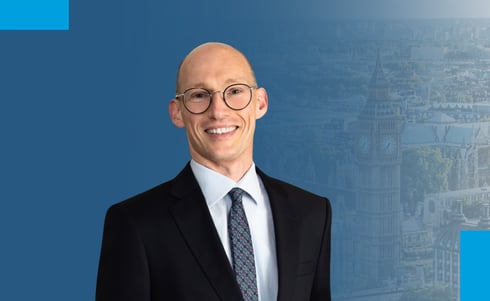
William J. Miller defends businesses, municipalities, and healthcare clients through complex commercial litigation, employment disputes, and products liability trials.

Bill brings that defense-focused advocacy to every stage of a matter — from pre-suit investigation and negotiation through administrative proceedings, arbitration, and trial and appeal in state and federal court, including probate and bankruptcy courts. Clients in government, healthcare, and financial services turn to Bill when the stakes are high and the path forward is uncertain.

Bill's commercial litigation practice spans a variety of disputes that he has tried to verdict in Iowa state and federal courts. He has also argued before the Iowa Supreme Court, the Iowa Court of Appeals, and the U.S. Court of Appeals for the Eighth Circuit.

On the employment law side, Bill defends employers from the administrative level through trial and appeal in state and federal courts or in arbitration. He has been entrusted with internal investigations and policy and procedure reviews in employment and other contexts. His employment work spans a range of industries, with particular depth in healthcare and government.

Bill is also called upon for consultation and trial support in matters involving tax increment financing, zoning, and other economic development initiatives — areas where legal, regulatory, and political considerations intersect.

Bill has consistently provided pro bono legal assistance to those in need through Dorsey & Whitney's Pro Bono program.

Select Experience

  • Defended municipal client through trial and appeal in breach of contract action arising from an economic development agreement, including litigation before the U.S. District Court for the Northern District of Iowa and the U.S. Court of Appeals for the Eighth Circuit.
  • Defended employers from the administrative level through trial in arbitration and state and federal courts across numerous employment law matters.
  • Tried and appealed multiple lawsuits against an independent living facility client alleging breach of fiduciary duty and other theories (Polk County and Iowa Supreme Court).
  • Represented manufacturing client in a complex products liability action in Iowa state court; tried the case to a jury over five weeks with a Dorsey colleague, resulting in an eight-figure verdict in favor of the client (Mahaska County).

Education

  • Drake University Law School
    • With Highest Honors
    • Order of the Coif
    • Iowa State Bar Association Graduating Senior Award
    • H.G. Cartwright Law Review Award
  • Augustana College
    • cum laude
    • Phi Beta Kappa

Bar Admissions

  • Iowa

Court Admissions

  • U.S. Court of Appeals for the Eighth Circuit
  • U.S. District Courts and Bankruptcy Courts for the Northern and Southern Districts of Iowa

Professional Affiliations

  • Member, Polk County Bar Association
    • Recipient, Award of Merit
    • Past President
    • Member, Board of Governors
    • Chair, Judicial Retention Committee
    • Member, Bench & Bar Committee
    • Past Member, Ethics Committee
    • Past Member, Public Relations Committee
  • Member, Iowa State Bar Association
    • Member, Board of Governors
    • Member and Past Chair, Litigation Section Council
    • Member, Judicial Administration Committee
    • Member, Appellate Practice Committee
    • Past Member, Future Needs Task Force
    • Past Member, Independence of the Judiciary/Fair Courts Committee
    • Past Member and Chair, Young Lawyers Division Services to the Elderly Committee
  • Life Fellow, Iowa State Bar Foundation
  • Member, Iowa Municipal Attorneys Association
  • Member, Iowa Society of Healthcare Attorneys
  • Past Member, Iowa Judicial Branch AI Working Group
  • Past Member, Iowa Supreme Court Jumpstart Jury Trials Task Force
  • Past Member and Co-Chair, Iowa Supreme Court Advisory Committee on Rules of Civil Procedure
  • Past Member, Iowa Supreme Court Commission on Continuing Legal Education
  • Past Member, PCBA Volunteer Lawyers Project Board of Directors
  • Past Member, American Judicature Society, National Advisory Council

Clerkships

  • Iowa Supreme Court, Justice Mark S. Cady

Charitable & Civic Involvement

  • Drake Law School, Board of Counselors
    • Past President
  • Des Moines Business Record's Forty Under 40, 2014
  • Past Member, Augustana College, President's Advisory Council
  • Past Member, Holy Trinity Church and School, Facilities Committee
  • Past Member, Amanda the Panda Board of Directors
  • Past President, Beaverdale Neighborhood Association

Accolades

  • Best Lawyers in America®, 2016-2027
    • Bet-the-Company Litigation
    • Commercial Litigation
    • Litigation - Labor and Employment
  • Chambers USA
    • Litigation: General Commercial, Iowa, 2018-2026
    • Labor & Employment, Iowa, 2025-2026
  • Great Plains Super Lawyers®, 2021-2026
  • Benchmark Litigation, "Future Star", 2015-2016, 2021-2022, 2024, 2026
  • Benchmark Litigation, "Labor & Employment Star – Iowa", 2021-2022
  • Best Lawyers in America® Employment Law Issue, 2021
  • Benchmark Litigation, "Under 40 Hot List," 2016-2018
  • Chambers USA, "Up and Coming", Litigation: General Commercial, 2015-2017
  • Rated AV Preeminent® by Martindale-Hubbell®
  • Great Plains Super Lawyers®, "Rising Stars," 2013-2017
  • Recipient of Polk County Bar Association Award of Merit in recognition of “outstanding service and dedication to the association and its members,” 2024
  • Dorsey & Whitney – Scales of Justice Team Award (Dr. Conaway Disability Rights Team), 2021
  • Consistently providing pro bono legal assistance to those in need through Dorsey’s Pro Bono program

Select Presentations

  • Bill has presented on topics including appellate law and practice, professional responsibility, and elder law for organizations including the Association of Corporate Counsel - Iowa Chapter, Iowa Hospital Association, Iowa Judicial Institute, Iowa Defense Counsel Association and Polk County and Iowa State Bar Associations.

Insights

Client Alert

Reputation is Everything: Iowa Supreme Court Clarifies Use of Closed Session Job Interviews

December 11, 2025

The Iowa Supreme Court recently decided Teig v. Hart, No. 24-0029 (Nov. 25, 2025), which provides much-needed clarity to governmental bodies on the limits to Iowa’s open meetings law. The Iowa Supreme Court’s opinion in Teig clearly establishes that local officials, not a reviewing court, should determine whether a closed session is necessary to prevent “needless and irreparable injury” to the reputation of a candidate for employment with the public body. However, this decision has implications for the wide range of actions related to a governmental body evaluating an individual’s professional competency. The Iowa Open Meetings Law (Iowa Code Ch. 21) requires most governing bodies in the state—whether at the state, county, city, school, or local level—to conduct its business in open, public meetings so that Iowans have “access to the deliberations and decisions of their government.”1 But this access is limited by practicality, and the statute: the Open Meetings Law describes twelve circumstances in which a body may enter a “closed” session, where the public is not allowed and records of discussions are sealed from public inspection.2 While many of the exceptions pertain to legal or other sensitive matters (e.g., closed sessions “to discuss strategy with counsel[,]” or “to discuss hearings to suspend or expel a student[]”), the law also provides a body may enter closed session: To evaluate the professional competency of an individual whose appointment, hiring, performance, or discharge is being considered when necessary to prevent needless and irreparable injury to that individual’s reputation and that individual requests a closed session.3  This “Evaluation Exception” has three operative parts. First, the governmental body must be considering the professional competency of a past, current, or future employee, contractor, or appointee Second, the discussion about the employment action must have some risk of causing “needless and irreparable injury to [the] individual’s reputation[.]” Finally, the individual must request a closed session.  The Iowa Supreme Court’s decision in Teig helps answer how to apply these portions of the Evaluation Exception in practice. The Teig case involved the City of Cedar Rapids’s hiring a new city clerk. The interim city clerk applied and requested a closed session. Testimony in the case established that the interim clerk did not know all of the incumbent city council members (who would interview her), nor did she expect any specific issues regarding her performance in her city employment to be discussed. Testimony also established that the city council members had no reason to expect negative or harmful information would be disclosed in the closed session. In actuality, the closed-session job interview was “positive in tone” and the interim city clerk was offered the role as permanent city clerk following the end of the closed session.  After the hiring of the interim clerk, a resident of Linn County requested documents relating to the reason to hold a closed session for a job interview and then sued the city for violations of the Iowa Open Meetings Law. The district court in Linn County rejected the resident’s claims, but the Iowa Court of Appeals reversed that ruling. The resident’s primary complaint, which was echoed by the court of appeals decision, was that the Cedar Rapids City Council never asked or considered whether a closed session was actually necessary to prevent “needless and irreparable injury” to the interim city clerk’s reputation. As the evidence showed, there was no reason to believe such injury to reputation was imminent, and seemingly none occurred: the interim clerk was offered the permanent role. The court of appeals determined the interim clerk’s request, without any information supporting it or inquiry by the city council, was not sufficient to trigger the Evaluation Exception.  The Iowa Supreme Court reversed the Iowa Court of Appeals, reinstating the original district court ruling determining that the city council had not violated the Iowa Open Meetings Law. The supreme court recognized the inherent unpredictability of a job interview, where applicants do not know the questions to be asked and the prospective employer does not know how the applicant will respond or what they may volunteer. Protecting the privacy of those conversations, when the applicant requests a closed session, serves the prophylactic purpose of the statute: to “prevent” harmful reputational disclosures, not to “remedy” or “recompense” for reputational damages. In other words, allowing closed sessions for job interviews is consistent with the other provisions of the Iowa Open Meetings Law: it avoids trying to “un-ring the bell,” by preventing the harm to the applicant in the first place.  The supreme court’s ruling in Teig implicitly directs courts to take a softer, more deferential approach to reviewing claims under the Iowa Open Meetings Law with respect to the Evaluation Exception. But Teig is no license to go too far in the other direction by holding closed meetings if they are not justified or improperly noticed or closed. Evidence that a public body was engaged in bad faith, for example by trying to close an interview to circumvent a fair process, would require different analysis. And, as the supreme court reminded readers, the records from closed sessions must be maintained (even if they are not publicly reviewable).  Finally, the supreme court emphasized that the closure of a public meeting under the Evaluation Exception is a mutual agreement: the individual must request the closed session, and the governmental body must vote (by a two-thirds margin) to enter closed session. This mutual buy-in from the individual and the elected representatives of the public maintains the balance between providing Iowans access to government decision making and protecting the reputation of those seeking to serve the public. However, when it comes to individuals whose professional competence is being evaluated, Teig confirms that it is unnecessary to scrutinize the motives or basis for that individual’s request for a closed session.  1 Teig, Slip. Op. at 3.  2 See generally Iowa Code § 21.5 (2025).  3 Iowa Code § 21.5(1)(i).   

Client Alert

What Employers Need to Know about Iowa’s Religious Freedom Restoration Act

April 11, 2024

On April 2, 2024, Governor Kim Reynolds signed Senate File 2095, the Iowa Religious Freedom Restoration Act, which became effective immediately. Iowa’s Religious Freedom Restoration Act (“RFRA”) is modeled on a similar law that Congress enacted in 1993. According to The Becket Fund, which supports the passage of RFRA-style laws, a total of 28 states have enacted state-level RFRA laws since Congress took action. Iowa’s RFRA limits the actions of employers in some cases, while empowering employers in other respects. In other words, it is a statute that can both be used by employers and against employers, depending on the circumstance. As a restriction, the Iowa RFRA prohibits “state action” from “substantially burdening” a “person’s” exercise of religion. Each of the quoted terms is given a specific meaning by the statute. “State action” means the application of any law, ordinance, regulation, or policy, or the actions of any public official as authorized by law. Actions taken by public employers, such as cities, counties, and related entities, fit directly within the definition of “state action.” In certain cases, the conduct of private employers could be “state action,” if the private employer is taking action to implement or apply a law or regulation. For example, a private employer that requires an employee to register with the state pursuant to a regulatory requirement could be taking “state action.” State actions “substantially burden” religious practice if the conduct “constrains, inhibits, curtails, or denies the exercise of religion . . . or compels any action contrary to a person’s exercise of religion[.]” Finally, “person” is defined broadly to include any “individual, association, partnership, corporation, church, religious institution, estate, trust, foundation, or other legal entity.” State action that substantially burdens a “person’s” exercise of religion is permissible if “the burden to that person’s exercise of religion is in furtherance of a compelling governmental interest and is the least restrictive means of furthering that compelling governmental interest.” In other words, exceptions to the general rule require a very good justification and proof that the restriction is the least restrictive way to achieve that justification. For example, a general policy that requires individuals to shave their face and head for boot camp training presumably would be found to burden the religious practice of individuals for whom shaving or cutting hair is prohibited. Where the policy is only motivated by a general desire for unit cohesion, the policy does not support a compelling interest, nor is it the least restrictive means of achieving that goal.[1] The Iowa RFRA authorizes employers to take action in other instances. Given the broad definition under the statute, many Iowa employers are also “persons” who also have protections against state action that substantially interferes with the exercise of religion. Perhaps the most well-known application of this principle came in the United States Supreme Court’s 2014 decision in Burwell v. Hobby Lobby. There, an employer objected on religious grounds to a regulation under the Affordable Care Act requiring insurance coverage for certain contraceptives. The Supreme Court, applying the federal RFRA, determined that the requirement was not the least restrictive means of achieving the goal of providing contraceptive coverage, and granted an exception from the general regulation to the employer. Employers in other states have also argued RFRA laws provide exceptions to generally applicable laws, such as child labor codes and emergency medical care statutes. When a “person’s” exercise of religion is substantially burdened, the Iowa RFRA allows the person to go to court and obtain “appropriate relief, including damages, injunctive relief, or other appropriate redress[,]” including attorney’s fees. Where conduct is religious in nature and challenged, a “person” can also assert an RFRA affirmative defense to justify otherwise (presumably) unauthorized conduct. It remains to be seen how Iowa courts will apply this statute. Given the developing state of the law in this area, there are a few key points for employers to keep in mind: Discrimination is still prohibited by the Iowa Civil Rights Act and federal law. The enactment of the Iowa RFRA makes no changes to Iowa Code Chapter 216, the Iowa Civil Rights Act. Employment, education, and public accommodation discrimination remains prohibited on the basis of race, color, creed, national origin, religion, sex, sexual orientation, gender identity, pregnancy, and disability. Similarly, while an employer can be a “person” entitled to justify certain actions based on its religious beliefs, an employer who adopts a “favored” religion in the workplace may still face religious discrimination claims from members of the “non-favored” group. Employers should consult with legal counsel before taking an employment action that could be perceived as motivated by an individual’s membership in a protected class. Review religious accommodation policies. While most employers maintain reasonable accommodation policies relating to disability, it is important to ensure religious accommodations are also available where appropriate. Revising and updating religious accommodation policies is especially timely given the Supreme Court’s Groff v. DeJoy decision last summer, which discussed an employer’s obligation to accommodate an employee’s religion. Public employers specifically should ensure the process for asserting religious objections is controlled by a written policy. Additional trainings may be appropriate. Iowa’s RFRA protects the exercise of all religions, whether that exercise is unfamiliar or well known. Employers may choose to use this opportunity to adopt policies that support and reflect a religiously diverse workforce. While Iowa’s RFRA is modeled on federal and out-of-state counterparts, it remains to be seen how Iowa courts will interpret and implement it. Employers seeking to mitigate RFRA-related risk should contact their trusted Dorsey & Whitney counsel for advice and best practices.  [1] Singh v. Berger, 56 F.4th 88 (D.C. Cir. 2022).

Firm Highlights

Insights

Observations on the SEC’s 2027 Examination Priorities

The SEC’s Division of Examinations (the “Division”) recently announced its examination priorities (“Exam Priorities”) for fiscal year 2027.1 Although many of the Division’s core areas of focus remain consistent with fiscal year 2026, the 2027 Exam Priorities include notable changes and refinements, which we discuss below, along with other key 2027 examination priorities. Dorsey Observations Renewed focus on economic conflicts of interest. After certain economic-incentive topics received less emphasis in the 2026 Exam Priorities2, the Division has again expressly identified economic conflicts as an examination focus. The 2027 Exam Priorities indicate that the Division will prioritize reviewing advisers’ fiduciary obligations relating to economic conflicts of interest raised by fee rebates, fee and expense calculations, cash management, quid pro quo arrangements, and deposits and withdrawals. Greater emphasis on private-fund practices. Building on the private-fund items in the 2026 Exam Priorities, the 2027 Exam Priorities indicate that the Division will assess private-fund disclosures and controls relating to investment allocations, leverage, affiliated service providers, and fees and expenses. The Division also identified investments in private companies through special purpose vehicles (“SPVs”) and loans provided by private funds and business development companies (“BDCs”) as products the Division will scrutinize. Advisers, particularly private-fund advisers, should evaluate whether their disclosures and compliance programs address these areas. Expanded focus on AI-related cybersecurity risks. While the 2026 Exam Priorities focused on advisers’ use of and representations regarding artificial intelligence (“AI”), the 2027 Exam Priorities specifically highlight AI-enabled cybersecurity threats, including AI-generated phishing and synthetic or “deepfake” voice and video used for social engineering. The shift signals that registrants should consider whether their cybersecurity policies and controls adequately address these evolving threats. New focus on proxy advisory firms. The 2027 Exam Priorities state that the Division will examine advisers that rely on proxy advisory firms, including how those advisers evaluate the firms’ recommendations, assess the bases for those recommendations, identify potential conflicts of interest, and determine whether that reliance satisfies applicable legal obligations. Advisers that rely on proxy advisory firms may wish to consider whether their compliance programs address these areas. Updated focus on Regulation S-P and Regulation S-ID. The 2026 Exam Priorities stated that the Division would engage firms during examinations regarding their progress in preparing incident response programs ahead of the compliance dates for the amendments to Regulation S-P and would examine compliance with the amended rule after those dates. The 2027 Exam Priorities indicate that examinations will focus on whether firms have developed, implemented, and maintained reasonably designed policies and procedures addressing administrative, technical, and physical safeguards to protect customer information and that, in accordance with the amended rule, staff will evaluate response program policies and procedures for unauthorized access to or use of customer information, including customer notification procedures and oversight of service providers. With respect to Regulation S-ID, the 2027 Exam Priorities indicate that examiners will assess whether firms are updating their Identity Theft Prevention Program to address emerging risks, such as those related to AI and stolen credentials. Advisers may wish to consider whether their compliance programs address these areas, as applicable. Summary of Other 2027 Examination Priorities Beyond the developments discussed above, many of the Division’s core examination priorities remain consistent with fiscal year 2026. These include investment adviser fiduciary obligations and compliance programs, examinations of never-examined and recently registered advisers, and cybersecurity and operational resiliency. The Exam Priorities are not exhaustive, and examinations will vary based on each registrant’s business, activities and risks. Advisers should consider the 2027 Exam Priorities in reviewing their compliance programs and preparing for potential examinations, including by: Reviewing risk disclosures and controls. The Division states that, when examining advisers to private funds, it will assess whether investment-related risk disclosures are consistent with fiduciary standards and whether compliance policies, procedures, and controls are designed to address both fund-level and investment-level risks. Reviewing disclosures on allocations, leverage, and affiliated service providers. The 2027 Exam Priorities identify disclosures related to certain investments and allocations, the use of debt and fund-level lines of credit, and the use of affiliated service providers as examples. Confirming the accuracy of fee and expense calculations. The Division states that it will assess the accuracy of fee and expense calculations at both the fund and investment levels, and it identifies fee rebates, cash management, quid pro quo arrangements, deposits, and withdrawals as areas in which economic conflicts of interest may affect the impartiality of advice. Reviewing recommendations of illiquid or hard-to-trade products. The Division states that it will prioritize advisers that recommend products that are difficult to trade, have unusual features, or are illiquid, including loans provided by private funds or BDCs and investments in private companies through SPVs. Confirming that the compliance program is implemented and reviewed. The Division states that it will review compliance program components such as marketing, valuation, and custody, as appropriate, and will typically analyze the annual compliance review. It will also focus on compliance practices when advisers have started advising new asset classes or clients or grown through mergers or acquisitions. 1 SEC Division of Examinations 2027 Examination Priorities. 2 See Dorsey’s Client Alert on the SEC’s fiscal year 2026 exam priorities.

Insights

Minnesota Consumer-Fraud Enforcement: Disclaimers Won’t Cure Deception, and Penalties Can Add Up

Misleading advertising claims can lead to costly consequences. In State of Minnesota ex rel. Ellison v. Wall & Associates, Inc., No. A25-2064, 2026 WL 3118291 (Minn. App. Oct. 19, 2026), the Minnesota Court of Appeals recently affirmed a bench trial verdict against a tax-relief company and two executives for violations of the Minnesota Consumer Fraud Act (“MCFA”) and the Minnesota Deceptive Trade Practices Act (“MDTPA”). The decision, which affirmed a substantial restitution and civil penalty judgment, underscores the broad power of the Minnesota Attorney General to act against deceptive sales practices. The decision also offers practical lessons for businesses seeking to reduce liability risks in consumer-facing communications. Background Wall & Associates (“W&A”), a Virginia-based tax-relief company, marketed assistance to taxpayers seeking relief from outstanding federal and state tax liabilities, often with offers in compromise—agreements to settle tax liabilities for less than the amount owed. In its extensive advertising campaigns, W&A represented that its average client received a 90% reduction in their tax debt, that it was a local company with Minnesota offices, that it provided legal services, and that it would “Solve ALL Tax Problems.” In reality, W&A’s promises bore little resemblance to what many clients received. Most of W&A’s clients saw just a 9.5% reduction in federal tax debt and 1.2% in state tax debt. W&A had no permanent Minnesota offices. And W&A provided neither legal representation nor assistance with filing tax returns—those services required referrals to separate firms for an additional fee. All the while, W&A clients paid upfront and recurring fees, including during periods when W&A did no work on their cases. Minnesota Attorney General Keith Ellison sued W&A, its founder and owner Ernest Kenneth Wall, and its president and CEO Patrick Mark Yates, alleging violations of, among other laws, the MCFA and the MDTPA. Following a 12-day bench trial, the district court determined that W&A violated the MCFA and MDTPA through its false and embellished advertising. The district court also held Wall and Yates individually liable for those violations because they directed, participated in, and acquiesced in the violations. The district court ordered injunctive relief, $2.7 million in restitution (with Wall and Yates jointly and severally liable for $1.3 million), and civil penalties of $786,517 against W&A, $415,500 against Wall, and $207,750 against Yates. The district court also awarded over $2.5 million in attorneys’ fees and costs to the state. W&A, Wall, and Yates appealed to the Minnesota Court of Appeals, which affirmed the district court’s decision on October 19, 2026. Although W&A, Wall, and Yates challenged the judgment on numerous grounds, several highlights of the decision provide important takeaways for consumer-facing businesses. Individual Reliance Is Not Required for Statutory Liability W&A argued that Attorney General Ellison had to prove a causal nexus between each violation of the MCFA and MDTPA and the injury to a particular consumer to establish liability. In W&A’s view, this required proof that each injured consumer had personally relied on W&A’s false representation. The Court of Appeals rejected this argument based on the MCFA’s and MDTPA’s plain language, which requires no proof of actual deception or confusion by consumers. The Court of Appeals finally pointed to the Minnesota Supreme Court’s decision in State v. Minnesota School of Business, Inc., which held that when a defendant’s misrepresentations are directed at and affected “a broad group of consumers, proof of direct individual reliance is not required to establish a causal nexus between MCFA violations and the harm suffered by consumers.” 935 N.W.2d 124, 135 (Minn. 2019). The Court of Appeals affirmed, however, that a causal nexus is necessary to support an award of damages under the MCFA and MDTPA. In making that determination, district courts look to various factors, including whether the misrepresentations were “longstanding, pervasive, and widespread in communications directed to consumers,” whether the seller intended and understood that consumers would rely on the misrepresentations, and whether the information was of a kind on which consumers would typically rely. The Court of Appeals’ decision continues Minnesota School of Business’s broad interpretation of liability under the MCFA and the MDTPA. Coordinated marketing campaigns to a “broad group of consumers” may expose businesses to MCFA and MDTPA liability without customer-by-customer proof of injury. That said, a causal nexus remains an element of an MCFA and MDTPA claim, and businesses involved in litigation should build a clear record at trial and on appeal showing how each of the relevant factors bears on the causal-nexus inquiry. Contractual Disclaimers Are Not an Automatic Defense to a Misleading Pitch W&A next argued that disclaimers in its client contracts prevented consumers from claiming they had been misled by its advertising. Reiterating that individual reliance is not required under the MCFA and MDTPA, the Court of Appeals held that a contractual disclaimer does not necessarily defeat a claim based on a conflicting oral representation. And on the facts of this case, the Court of Appeals agreed with the district court that W&A’s contractual disclaimers were insufficient given the extensive misrepresentations by W&A and the unequal bargaining power between it and its customers. This holding confirms that contractual disclaimers are not a cure-all for misleading advertising or sales practices. Businesses should review the entire customer journey, including pre-contract representations, as those representations may survive a contractual disclaimer to the contrary. And if faced with litigation, businesses should build a strong record, both at trial and on appeal, showing why any disclaimer is effective in context. The State Has Broad Authority to Seek Restitution W&A also challenged Attorney General Ellison’s authority to seek restitution under the state’s parens patriae authority to protect residents’ collective interests, arguing that injury to only 228 Minnesotans did not affect a sufficiently substantial segment of the population. The Court of Appeals rejected a simple headcount approach, instead explaining that the state had a legitimate interest in protecting residents’ economic well-being as a whole. In any event, the Court of Appeals held that if restitution was not appropriate under the state’s parens patriae authority, then it would still be appropriate under the Attorney General’s enforcement powers under Minn. Stat. § 8.31. The decision reinforces that the broader and more sustained the deceptive advertising, the stronger the case for restitution to protect Minnesotans’ economic interests. Civil Penalties Accrue Per Violation, Not Per Defendant The Court of Appeals finally rejected W&A’s claim that the Attorney General’s enforcement powers under Minn. Stat. § 8.31 permit only civil penalties of up to $25,000 for each defendant. Rather, the Court of Appeals explained that penalties are limited to $25,000 per violation. Multiple violations can therefore produce substantially greater penalties. The Court of Appeals also rejected the argument that restitution made penalties unnecessary: repaying consumers does not eliminate the need to address gains from deceptive conduct and deter future violations. Final Takeaways Align every consumer-facing communication. Broad and extensive marketing campaigns can expose businesses to stronger enforcement standards under the MCFA and MDTPA, making it critical that consumer communications remain accurate and consistent from the first advertisement through the final sale. Plan for layered enforcement exposure. Penalties under the MCFA and MDTPA can add up quickly: W&A, Wall, and Yates ultimately faced more than $6 million in civil penalties, restitution, and attorneys’ fees. The decision continues a line of Minnesota cases recognizing the Attorney General’s broad consumer-protection authority. Details matter. Although the Attorney General’s enforcement power is broad, it is not boundless. As the Court of Appeals explained, issues of causation, the effectiveness of contractual disclaimers, and the availability of restitution and civil penalties all turn on the specific facts of the case. Effective advocacy at trial and on appeal is critical to developing the facts relevant to liability and damages.

Event/Resource

Corporate Counsel Symposium 2026 Materials Hub

Materials Symposium Agenda Sessions 8:30 am - 9:30 am CT Session A: The Corporate Compass: Finding True North When Ethical Duties Conflict Philip Kaplan, Senior Legal Counsel, Howden Re Lucia Suljic, Vice President, Corporate Legal, Canon USA Nicole Stanton, Partner & Deputy General Counsel, Dorsey & Whitney LLP This panel addresses ethical obligations of in-house counsel, including balancing obligations and duties that may conflict with each other. How should a responsible in-house lawyer deal with those challenging situations? Rather than stick to an academic discussion, this panel will revolve around a series of practical scenarios that are designed to be realistic and timely, including situations where counsel is asked to represent both the company and an individual, how and when to disclose uncomfortable facts and inconvenient documents, issues involving changing firms and companies, and multijurisdictional practice. The panel will feature discussion from two experienced in-house lawyers and Dorsey’s Deputy General Counsel. Session B: Managing Rapid Regulatory Change in International Trade and Cross-Border Investment Nathan Brower, Executive Vice President, General Counsel, Nature’s Sunshine Greg Ogunsanya, Senior Vice President, General Counsel and Corporate Secretary, H.B. Fuller Kathryn Wood, Senior Vice President & General Counsel, DecoPac, Inc. Dave Townsend and Lawrence Ward, Dorsey & Whitney LLP This program is designed for attorneys advising on cross-border transactions, international trade, regulatory compliance, and corporate governance matters. Panelists will examine recent developments in U.S. trade and investment law and policy, as well as their impact on international collaborations, corporate compliance, and mergers and acquisitions. The discussion will explore how general counsel and in-house legal teams assess and manage evolving trade-related risks within their organizations. Particular focus will be given to developments during the first two years of the second Trump Administration, including changes in tariff policy, tariff refunds, export controls, economic sanctions, and national security reviews of foreign investment. Through a discussion of regulatory trends and practical case studies, attendees will gain a deeper understanding of the legal risks and compliance obligations associated with cross-border business activities, and hear about practical strategies for advising clients and managing compliance obligations in a rapidly changing trade and investment environment. 9:45 am - 10:45 am CT Session A: The Elon Musk Cases: What Tesla and Twitter Can Teach Your Board of Directors Loren Unterseher, Managing Partner, Oxbow Industries, LLC Shulamite White, Chief Legal Officer and Head of People, Motive Technologies Kirsten Schubert, Tom Swigert, and Jonathan Van Horn, Dorsey & Whitney LLP Recent cases involving Elon Musk and his businesses have had significant impact on principles governing board of directors’ fiduciary duties and corporate processes. This panel will examine recent litigation involving Elon Musk, Tesla, and Twitter, and its effects on the law governing the duties of directors and executives, including the executive compensation and director compensation processes, conflicts that may arise when a single executive has control over multiple businesses, and the ramifications of tweets or other public statements by an executive. Session B: All Eyes on DEI: Managing Diversity Efforts Amid Regulatory Scrutiny and Potential Litigation Maggie Dalton, Senior Commercial Attorney, Cargill; Board Co-Chair, Twin Cities Diversity in Practice Laura A. Vannelli, Legal Counsel, Mayo Clinic Susan Lorenc and Jack Sullivan, Dorsey & Whitney LLP The legal and regulatory landscape surrounding diversity, equity, and inclusion (DEI) initiatives has changed dramatically over the past two years. Law firms and legal departments are continuing to grapple with how to recruit, retain, and develop talent from a wide range of personal backgrounds, in a world where previously accepted recruiting and employment practices are facing increased scrutiny and litigation. This program will provide a practical overview of the current legal regime, including recent federal enforcement actions and litigation trends associated with DEI initiatives. Panelists will discuss practical ways in which organizations can pursue and retain legal talent and increase inclusion while minimizing legal, business, and reputational risk. 11:00 am - 12:00 pm CT Session A: Governance in an Age of Increasing Unpredictability James Chosy, Senior Executive Vice President and General Counsel, U.S. Bancorp Todd Hartman, Executive Vice President and Chief Legal and Risk Officer, Best Buy Co., Inc. Alan Rosselot, Associate General Counsel & Assistant Secretary, Delta Air Lines, Inc. Cam Hoang and Robert Rosenbaum, Dorsey & Whitney LLP More than ever, ensuring that boards are well-informed and forward-thinking is critical to a company’s success. Join our panel of corporate governance experts as they share their experiences advising boards through crisis and unpredictable events; capitalizing on, but also checking, disruptive technologies; and positioning the company to succeed in an environment of shifting government priorities. Session B: A Day in the Life of a Trademark, Copyright & Advertising Attorney: A Hypothetical Case Study Alexander Kim, Vice President and General Counsel, Binks Nate Whitaker, Chief Legal Officer and General Counsel, Crumbl Cathy Dahl and Tiffany Shimada, Dorsey & Whitney LLP What issues are companies facing daily while developing rights in intellectual property, protecting those rights, and staying in compliance with myriad potential issues related to advertising, social media, relationships with influencers, and environmental or governmental claims? This panel will feature two in-house counsel who are navigating these issues, utilizing a hypothetical case study, with the support of two Dorsey attorneys helping to develop a roadmap for meeting business objectives and minimizing the risk of claims. 12:00 pm - 1:15 pm CT Keynote Address Dr. Rebecca Heiss, Stress Physiologist Dr. Rebecca Heiss is a stress physiologist, author, and sought-after speaker who helps audiences transform fear and stress into fuel for greater performance and resilience. Her research has been recognized as “transformative” by the National Science Foundation, and she is the author of two books, Springboard and Instinct. Through her Fear(less) message, Rebecca inspires audiences with practical, science-based strategies to train our brains to work for us – not against us – and navigate change and uncertainty with greater confidence.


News

Dorsey & Whitney Advises Beijing Xunzhong on Two Consecutive H Share Placings Raising HK$418.5 Million

International law firm Dorsey & Whitney LLP acted as Hong Kong legal advisors to Beijing Xunzhong Communication Technology Co., Ltd. (“Xunzhong”) as to Hong Kong law in connection with two consecutive placings of new H shares under general mandate (the “First Placing” and the “Second Placing”, respectively, and together, the “Placings”). Xunzhong’s H shares are listed on the Main Board of the Hong Kong Stock Exchange (Stock Code: 2597). Winbull Securities International (Hong Kong) Limited acted as sole overall coordinator and placing agent on both Placings. The First Placing of 11,190,000 new H shares at HK$28.20 each was completed on September 17, 2026, followed by the Second Placing of 3,550,000 new H shares at HK$29.00 each on October 30, 2026. The Placings raised approximately HK$315.56 million and HK$102.95 million in gross proceeds, respectively, or approximately HK$418.51 million in aggregate (approximately HK$415.96 million in aggregate net proceeds). Both Placings were conducted under the same general mandate granted by shareholders at Xunzhong’s 2025 annual general meeting, and each was completed within one week of the signing of its placing agreement. Completing placings in consecutive months is relatively uncommon in the Hong Kong market, and doing so called on the technical depth of Dorsey’s Hong Kong Capital Markets team. Working closely with Xunzhong to understand its business needs and prepare the transaction documents, the team addressed in quick succession the remaining capacity under the general mandate, disclosure of the use of proceeds and the maintenance of Xunzhong’s public float, enabling both Placings to be completed seamlessly. “We are pleased to have advised Xunzhong on both Placings,” said Rachel Han, Partner and Co-Head of Dorsey’s Asia Capital Markets practice. “We appreciate the trust placed in our team and the close collaboration among all parties involved. We look forward to supporting Xunzhong as it continues to execute its growth strategy and pursue future capital markets opportunities.” Xunzhong is principally engaged in cloud-based communications services and enterprise digitalization services in the PRC. As disclosed in its announcements, the net proceeds of the First Placing are allocated to developing Xunzhong’s new computing power operation services business, while those of the Second Placing will be used to integrate model-as-a-service (MaaS) and AI agent capabilities into its existing cloud communications platform-as-a-service (PaaS) platform and software-as-a-service (SaaS) products. Approximately 55% of the net proceeds of the Second Placing will be used for computing power equipment upgrades for the MaaS system, approximately 35% for MaaS, PaaS and SaaS platform upgrades, and approximately 10% for working capital and general corporate purposes. With a single MaaS platform and shared computing power supporting its PaaS and SaaS offerings, Xunzhong intends for its MaaS, PaaS and SaaS capabilities to complement and reinforce one another, and to address customer needs from multiple angles, from embedding AI in customer communications and business workflows to maintaining stable performance at scale and keeping customer data within controlled environments. Partner and Co-Head of Dorsey’s Asia Capital Markets practice Rachel Han and Of Counsel in the Capital Markets and Corporate Compliance group Carlton Ng, along with Associate Kristy Ting, led the Dorsey Hong Kong Capital Markets & Corporate Compliance group in advising Xunzhong on both Placings.