.

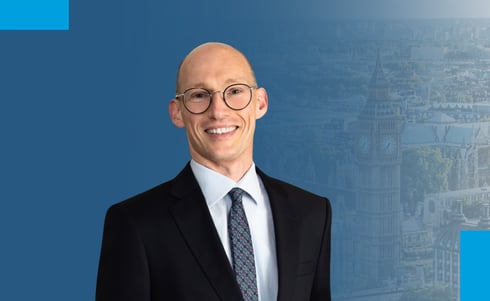
Jay Lindgren structures public-private partnerships and navigates land use entitlements so developers and governments can turn complex urban redevelopment and infrastructure projects into reality.

Jay brings a rare combination of legal depth and firsthand government leadership to every public-private partnership (P3) and urban redevelopment engagement he takes on. Clients — ranging from private developers to public agencies — rely on Jay to bridge the gap between government process and project execution, moving initiatives from concept through entitlement, financing, and construction.

Jay's practice centers on land use and zoning, municipal law, tax increment financing (TIF), and public finance. He structures development agreements, negotiates cooperative agreements between governmental units, and advises on economic development programs including tax abatement and Housing and Redevelopment Authority (HRA) matters. He also counsels clients on government contracting and public procurement, municipal comprehensive planning, and the ethical requirements governing public officials.

Jay is the former Chief Administrative Officer of the Metropolitan Council — the regional agency responsible for community development, land use planning, transit, open space, and wastewater treatment across the seven-county Twin Cities metropolitan area. In that role, he oversaw a $530million annual budget and 3,700 employees. He previously served as the Council's General Counsel and was instrumental in developing the region's first light rail line. Jay also served as an elected member of the North Dakota Legislative Assembly for 10 years, in both the House and the Senate — experience that gives him a practitioner's understanding of how legislation is drafted, debated, and enacted.

Jay began his legal career in public finance, serving as bond counsel, issuer's counsel, and underwriter's counsel in state, municipal, and industrial development bond financings.

Chambers USA has recognized Jay in Real Estate: Zoning/Land Use in Minnesota continuously since 2005.

Jay is a member of the Minneapolis Regional Chamber of Commerce Board and the Minneapolis Downtown Council Board. He is also a Fellow of the American College of Real Estate Lawyers.

Select Experience

  • Serves as General Counsel to the public authority that developed and owns the $1.1 billion U.S. Bank Stadium, home of the Minnesota Vikings, advising on public finance, development agreements, and public-private partnership structuring for one of Minnesota's largest civic infrastructure projects.
  • Served as General Counsel to the public agency that owns and operates Minnesota's first light rail line, advising on governance, operations agreements, and the legal framework for the state's inaugural light rail transit system.
  • Served as counsel to the developer on the redevelopment of a former automotive manufacturing plant in St. Paul, Minnesota into a mixed-use urban village, with nearly $1 billion in total estimated development costs.
  • Served as redevelopment counsel to the City of Edina, Minnesota on multiple mixed-use urban redevelopment projects.

Education

  • University of North Dakota School of Law (J.D., 1994)
    • With Distinction
  • Concordia College (B.A., 1984)
    • cum laude

Court Admissions

  • U.S. District Court for the District of Minnesota

Professional Affiliations

  • Board Member, Minneapolis Regional Chamber of Commerce
  • Board Member, Minneapolis Downtown Council
  • Co-chair of the Transportation and Infrastructure Initiative sponsored by ULI-Minnesota and the Regional Council of Mayors
  • Member, National Conference of State Legislatures, Project on Public-Private Partnerships for Transportation
  • National Association of Bond Lawyers
  • The Minnesota Bar Association
  • The Hennepin County Bar Association
  • The North Dakota Bar Association
  • Chair, The Urban Land Institute's Infrastructure Advisory Group (2011-2013)
  • Lambda Alpha International (an honorary land economics society)

Bar Admissions

  • Minnesota
  • North Dakota

Accolades

  • Chambers USA, Real Estate: Zoning/Land Use, Minnesota, 2005-2026
  • Best Lawyers in America®, Land Use and Zoning Law, Public Finance Law, Minneapolis, 2006-2027
  • Minnesota Monthly, “Top Lawyers in Minnesota,” 2024, 2026
  • MSBA, North Star Lawyer, 2012, 2017-2020, 2023-2025
  • Dorsey & Whitney – Scales of Justice Team Award (Rebuilding Our Community Webinar Series), 2021
  • Best Lawyers® Lawyer of the Year, Land Use and Zoning Law, Public Finance Law, Minneapolis, 2015
  • Fellow, American College of Real Estate Lawyers
  • Consistently providing pro bono legal assistance to those in need through Dorsey’s Pro Bono program

Select Presentations

  • Jay has been a frequent speaker throughout the Twin Cities area and nationally on topics including tax increment financing, public-private partnerships, land use law and planning, "Smart Growth" initiatives, transportation policy, and regional governance.
  • Speaker, "Crash Course on Planned Unit Developments", The 2022 Real Estate Institute (October 27, 2022)
  • Speaker, Takings Conference 2017: The 20th Annual Conference on Litigating Taking Challenges to Land Use and Environmental Regulations (October 6, 2017)
  • Panelist, Public-Private Partnership Summit, Roseville, Minnesota (May 24, 2017)  
  • Speaker, Using Public Private Partnerships (P3s) for Facilities and Infrastructure Development, Dorsey & Whitney's Annual Des Moines Symposium (October 27, 2016)
  • Speaker, “Leveraging Public Investment: Economic Impact of U.S. Bank Stadium on Downtown East Redevelopment,” Construction Law Section of Minnesota Bar’s Symposium (June 22, 2016)
  • Speaker, P3 Hub Midwest Conference (June 1-2, 2016)
  • Speaker, Public-Private Partnership Conference (P3C) & Expo (March 7-9, 2016)
  • Speaker, “Buy & Large: Tour of the Vikings Preview Center,” What’s Trending in Public Finance, Ehlers Minnesota Public Finance Seminar (February 4, 2016)
  • “The Art of Negotiation,” Minnesota Chapter of American Planning Association (October 2014)
  •  Speaker, “Urban Redevelopment – The Big Picture,” MSBA Construction Law Symposium (June 13, 2014)
  • "Using Tax Increment in Affordable Housing Projects," Minnesota Affordable Housing Conference (May 2014)
  • Panelist, Financing, Developing & Constructing Public Infrastructure in the Bakken (April 16, 2014)
  • "Financing Your Project: Infrastructure Development Tools and Innovation," Financing, Developing & Constructing Public Infrastructure in the Bakken, Bismarck, North Dakota (April 2014)
  • Speaker, “The Art of Negotiation– How to Get Your Stubborn Cow in the Corral For Showtime,” Ehlers Minnesota Public Finance Seminar (February 7, 2014)
  • Panelist, “Regional Governance: The Big Picture,” League of Minnesota Cities/Metro Cities (November 2013)
  • "Building Minnesota through PPPs: The New Vikings/Multi-Purpose Stadium and Rochester’s Destination Medical Center Initiative," Dorsey & Whitney's Corporate Counsel Symposium (October 2013)
  • “Land Use 101: Entitlements,” Urban Land Institute – Minnesota Chapter (October 2013)
  • "Regional Government: Model for the 21st Century?" Sensible Land Use Coalition (May 2013)
  • "Parks: The Foundation of Regional Livability," Lambda Alpha International (January 2012)
  • Panelist, "Navigating the New Normal for Future Development," Urban Land Institute - Minnesota Chapter (January 2012)
  • Panelist, "ULI in Action on Transportation and Infrastructure: A Catalyst for Sustainable and Competitive Regions," Urban Land Institute Fall Meeting & Urban Land Expo, Los Angeles, (October 2011)
  • "Reinvesting in the Region: An Action Plan to Make it Easier to Do Better," Compact Development in the Suburbs: Solving Infrastructure and Financing Challenges, Urban Land Institute (October 2011)
  • Facilitator, "Funding and Financing: Municipal Bonds, Tax Increment Financing, and Value Capture," Compact Development in the Suburbs: Solving Infrastructure and Financing Challenges, Urban Land Institute (October 2011)
  • Panelist, "Public-Private Partnerships," Transportation Research Conference, University of Minnesota Center for Transportation Studies, May 2011.
  • "Regionalism and Encouraging Great Regional Cooperation," National League of Cities (July 2010)
  • "Public-Private Partnerships in High-Speed Rail Development," Webinar (May 2010)
  • "Public-Private Partnerships in Transportation: Determining a Fit for Minnesota?" ULI Minnesota (April 2010)
  • Moderator, "Metropolitan Highway System Investment Study Policymaker Workshop," a joint effort of the Metropolitan Council and the Minnesota Department of Transportation (January 2010)
  • "Managing Risks under the P3 Model: What Needs to Happen to Attract Private Capital?" Construction Super Conference (San Francisco, December 2009)
  • "Creative Alternative Sources of Financing in Today's Market: Government Money, Private Equity, Non-Traditional Sources and Seller Financing," Real Estate Institute (November 2009)
  • "Next Steps for Regionalism: What Fits the Twin Cities Greater Metro Area?" Regional Policy Conference (September 2009)
  • "Connecting People, Jobs & Communities," Regional Business Organization Conference, Saint Paul Area Chamber of Commerce (September 2009)
  • "Regionalism: The Role of the Metropolitan Council," Atlanta Leadership Visit, Atlanta Regional Commission (May 2009)
  • "Getting Local Land Use Approvals," University of St. Thomas Real Estate Leadership Forum (February 2009)
  • "Zoning and Land Use," Real Estate Law Conference (September 2008)
  • "Not Just a Walk in the Park: What You Need to Know About Current Issues Concerning Parkland Dedication and Fees," Real Estate Institute (November 2007)
  • "Taxable and Tax Exempt TIF Revenue Bonds," Ehlers & Associates Public Finance Seminar (February 2007)
  • "Development Agreements: Practical Tips for Greenfields, Brownfields and Greyfields," Minnesota Association of City Attorneys Educational Conference (February 2006)
  • "Understanding Land Use and Other Concepts in Mixed Development," Lorman Education Services Seminar on Urban Development and Redevelopment in Minnesota (August 2005)
  • "TIF Financing Issues," Ehlers & Associates Public Finance Seminar (February 2005)
  • "Mixed Up About Mixed Use? Understanding Land Use and Other Concepts in Mixed Use Development," Real Estate Institute (November 2004)
  • "Alternative Revenue Sources and Financial Planning," Ehlers & Associates Public Finance Seminar (February 2005)
  • "Transportation & the Twin Cities Economy: A Business Community Discussion" (January 2004)
  • "The Good, the Bad and the Ugly: Developing Town Centers and Urban Villages," Minnesota Chapter of American Planning Association (October 2004)
  • "The Role of the Metropolitan Council: Development in the 7 County Region," Real Estate Institute (November 2003)
  • "The Metropolitan Council: Minnesota's Comprehensive, Compelling and Controversial Model for Metropolitan Land Planning," International Municipal Lawyers’ Association Conference (October 2003)
  • "Law and the Policy of Suburban Sprawl," American Constitution Society (October 2003)
  • "Comparing Minnesota & Washington Growth Management Acts," Inter City Leadership Visit (September 2003)
  • "LRT and the Environment," Hennepin County Bar Association, Environmental Law Committee (October 2001)
  • "Growing Smart to Preserve Natural Resources," Metro Environment Breakfast Series (June 2001)
  • "Growing Smarter in the Twin Cities," Minneapolis Kiwanis Club (April 2001)
  • "Building Communities that Work," Women’s Transportation Seminar (January 2001)
  • "Environmentally Responsible Transportation," Humphrey Institute of Public Affairs, University of Minnesota (October 2000)

Insights

Client Alert

Changes to Lobbying Disclosure in Minnesota

December 7, 2023

Effective January 1, 2024, Minnesota’s lobbying and public disclosure law will vastly increase the number of political jurisdictions that trigger disclosure requirements in a manner that will increase the number of persons and entities deemed a “lobbyist” and a “principal.” Lawyers who interact with governmental units at any level in Minnesota—as well as their clients—should be aware of these new requirements. New and Expanded Definitions For decades, Minnesota’s lobbying disclosure requirements have been limited to those attempting to influence: (1) state legislative or administrative action, or (2) an official action of approximately 30 metropolitan governmental units. Beginning in 2024, registration as a lobbyist will be required for any person attempting to influence the “official action of a political subdivision” of any Minnesota “political subdivision” as defined here. Thus, thousands of new entities are covered by the law: all 87 counties, 855 cities, 331 school districts, and 1,780 townships in the State of Minnesota. The Campaign Finance Disclosure Board has a compiled list of 504 local officials under the current law. This list will grow exponentially under the new law. As applied to non-volunteers, the definition of lobbyist will now include an individual paid more than $3,000 from all sources in any year for the purpose of attempting to influence the official action of a political subdivision by communicating or urging others to communicate with public or local officials. Before these amendments, only attempts to influence legislative action, state administrative action, or the official action of a metropolitan governmental unit qualified as lobbying. In addition to expanding the definition to include all political subdivisions, the legislature also added a definition of what constitutes an “official action of a political subdivision.” It now comprises any action that requires a vote or approval by one or more elected local officials in their official capacity or an action by an appointed or employed local official to make, recommend, or vote on major decisions regarding the expenditure or investment of public money as a member of the governing body. Given the breadth of the new law, many more routine interactions with local governments across Minnesota will trigger lobbying registration and disclosure requirements for many more lawyers and their clients. Who and What is Covered? The definition of official action of a political subdivision includes two parts—one relating to elected officials, the other relating to appointed or employed local officials. The portion of the definition relating to elected officials extends what constitutes lobbying to attempting to influence any action involving a vote or approval by an elected local official. Based on this definition, any agenda item requiring a vote by a local elected board, whether township, city, county, or school board, will require lobbyist and principal registration. Examples of types of activities that may be covered include: Appealing a planning commission’s denial of a conditional use permit or variance to the city council or town board of supervisors, Advocating for subdivision approval before the city council, Requesting that the city council approve a property transfer, Applying for a liquor license from a city council, Seeking a tax abatement, Applying to the city council for a change in the zoning code or comprehensive plan, and Seeking approval of a development agreement or tax-increment financing district from the city council. The second portion of the definition relating to appointed or employed local official is narrower. This portion of the definition of official action would appear to apply to any advocacy to county, city, and other political subdivisions in connection with grants or contracts that involve major expenditures of public money. For instance, applying for an economic development brownfields redevelopment grant from a city or the sale of property to a political subdivision. It is unclear, however, what constitutes a “major decision regarding an expenditure or investment.” The Campaign Finance Disclosure Board is in the middle of a rulemaking process that may clarify the law. Principal Reporting If an attorney, agent, or employee acts on behalf of an entity to trigger individual lobbying disclosure requirements, it will usually also trigger reporting requirements by the client or “principal.” The lobbyist’s client or employer is a “principal” if they spend more than $500 to engage a lobbyist. For these clients, starting in March 2025 for calendar year 2024 and annually thereafter, clients must file a principal report, rounded to the nearest $9,000, detailing their expenses for lobbying as they separately relate to: (1) legislative action, (2) administrative action, (3) rate setting, power plant, and powerline siting action, and (4) official action of a political subdivision. Developers and other clients who routinely interact with local governments may need to report as principals without being aware of this obligation. Conclusion Lawyers’ advocacy on behalf of clients to influence local government decisions may subject the lawyer and the lawyer’s client to lobbying-reporting obligations. Stakeholders are actively engaged in efforts to clarify the law through administrative or other action.

Client Alert

Uncertainty Looms: Minneapolis' 2040 Plan Hits (Another) Judicial Roadblock

October 11, 2023

The month of September was a bad month for the City of Minneapolis’ 2040 Comprehensive Plan (2040 Comp Plan). On September 5, 2023, Minnesota’s Fourth Judicial District (Hennepin County) released a decision temporarily enjoining the City “from any ongoing implementation of the residential development portions of the City’s 2040 comprehensive plan.” The district court ordered the City to “immediately cease all present action in furtherance of the 2040 Plan” pending completion of environmental review. The Court further ordered that, if the City does not complete an environmental impact statement or an alternative urban areawide review by November 4, 2023, the City must restore the status quo “between the parties [the City and the nonprofits that sued the City over the 2040 Plan] as it existed on December 4, 2018 by reinstating for its prospective enforcement both the residential development portions of the City’s Comprehensive 2030 Plan, and the pre-December 4, 2018 land use ordinances” regarding those same residential development areas. Based on the district court’s rationale for its order, the “residential development portions” of the 2040 Comp Plan appear to refer to zoning districts that, prior to the 2040 Plan, were designated to allow only single-family residential use. The 2040 Comp Plan lifted the single-family residential limitation for these zoning districts. That said, the district court’s order uses broad language, applying to “the residential development portions of the City’s 2040 comprehensive plan.” This language could be read more broadly to include all residential zoning districts in Minneapolis. The City filed a notice of appeal of the court’s order on September 15, 2023, and moved the district court to stay the injunction pending the City’s appeal. The district court heard arguments for the motion for the stay on September 19, 2023. The district court has not yet ruled on the motion. Notably, in the September 5 order, the district court, in the City’s words, “forecasted its intent to deny the City’s motion for a stay, having explicitly ordered that the amended injunction is ‘not stayed and shall be effective immediately.’” Therefore, a stay from the district court appears unlikely. Although, the City can appeal any denial of the stay motion to the Court of Appeals. In a declaration submitted to the district court in support of the stay motion, the Director of Community Planning and Economic Development stated that the City has “been inundated with questions and concerns from residents and developers of both market-rate and affordable housing regarding the uncertainty caused by the amended injunction ordered by the Court. The Director stated that “[i]mplementation of the amended injunction . . . will require, at a minimum, . . . [r]eviewing plans and ordinances to identify and re-introduce those ordinances implemented during the timeframe of the 2040 Plan and discern which provisions are simultaneously supported by the 2030 Plan from those 2030 Plan provisions that the City is being ordered to resume under the Amended Order.” She further noted, “There are currently 73 units of market rate and 55 units of affordable rental and ownership housing in the development pipeline that will not be approved under the amended injunction” She continued that there are “another 498 units of market rate and 69 units of affordable housing which have received land use approvals but will likely not be able to receive building permits before the November 4, 2023, deadline in the Amended Order.” Generally speaking, while there is little clarity as to how the City will comply with the district court’s order, there are a few things that can be expected. First, the City most likely will not issue new building permits or land-use approvals (e.g., conditional use permits and variances) for non-single-family, residential structures on land that, under the 2030 Plan, was only to be used for single-family, residential purposes, even if the 2040 Plan would allow that development. Second, the City may be forced to amend the City’s zoning code to undo previous amendments made to formerly single-family, residential districts if the previous amendments had permitted more intense development. There is an open question as to what happens to a developer that has been granted a building permit or land-use approval for non-single-family, residential structures on land that historically could only be used for single-family, residential purposes and may be in the midst of construction or already has already completed construction. And, of course, the district court or, more likely, the Court of Appeals could stay the order pending the City’s appeal. If the stay is granted, the City would not have to comply with the district court’s order during the pendency of the appeal. The only certainty is that uncertainty regarding the 2040 Comp Plan will continue for many months, if not years.

Firm Highlights

Insights

Observations on the SEC’s 2027 Examination Priorities

The SEC’s Division of Examinations (the “Division”) recently announced its examination priorities (“Exam Priorities”) for fiscal year 2027.1 Although many of the Division’s core areas of focus remain consistent with fiscal year 2026, the 2027 Exam Priorities include notable changes and refinements, which we discuss below, along with other key 2027 examination priorities. Dorsey Observations Renewed focus on economic conflicts of interest. After certain economic-incentive topics received less emphasis in the 2026 Exam Priorities2, the Division has again expressly identified economic conflicts as an examination focus. The 2027 Exam Priorities indicate that the Division will prioritize reviewing advisers’ fiduciary obligations relating to economic conflicts of interest raised by fee rebates, fee and expense calculations, cash management, quid pro quo arrangements, and deposits and withdrawals. Greater emphasis on private-fund practices. Building on the private-fund items in the 2026 Exam Priorities, the 2027 Exam Priorities indicate that the Division will assess private-fund disclosures and controls relating to investment allocations, leverage, affiliated service providers, and fees and expenses. The Division also identified investments in private companies through special purpose vehicles (“SPVs”) and loans provided by private funds and business development companies (“BDCs”) as products the Division will scrutinize. Advisers, particularly private-fund advisers, should evaluate whether their disclosures and compliance programs address these areas. Expanded focus on AI-related cybersecurity risks. While the 2026 Exam Priorities focused on advisers’ use of and representations regarding artificial intelligence (“AI”), the 2027 Exam Priorities specifically highlight AI-enabled cybersecurity threats, including AI-generated phishing and synthetic or “deepfake” voice and video used for social engineering. The shift signals that registrants should consider whether their cybersecurity policies and controls adequately address these evolving threats. New focus on proxy advisory firms. The 2027 Exam Priorities state that the Division will examine advisers that rely on proxy advisory firms, including how those advisers evaluate the firms’ recommendations, assess the bases for those recommendations, identify potential conflicts of interest, and determine whether that reliance satisfies applicable legal obligations. Advisers that rely on proxy advisory firms may wish to consider whether their compliance programs address these areas. Updated focus on Regulation S-P and Regulation S-ID. The 2026 Exam Priorities stated that the Division would engage firms during examinations regarding their progress in preparing incident response programs ahead of the compliance dates for the amendments to Regulation S-P and would examine compliance with the amended rule after those dates. The 2027 Exam Priorities indicate that examinations will focus on whether firms have developed, implemented, and maintained reasonably designed policies and procedures addressing administrative, technical, and physical safeguards to protect customer information and that, in accordance with the amended rule, staff will evaluate response program policies and procedures for unauthorized access to or use of customer information, including customer notification procedures and oversight of service providers. With respect to Regulation S-ID, the 2027 Exam Priorities indicate that examiners will assess whether firms are updating their Identity Theft Prevention Program to address emerging risks, such as those related to AI and stolen credentials. Advisers may wish to consider whether their compliance programs address these areas, as applicable. Summary of Other 2027 Examination Priorities Beyond the developments discussed above, many of the Division’s core examination priorities remain consistent with fiscal year 2026. These include investment adviser fiduciary obligations and compliance programs, examinations of never-examined and recently registered advisers, and cybersecurity and operational resiliency. The Exam Priorities are not exhaustive, and examinations will vary based on each registrant’s business, activities and risks. Advisers should consider the 2027 Exam Priorities in reviewing their compliance programs and preparing for potential examinations, including by: Reviewing risk disclosures and controls. The Division states that, when examining advisers to private funds, it will assess whether investment-related risk disclosures are consistent with fiduciary standards and whether compliance policies, procedures, and controls are designed to address both fund-level and investment-level risks. Reviewing disclosures on allocations, leverage, and affiliated service providers. The 2027 Exam Priorities identify disclosures related to certain investments and allocations, the use of debt and fund-level lines of credit, and the use of affiliated service providers as examples. Confirming the accuracy of fee and expense calculations. The Division states that it will assess the accuracy of fee and expense calculations at both the fund and investment levels, and it identifies fee rebates, cash management, quid pro quo arrangements, deposits, and withdrawals as areas in which economic conflicts of interest may affect the impartiality of advice. Reviewing recommendations of illiquid or hard-to-trade products. The Division states that it will prioritize advisers that recommend products that are difficult to trade, have unusual features, or are illiquid, including loans provided by private funds or BDCs and investments in private companies through SPVs. Confirming that the compliance program is implemented and reviewed. The Division states that it will review compliance program components such as marketing, valuation, and custody, as appropriate, and will typically analyze the annual compliance review. It will also focus on compliance practices when advisers have started advising new asset classes or clients or grown through mergers or acquisitions. 1 SEC Division of Examinations 2027 Examination Priorities. 2 See Dorsey’s Client Alert on the SEC’s fiscal year 2026 exam priorities.

News

Dorsey & Whitney Advises Beijing Xunzhong on Two Consecutive H Share Placings Raising HK$418.5 Million

International law firm Dorsey & Whitney LLP acted as Hong Kong legal advisors to Beijing Xunzhong Communication Technology Co., Ltd. (“Xunzhong”) as to Hong Kong law in connection with two consecutive placings of new H shares under general mandate (the “First Placing” and the “Second Placing”, respectively, and together, the “Placings”). Xunzhong’s H shares are listed on the Main Board of the Hong Kong Stock Exchange (Stock Code: 2597). Winbull Securities International (Hong Kong) Limited acted as sole overall coordinator and placing agent on both Placings. The First Placing of 11,190,000 new H shares at HK$28.20 each was completed on September 17, 2026, followed by the Second Placing of 3,550,000 new H shares at HK$29.00 each on October 30, 2026. The Placings raised approximately HK$315.56 million and HK$102.95 million in gross proceeds, respectively, or approximately HK$418.51 million in aggregate (approximately HK$415.96 million in aggregate net proceeds). Both Placings were conducted under the same general mandate granted by shareholders at Xunzhong’s 2025 annual general meeting, and each was completed within one week of the signing of its placing agreement. Completing placings in consecutive months is relatively uncommon in the Hong Kong market, and doing so called on the technical depth of Dorsey’s Hong Kong Capital Markets team. Working closely with Xunzhong to understand its business needs and prepare the transaction documents, the team addressed in quick succession the remaining capacity under the general mandate, disclosure of the use of proceeds and the maintenance of Xunzhong’s public float, enabling both Placings to be completed seamlessly. “We are pleased to have advised Xunzhong on both Placings,” said Rachel Han, Partner and Co-Head of Dorsey’s Asia Capital Markets practice. “We appreciate the trust placed in our team and the close collaboration among all parties involved. We look forward to supporting Xunzhong as it continues to execute its growth strategy and pursue future capital markets opportunities.” Xunzhong is principally engaged in cloud-based communications services and enterprise digitalization services in the PRC. As disclosed in its announcements, the net proceeds of the First Placing are allocated to developing Xunzhong’s new computing power operation services business, while those of the Second Placing will be used to integrate model-as-a-service (MaaS) and AI agent capabilities into its existing cloud communications platform-as-a-service (PaaS) platform and software-as-a-service (SaaS) products. Approximately 55% of the net proceeds of the Second Placing will be used for computing power equipment upgrades for the MaaS system, approximately 35% for MaaS, PaaS and SaaS platform upgrades, and approximately 10% for working capital and general corporate purposes. With a single MaaS platform and shared computing power supporting its PaaS and SaaS offerings, Xunzhong intends for its MaaS, PaaS and SaaS capabilities to complement and reinforce one another, and to address customer needs from multiple angles, from embedding AI in customer communications and business workflows to maintaining stable performance at scale and keeping customer data within controlled environments. Partner and Co-Head of Dorsey’s Asia Capital Markets practice Rachel Han and Of Counsel in the Capital Markets and Corporate Compliance group Carlton Ng, along with Associate Kristy Ting, led the Dorsey Hong Kong Capital Markets & Corporate Compliance group in advising Xunzhong on both Placings.

Insights

Minnesota Consumer-Fraud Enforcement: Disclaimers Won’t Cure Deception, and Penalties Can Add Up

Misleading advertising claims can lead to costly consequences. In State of Minnesota ex rel. Ellison v. Wall & Associates, Inc., No. A25-2064, 2026 WL 3118291 (Minn. App. Oct. 19, 2026), the Minnesota Court of Appeals recently affirmed a bench trial verdict against a tax-relief company and two executives for violations of the Minnesota Consumer Fraud Act (“MCFA”) and the Minnesota Deceptive Trade Practices Act (“MDTPA”). The decision, which affirmed a substantial restitution and civil penalty judgment, underscores the broad power of the Minnesota Attorney General to act against deceptive sales practices. The decision also offers practical lessons for businesses seeking to reduce liability risks in consumer-facing communications. Background Wall & Associates (“W&A”), a Virginia-based tax-relief company, marketed assistance to taxpayers seeking relief from outstanding federal and state tax liabilities, often with offers in compromise—agreements to settle tax liabilities for less than the amount owed. In its extensive advertising campaigns, W&A represented that its average client received a 90% reduction in their tax debt, that it was a local company with Minnesota offices, that it provided legal services, and that it would “Solve ALL Tax Problems.” In reality, W&A’s promises bore little resemblance to what many clients received. Most of W&A’s clients saw just a 9.5% reduction in federal tax debt and 1.2% in state tax debt. W&A had no permanent Minnesota offices. And W&A provided neither legal representation nor assistance with filing tax returns—those services required referrals to separate firms for an additional fee. All the while, W&A clients paid upfront and recurring fees, including during periods when W&A did no work on their cases. Minnesota Attorney General Keith Ellison sued W&A, its founder and owner Ernest Kenneth Wall, and its president and CEO Patrick Mark Yates, alleging violations of, among other laws, the MCFA and the MDTPA. Following a 12-day bench trial, the district court determined that W&A violated the MCFA and MDTPA through its false and embellished advertising. The district court also held Wall and Yates individually liable for those violations because they directed, participated in, and acquiesced in the violations. The district court ordered injunctive relief, $2.7 million in restitution (with Wall and Yates jointly and severally liable for $1.3 million), and civil penalties of $786,517 against W&A, $415,500 against Wall, and $207,750 against Yates. The district court also awarded over $2.5 million in attorneys’ fees and costs to the state. W&A, Wall, and Yates appealed to the Minnesota Court of Appeals, which affirmed the district court’s decision on October 19, 2026. Although W&A, Wall, and Yates challenged the judgment on numerous grounds, several highlights of the decision provide important takeaways for consumer-facing businesses. Individual Reliance Is Not Required for Statutory Liability W&A argued that Attorney General Ellison had to prove a causal nexus between each violation of the MCFA and MDTPA and the injury to a particular consumer to establish liability. In W&A’s view, this required proof that each injured consumer had personally relied on W&A’s false representation. The Court of Appeals rejected this argument based on the MCFA’s and MDTPA’s plain language, which requires no proof of actual deception or confusion by consumers. The Court of Appeals finally pointed to the Minnesota Supreme Court’s decision in State v. Minnesota School of Business, Inc., which held that when a defendant’s misrepresentations are directed at and affected “a broad group of consumers, proof of direct individual reliance is not required to establish a causal nexus between MCFA violations and the harm suffered by consumers.” 935 N.W.2d 124, 135 (Minn. 2019). The Court of Appeals affirmed, however, that a causal nexus is necessary to support an award of damages under the MCFA and MDTPA. In making that determination, district courts look to various factors, including whether the misrepresentations were “longstanding, pervasive, and widespread in communications directed to consumers,” whether the seller intended and understood that consumers would rely on the misrepresentations, and whether the information was of a kind on which consumers would typically rely. The Court of Appeals’ decision continues Minnesota School of Business’s broad interpretation of liability under the MCFA and the MDTPA. Coordinated marketing campaigns to a “broad group of consumers” may expose businesses to MCFA and MDTPA liability without customer-by-customer proof of injury. That said, a causal nexus remains an element of an MCFA and MDTPA claim, and businesses involved in litigation should build a clear record at trial and on appeal showing how each of the relevant factors bears on the causal-nexus inquiry. Contractual Disclaimers Are Not an Automatic Defense to a Misleading Pitch W&A next argued that disclaimers in its client contracts prevented consumers from claiming they had been misled by its advertising. Reiterating that individual reliance is not required under the MCFA and MDTPA, the Court of Appeals held that a contractual disclaimer does not necessarily defeat a claim based on a conflicting oral representation. And on the facts of this case, the Court of Appeals agreed with the district court that W&A’s contractual disclaimers were insufficient given the extensive misrepresentations by W&A and the unequal bargaining power between it and its customers. This holding confirms that contractual disclaimers are not a cure-all for misleading advertising or sales practices. Businesses should review the entire customer journey, including pre-contract representations, as those representations may survive a contractual disclaimer to the contrary. And if faced with litigation, businesses should build a strong record, both at trial and on appeal, showing why any disclaimer is effective in context. The State Has Broad Authority to Seek Restitution W&A also challenged Attorney General Ellison’s authority to seek restitution under the state’s parens patriae authority to protect residents’ collective interests, arguing that injury to only 228 Minnesotans did not affect a sufficiently substantial segment of the population. The Court of Appeals rejected a simple headcount approach, instead explaining that the state had a legitimate interest in protecting residents’ economic well-being as a whole. In any event, the Court of Appeals held that if restitution was not appropriate under the state’s parens patriae authority, then it would still be appropriate under the Attorney General’s enforcement powers under Minn. Stat. § 8.31. The decision reinforces that the broader and more sustained the deceptive advertising, the stronger the case for restitution to protect Minnesotans’ economic interests. Civil Penalties Accrue Per Violation, Not Per Defendant The Court of Appeals finally rejected W&A’s claim that the Attorney General’s enforcement powers under Minn. Stat. § 8.31 permit only civil penalties of up to $25,000 for each defendant. Rather, the Court of Appeals explained that penalties are limited to $25,000 per violation. Multiple violations can therefore produce substantially greater penalties. The Court of Appeals also rejected the argument that restitution made penalties unnecessary: repaying consumers does not eliminate the need to address gains from deceptive conduct and deter future violations. Final Takeaways Align every consumer-facing communication. Broad and extensive marketing campaigns can expose businesses to stronger enforcement standards under the MCFA and MDTPA, making it critical that consumer communications remain accurate and consistent from the first advertisement through the final sale. Plan for layered enforcement exposure. Penalties under the MCFA and MDTPA can add up quickly: W&A, Wall, and Yates ultimately faced more than $6 million in civil penalties, restitution, and attorneys’ fees. The decision continues a line of Minnesota cases recognizing the Attorney General’s broad consumer-protection authority. Details matter. Although the Attorney General’s enforcement power is broad, it is not boundless. As the Court of Appeals explained, issues of causation, the effectiveness of contractual disclaimers, and the availability of restitution and civil penalties all turn on the specific facts of the case. Effective advocacy at trial and on appeal is critical to developing the facts relevant to liability and damages.

Event/Resource

Corporate Counsel Symposium 2026 Materials Hub

Materials Symposium Agenda Sessions 8:30 am - 9:30 am CT Session A: The Corporate Compass: Finding True North When Ethical Duties Conflict Philip Kaplan, Senior Legal Counsel, Howden Re Lucia Suljic, Vice President, Corporate Legal, Canon USA Nicole Stanton, Partner & Deputy General Counsel, Dorsey & Whitney LLP This panel addresses ethical obligations of in-house counsel, including balancing obligations and duties that may conflict with each other. How should a responsible in-house lawyer deal with those challenging situations? Rather than stick to an academic discussion, this panel will revolve around a series of practical scenarios that are designed to be realistic and timely, including situations where counsel is asked to represent both the company and an individual, how and when to disclose uncomfortable facts and inconvenient documents, issues involving changing firms and companies, and multijurisdictional practice. The panel will feature discussion from two experienced in-house lawyers and Dorsey’s Deputy General Counsel. Session B: Managing Rapid Regulatory Change in International Trade and Cross-Border Investment Nathan Brower, Executive Vice President, General Counsel, Nature’s Sunshine Greg Ogunsanya, Senior Vice President, General Counsel and Corporate Secretary, H.B. Fuller Kathryn Wood, Senior Vice President & General Counsel, DecoPac, Inc. Dave Townsend and Lawrence Ward, Dorsey & Whitney LLP This program is designed for attorneys advising on cross-border transactions, international trade, regulatory compliance, and corporate governance matters. Panelists will examine recent developments in U.S. trade and investment law and policy, as well as their impact on international collaborations, corporate compliance, and mergers and acquisitions. The discussion will explore how general counsel and in-house legal teams assess and manage evolving trade-related risks within their organizations. Particular focus will be given to developments during the first two years of the second Trump Administration, including changes in tariff policy, tariff refunds, export controls, economic sanctions, and national security reviews of foreign investment. Through a discussion of regulatory trends and practical case studies, attendees will gain a deeper understanding of the legal risks and compliance obligations associated with cross-border business activities, and hear about practical strategies for advising clients and managing compliance obligations in a rapidly changing trade and investment environment. 9:45 am - 10:45 am CT Session A: The Elon Musk Cases: What Tesla and Twitter Can Teach Your Board of Directors Loren Unterseher, Managing Partner, Oxbow Industries, LLC Shulamite White, Chief Legal Officer and Head of People, Motive Technologies Kirsten Schubert, Tom Swigert, and Jonathan Van Horn, Dorsey & Whitney LLP Recent cases involving Elon Musk and his businesses have had significant impact on principles governing board of directors’ fiduciary duties and corporate processes. This panel will examine recent litigation involving Elon Musk, Tesla, and Twitter, and its effects on the law governing the duties of directors and executives, including the executive compensation and director compensation processes, conflicts that may arise when a single executive has control over multiple businesses, and the ramifications of tweets or other public statements by an executive. Session B: All Eyes on DEI: Managing Diversity Efforts Amid Regulatory Scrutiny and Potential Litigation Maggie Dalton, Senior Commercial Attorney, Cargill; Board Co-Chair, Twin Cities Diversity in Practice Laura A. Vannelli, Legal Counsel, Mayo Clinic Susan Lorenc and Jack Sullivan, Dorsey & Whitney LLP The legal and regulatory landscape surrounding diversity, equity, and inclusion (DEI) initiatives has changed dramatically over the past two years. Law firms and legal departments are continuing to grapple with how to recruit, retain, and develop talent from a wide range of personal backgrounds, in a world where previously accepted recruiting and employment practices are facing increased scrutiny and litigation. This program will provide a practical overview of the current legal regime, including recent federal enforcement actions and litigation trends associated with DEI initiatives. Panelists will discuss practical ways in which organizations can pursue and retain legal talent and increase inclusion while minimizing legal, business, and reputational risk. 11:00 am - 12:00 pm CT Session A: Governance in an Age of Increasing Unpredictability James Chosy, Senior Executive Vice President and General Counsel, U.S. Bancorp Todd Hartman, Executive Vice President and Chief Legal and Risk Officer, Best Buy Co., Inc. Alan Rosselot, Associate General Counsel & Assistant Secretary, Delta Air Lines, Inc. Cam Hoang and Robert Rosenbaum, Dorsey & Whitney LLP More than ever, ensuring that boards are well-informed and forward-thinking is critical to a company’s success. Join our panel of corporate governance experts as they share their experiences advising boards through crisis and unpredictable events; capitalizing on, but also checking, disruptive technologies; and positioning the company to succeed in an environment of shifting government priorities. Session B: A Day in the Life of a Trademark, Copyright & Advertising Attorney: A Hypothetical Case Study Alexander Kim, Vice President and General Counsel, Binks Nate Whitaker, Chief Legal Officer and General Counsel, Crumbl Cathy Dahl and Tiffany Shimada, Dorsey & Whitney LLP What issues are companies facing daily while developing rights in intellectual property, protecting those rights, and staying in compliance with myriad potential issues related to advertising, social media, relationships with influencers, and environmental or governmental claims? This panel will feature two in-house counsel who are navigating these issues, utilizing a hypothetical case study, with the support of two Dorsey attorneys helping to develop a roadmap for meeting business objectives and minimizing the risk of claims. 12:00 pm - 1:15 pm CT Keynote Address Dr. Rebecca Heiss, Stress Physiologist Dr. Rebecca Heiss is a stress physiologist, author, and sought-after speaker who helps audiences transform fear and stress into fuel for greater performance and resilience. Her research has been recognized as “transformative” by the National Science Foundation, and she is the author of two books, Springboard and Instinct. Through her Fear(less) message, Rebecca inspires audiences with practical, science-based strategies to train our brains to work for us – not against us – and navigate change and uncertainty with greater confidence.