

Blog Post
Supreme Court’s Warhol Decision Transforms Law of Fair Use by Emphasizing Importance of the “Purpose” of the Works at Issue
May 18, 2023 – The TMCA
by Bruce R. Ewing
Download as a PDF
The Supreme Court’s decision in Andy Warhol Foundation for the Visual Arts, Inc. v. Goldsmith issued earlier today is chock full of references to famous artists, famous works of art, famous musicians and famous celebrities dating back centuries. Given Andy Warhol’s focus on the famous during his prolific career, he’d have to be pleased to see his name and works mentioned with such celebrated company, and in a Supreme Court decision no less.
But stripped of its many pop culture and artistic references, the Warhol Foundation decision is the most important fair use decision in the past two decades, with ramifications that will reverberate far longer than the fifteen minutes Warhol envisioned.
To recap the basic facts, the core question in the case is whether the use of a copyrighted photograph taken of the artist Prince by the photographer Lynn Goldsmith, subsequently modified by the artist Andy Warhol to create what was referred to as the “Orange Prince,” qualifies as a fair use under Section 107 of the U.S. Copyright Act. Goldsmith had licensed her 1981 photo of Prince, below left, to Vanity Fair magazine, published by Conde Nast, with the understanding that it would be modified by an artist, who turned out to be Andy Warhol. Warhol’s version of the work, below right, was published in 1984.
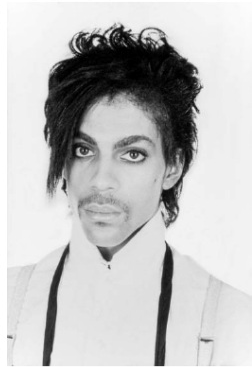
Goldsmith
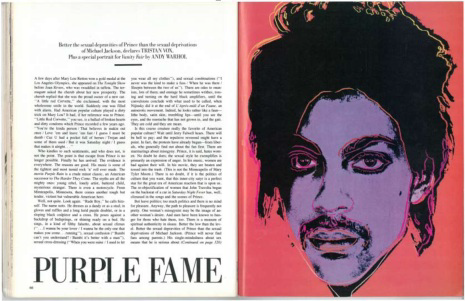
Warhol
Unbeknownst to Goldsmith, Warhol created a series of works based on her photo called the “Prince Series,” most of which were sold to collectors, with four now held by the Andy Warhol Museum in Pittsburgh. In 2016, Conde Nast licensed from the Warhol Foundation another work from the Prince Series – called the “Orange Prince” – that appears below.
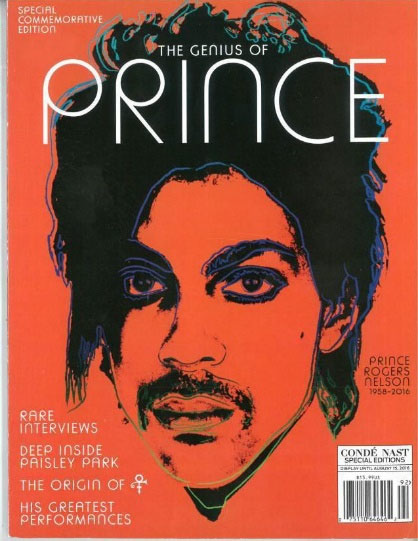
The “Orange Prince” was used by Conde Nast on the cover of a commemorative magazine published after Prince’s death. The Warhol Foundation received $10,000 as a licensing fee for this use of the “Orange Prince,” but Goldsmith received neither compensation nor credit for this use of her work.
When Goldsmith asserted that the unauthorized 2016 use of her copyrighted photo was infringing, the Warhol Foundation sued her in New York for a declaratory judgment, asserting that the use of her photo in the “Orange Prince” qualified as a fair use. The district court granted summary judgment to the Foundation on its fair use defense, holding that all four factors set forth in 17 U.S.C. § 107 bearing on the issue of fair use favored the Foundation, in that the Prince Series was: (1) “transformative” because, while Goldsmith’s photo portrayed Prince as “not a comfortable person” and a “vulnerable human being,” the Prince Series portrayed Prince as an “iconic, larger-than-life figure”; (2) although Goldsmith’s photo was both creative and unpublished, which would traditionally weigh in Goldsmith’s favor, this was “of limited importance because the Prince Series works are transformative works”; (3) in creating the Prince Series, Warhol removed nearly all of the Goldsmith photo’s protectable elements; and (4) the Prince Series was not a market substitute that harmed or had the potential to harm Goldsmith.
On appeal, the U.S. Court of Appeals for the Second Circuit reversed – twice – holding that the Prince Series was neither transformative nor a fair use as a matter of law, and also concluding that the Goldsmith photo and Prince Series were substantially similar as a matter of law. Even after the Supreme Court’s decision in Google LLC v. Oracle America, Inc., 141 S. Ct. 1183 (2021), reaffirmed the principle that a new work is transformative if it “adds something new . . . [by] altering the copyrighted work ‘with new expression, meaning or message’” (quoting Campbell v. Acuff-Rose Music, Inc., 510 U.S. 569, 579 (1994)), the Second Circuit stuck to its guns and held that the Prince Series of works were not transformative. Subsequently, the Supreme Court agreed to hear the Warhol Foundation’s appeal, but in today’s 7-2 decision authored by Justice Sotomayor, it agreed almost entirely with the Second Circuit’s holding.
Today’s decision in Warhol Foundation is both narrow and broad at the same time. The decision is narrow in that it addresses only: (i) the licensing to Conde Nast of the “Orange Prince” in 2016 and subsequent publication of that work in a commemorative magazine; and (ii) whether the first statutory fair use factor – the purpose and character of the use – favors the Warhol Foundation. The Court expressed “no opinion as to the creation, display, or sale of any of the original Prince Series works,” and did not consider any other statutory fair use factor except to note how they can relate to the analysis of the first. Indeed, the concurrence from Justices Jackson and Gorsuch noted that all other issues, including whether the “Orange Prince” as licensed by the Warhol Foundation to Conde Nast actually infringes the Goldsmith photo, remain to be addressed during further proceedings.
That said, the Court’s ruling is quite broad in a number of respects. In terms of assessing the first fair use factor (the purpose and character of the use), the question of whether a challenged use is “transformative” is now of secondary importance. Indeed, the entire body of case law that has focused the fair use inquiry on the issue of whether a challenged use is or is not transformative is now of questionable validity. So what is of primary importance now to the assessment of the first fair use factor? Two things: (i) whether and to what extent the challenged use has a purpose that is different from that of the original work; and (ii) whether the challenged use is commercial or non-commercial. To sum up the Court’s holding, in its own words:
In sum, the first fair use factor considers whether the use of a copyrighted work has a further purpose or different character, which is a matter of degree, and the degree of difference must be balanced against the commercial nature of the use. If an original work and a secondary use share the same or highly similar purposes, and the secondary use is of a commercial nature, the first factor is likely to weigh against fair use, absent some other justification for copying.
In this case, the Court held that the purposes of the Goldsmith photo and the “Orange Prince” were substantially the same – to depict the artist Prince. In reaching this conclusion, the Court emphasized the importance of Goldsmith’s extensive licensing of her famous portfolio of works for commercial purposes – not just the same photo of Prince – and the fact that Goldsmith had herself licensed her images of Prince for appearances in commemorative publications issued after his death. Since Conde Nast also published the “Orange Prince” to commemorate Prince’s death, the purposes of Goldsmith’s photo and the “Orange Prince” were substantially the same as far as the Court was concerned. And to the Court, when the purpose of two works is substantially the same, then the prospect that the junior use will substitute for the senior work – characterized as copyright law’s “bête noire” – looms large.
The Court contrasted the use of the “Orange Prince” with Andy Warhol’s use of the famous Campbell’s Soup can logo, shown in the image below.
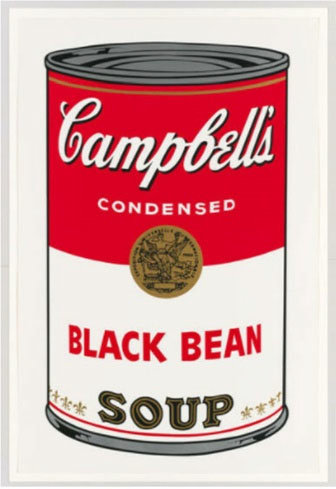
This use of a copyrighted commercial logo had a purpose (commenting on consumerism) different from that of the original work (selling soup), and therefore the first statutory factor would favor a finding of fair use in this instance, according to today’s decision. Likewise, the use of a copyrighted work for purposes like parody, newsgathering, criticism, commentary and education would all likely support a finding of fair use because those purposes would, in most cases, differ from those of the original.
The Court repeatedly emphasized in its decision that “the first fair use factor . . . focuses on whether an allegedly infringing use has a further purpose or different character, which is a matter of degree, and the degree of difference must be weighed against other considerations, like commercialism.” And on the issue of commercialism, Conde Nast’s commercial exploitation of the “Orange Prince” under license from the Warhol Foundation was of great importance to today’s ruling. Indeed, the Court emphasized that a use of the “Orange Prince” for non-commercial purposes might qualify as fair, but that Conde Nast’s use of that work was not fair insofar as the first factor was concerned, in part because the work was used for commercial purposes.
So what about the question of whether a challenged use is transformative? Well, that still matters, but not nearly as much to the fair use analysis as it did before. Under today’s ruling, while the question of whether a later work has transformed a prior work by adding new meaning or message remains relevant, such additions will not by themselves tilt the first factor in favor of fair use, as most cases had held previously. Indeed, under today’s ruling, the first factor will only favor fair use if the newly added material rises to such a sufficiently transformative level that the new work achieves a different purpose than that of the prior work, and therefore does not supersede it. In the Court’s words: “Many secondary works add something new. That alone does not render such uses fair. Rather, the first factor (which is just one factor in a larger analysis) asks ‘whether and to what extent’ the use at issue has a purpose or character different from the original. Campbell, [510 U.S. at 579] (emphasis added). The larger the difference, the more likely the first factor weighs in favor of fair use. The smaller the difference, the less likely.”
Indeed, one major takeaway from today’s decision is the Court’s concern that a focus on whether a challenged use is transformative is both difficult to apply in a consistent manner from case to case, and simultaneously permits copying on a such a large scale that the purposes of copyright are subverted. “[A]n overbroad concept of transformative use, one that includes any further purpose, or any different character, would narrow the copyright owner’s exclusive right to create derivative works. To preserve that right, the degree of transformation required to make ‘transformative’ use of an original must go beyond that required to qualify as a derivative.”
In this regard, the Court’s majority opinion differed sharply from the dissent penned by Justices Kagan and Roberts, which lamented that today’s decision “will stifle creativity of every sort. It will impede new art and music and literature. It will thwart the expression of new ideas and the attainment of new knowledge. It will make our world poorer.” The majority shot back that the dissent was rife with “misstatements and exaggerations, from the dissent’s very first sentence, post, at 1 (“Today, the Court declares that Andy Warhol’s eye-popping silkscreen of Prince . . . is (in copyright lingo) not ‘transformative’”), to its very last, post, at 36 (“[The majority opinion] will make our world poorer”). The majority opinion characterized today’s decision as upholding the purpose of copyright – to protect the rights of creators in their original works – without preventing the uses of such works in circumstances long permitted by law, like when an unauthorized use qualifies as fair.
Whether today’s decision actually achieves the balance the majority sought to strike will be a subject of extensive debate for many years to come. And whether subsequent decisions applying Warhol Foundation are effective in achieving that balance will be equally unclear until sufficient time has passed. But what is clear, now, is that the importance of Warhol Foundation to the fair use analysis in many artistic contexts is undeniable.







