.

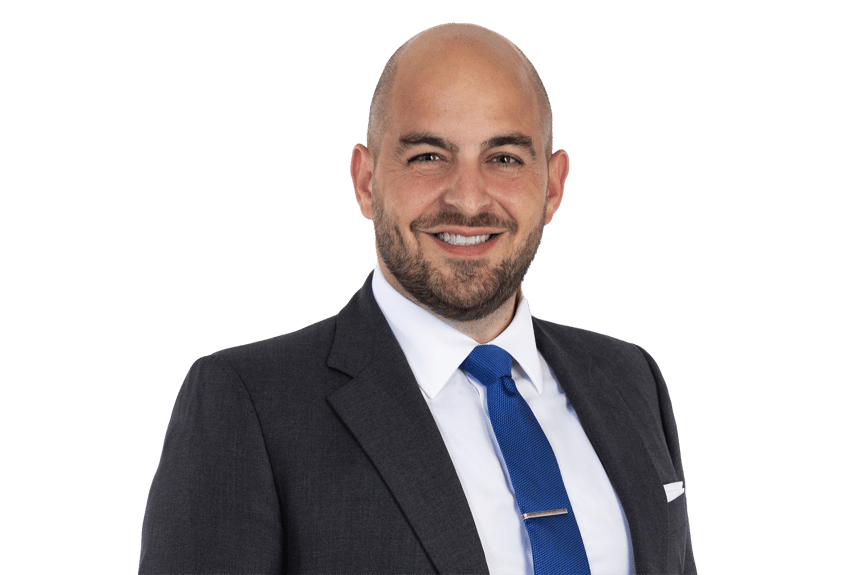
Dave advises clients on mergers and acquisitions of all sizes, from term sheet stage to post-closing integration, ensuring that each client can meet their business goals through comprehensive yet practical guidance. Dave often works with strategic acquisitions, portfolio company add-ons, and auction processes, both international and domestic.

As a partner in Dorsey's New York Corporate Group, Dave also regularly advises clients on corporate governance matters, including forming and optimally structuring business and investment entities. Dave also counsels individuals and entities in matters relating to the acquisition and ownership of corporate and personal aircraft under Part 91.

Dave also advises a wide range of clients on the negotiation and implementation of commercial contracts. He also frequently counsels local entrepreneurs on a broad range of legal issues.

Select Experience

Dave’s recent transactions have included representation of:

  • GVB Biopharma, a leading contract development and manufacturing organization (CDMO) in the cannabis and hemp-derivative space, in its sale to 22nd Century Group, Inc. (Nasdaq: XXII).
  • Eddingpharm, a China-based specialty pharmaceutical company in its acquisition from Eli Lilly of Chinese rights to antibiotics products Ceclor® and Vancocin®, as well as the Ceclor manufacturing facility in Suzhou, China.
  • Andlauer Healthcare Group Inc. (TSX: AND) in connection with its acquisition of T.F. Boyle Transportation, Inc., and its related restructuring.
  • CityMD, a leading urgent care provider and portfolio company of Warburg Pincus, in connection with its acquisition of STAT Health from private equity firm Spanos Barber Jesse & Co.

Education

  • American University (J.D., 2009)
    • cum laude, Administrative Law Review
  • University of Rhode Island (B.A., Political Science, 2006)
    • cum laude

Bar Admissions

  • New York

Professional Affiliations

  • Member of the National Business Aviation Association

Accolades

  • Consistently providing pro bono legal assistance to those in need through Dorsey’s Pro Bono program
  • New York Super Lawyers, “Rising Star,” 2016-2020

Insights

Articles

Dorsey Represents R&F Properties in Sale of 70% Stake in the Integrated Logistics Park near Guangzhou Airport 德汇代表广州富力地产股份有限公司出售价值约10亿美元的广州国际机场富力综合物流园70%权益

February 2, 2021

Dorsey & Whitney, as the seller’s counsel, advised Guangzhou R&F Properties Co., Ltd. (HKEX: 2777) (“R&F”), a top-ranking property developer in China, in its establishment of a joint venture with The Blackstone Group Inc. (“Blackstone”) by selling a 70% interest in Guangzhou International Airport R&F Integrated Logistics Park to Blackstone valued at approximately US$1.0 billion.  R&F and Blackstone envision the establishment of the largest logistics park in China’s Greater Bay Area to capture the strong momentum driven by e-commerce trends in China. 德汇律师事务所作为卖方法律顾问,代表中国顶级房地产开发商广州富力地产股份有限公司(“富力地产”,香港联合交易所股份代号:2777)通过向The Blackstone Group Inc.(“黑石集团”)出售总价值约10亿美元的广州国际机场富力综合物流园70%股权,与黑石集团成立合资企业。富力地产和黑石集团计划在中国大湾区建立规模最大的物流园区,抓牢中国市场在电子商务发展趋势推动下的强劲势头。 R&F is one of the top-ranking property companies focusing on medium to high-end property developments with its headquarters in Guangzhou, the PRC. Its business includes property development of both residential and commercial properties, as well as office buildings, shopping malls, hotels and logistics parks. R&F is also the first real estate company from mainland China to be included in the Hang Seng China Enterprises Index. 富力地产总部位于中国广州,是专注发展中高端房地产项目的顶级房地产公司之一。其业务包括开发住宅及商用物业、办公室大楼、商场、酒店和物流园区。富力地产也是首家被纳入恒生中国企业指数的中国内地房地产公司。 The Dorsey team was led by partners Hilda Chan and Karen Yiqin Fan, with support from partners, David Mack, Simon Chan, Steven Nelson, Katherine Cheung and associates, Janice Wong, Daniel He, Abby Fang, Celine Zhang and intern, Vera Chen. 本次交易中的德汇团队由香港办公室合伙人陈希文和上海办公室合伙人范祎沁牵头领导,团队成员包括合伙人David Mack、陈文耀、Steven Nelson 及张西媛,资深律师黄绮君、贺子仪、方媛和张倩,以及实习生陈梦格。 For more information, please refer to the press release about the transaction. 如需了解关于本交易的更多信息,请点击此处阅读本交易的新闻稿。 Dorsey & Whitney was founded in 1912 and has 19 offices around the world. The firm has long been committed to developing its China practice, and has advised Chinese clients in a great variety of cross-border transactions and commercial dispute resolution matters, including well-known private companies, large state-owned enterprises and financial institutions. Consisting of both experienced lawyers in our China offices in Shanghai, Beijing and Hong Kong, and other attorneys from various practice areas who are based in New York, London, Silicon Valley, Salt Lake City, Southern California, Seattle, Minneapolis, Denver, Washington D.C., Dallas, Delaware, Toronto and Vancouver, Dorsey & Whitney’s US-China Practice Group provides integrated international legal services to Chinese clients in a seamless manner. 德汇律师事务所始创于1912年,全球拥有19家分所,数十年来一直致力于发展中国业务,为中国众多的知名民营企业、大型国有企业和金融机构提供跨境投资交易和商业争端解决领域的国际法律服务。德汇的全美及中国联合业务部不仅包括上海、北京和香港分所,而且汇聚了纽约、伦敦、硅谷、盐湖城、洛杉矶、西雅图、明尼亚波利斯、丹佛、华盛顿、达拉斯、特拉华、多伦多、温哥华等全球其他分所和代表不同执业领域的精英律师,以无缝连接的方式为中国客户提供一体化的全球法律服务。

Client Alert

SEC Adopts Use of Exhibit Hyperlinks in Filings

March 3, 2017

We reported in September 2016 on proposed Securities and Exchange Commission rules requiring the use of hyperlinks to exhibits in most registration statements and periodic and current reports. On March 1, 2017, the SEC adopted final rules, largely in line with the proposed rules, amending Item 601 of Regulation S-K and Rules 102 and 105 of Regulation S-T. These rules will apply to these forms: 10, 10-K, 10-Q, 8-K and 10-D under the Securities Exchange Act of 1934; and S-1, S-3, S-4, S-8, S-11, F-1, F-3, F-4, SF-1 and SF-3 under the Securities Act of 1933. The final rules also require registrants to submit all such filings on EDGAR in HyperText Markup Language (HTML) format. Hyperlinks will not be required for any exhibit incorporated by reference not filed with the SEC in electronic format. The final rules also apply to Forms F-10 and 20-F, but do not apply to filings under the Multijurisdictional Disclosure System (MJDS) or reports on Form 6-K. Active hyperlinks will be required (i) for periodic and current reports, when the report is filed, and (ii) for registration statements, when the initial registration statement and each of its amendments are filed. The final rules specifically exclude XBRL exhibits and the exhibits filed with Form ABS-EE. A registrant must correct any incorrect or nonfunctioning hyperlink to an exhibit, in the case of a registration statement that is not yet effective, by filing an amendment, or, for effective registration statements or Exchange Act reports, in the next Exchange Act periodic report that requires, or includes, an exhibit under Item 601 of Regulation S-K. The SEC has clarified that an inaccurate hyperlink alone will not render a filing materially deficient, nor affect a registrant’s eligibility to use short-form registration statements. While the SEC has encouraged early compliance, the final rules will take effect on September 1, 2017, meaning that most calendar year filers will have to first comply with their Quarterly Report on 10-Q for the quarter ended September 30, 2017, although non-accelerated filers and smaller reporting companies that submit filings in American Standard Code for Information Interchange (ASCII) format will not have to comply with the final rules until September 1, 2018. For any Form 10-D filing requiring a hyperlink to an exhibit filed with Form ABS-EE, compliance with these final rules will be delayed to allow the SEC to make programming changes in EDGAR, and the final compliance date will be announced in the Federal Register. The full text of the final rules can be found here.

Firm Highlights

Insights

Ninth Circuit Splits California’s Climate Disclosure Laws: Scope 1 and 2 Reporting Proceeds; Scope 3 and SB 261 Likely Unconstitutional

Key Takeaways On November 9, 2026, the Ninth Circuit in Chamber of Commerce v. Sanchez allowed Scope 1 and Scope 2 greenhouse gas (GHG) emissions reporting under SB 253 to proceed but held that SB 253’s Scope 3 requirement, and SB 261 in its entirety, likely violate the First Amendment.1 U.S.-formed entities with total annual revenues above $1 billion that do business in California remain subject to Scope 1 and 2 reporting. First reports (or, for eligible entities, statements of non-reporting) were due November 10, 2026.2 Scope 3 reporting (scheduled to begin in 2027) and SB 261 climate-risk reporting are effectively on hold. Entities with revenues between $500 million and $1 billion, which were covered only by SB 261, currently have no reporting obligation under either law.3 The ruling addresses only preliminary injunctive relief; it is not a final judgment on the merits. If the district court finds the Scope 3 requirement non-severable, it could also enjoin Scope 1 and 2 reporting.4 Background SB 253 (the Climate Corporate Data Accountability Act) requires U.S.-formed entities with total annual revenues above $1 billion that do business in California to report Scope 1 and 2 emissions starting in 2026 and Scope 3 emissions starting in 2027, with penalties of up to $500,000 per reporting year.5 SB 261 (the Climate-Related Financial Risk Act) requires U.S.-formed entities with total annual revenues above $500 million that do business in California to publish biennial climate-related financial risk reports consistent with the Task Force on Climate-related Financial Disclosures (TCFD) framework, with penalties of up to $50,000 per reporting year.6 Business groups led by the U.S. Chamber of Commerce challenged both laws as compelled speech that violates the First Amendment. In August 2025, the district court denied their motions for preliminary injunctions. On November 18, 2025, the Ninth Circuit enjoined SB 261 pending appeal but declined to enjoin SB 253.7 The implementing regulation adopted by the California Air Resources Board (CARB) took effect on October 12, 2026, and set November 10, 2026, as the first Scope 1 and 2 reporting deadline.8 The Court’s Decision Scope 1 and Scope 2: Upheld for Now The panel held that Scope 1 and 2 disclosures are commercial speech because they compel disclosure of factual information about emissions from a company’s own operations and purchased energy—information that bears on capital transactions. Applying intermediate scrutiny, the court concluded that the requirements advance California’s substantial interests in reducing information asymmetries for investors and in reducing emissions and are no more extensive than necessary.9 The panel split 2–1 on this issue.10 Scope 3: Likely Unconstitutional The court held that Scope 3 disclosures concern diffuse third-party conduct across the value chain and are “insufficiently tethered” to the reporting entity’s own operations to qualify as commercial speech. Applying strict scrutiny, the court concluded that the requirement likely fails because (1) SB 253 does not require primary data, (2) the record did not show that companies’ proxy-based estimates would be more reliable than estimates the State could generate itself, and (3) the link to investor-relevant risk was too remote.11 SB 261: Likely Unconstitutional in Its Entirety The court held that SB 261 compels noncommercial speech because it requires “predictive and normative judgments” about a “politically fraught subject.” Even assuming California’s interests are compelling, the court reasoned that the law is likely not narrowly tailored because California could use less restrictive alternatives, such as incentives for voluntary disclosure.12 The panel was unanimous on Scope 3 and SB 261.13 Remand and Severability The Ninth Circuit did not enter injunctions itself. It reversed the denials of preliminary injunctive relief and remanded with instructions for the district court to enter relief consistent with the opinion and, for Scope 3, to decide severability first.14 SB 253 contains an express severability clause. If the district court nevertheless finds the Scope 3 requirement non-severable, it could also enjoin Scope 1 and 2 reporting.15 Current Status at a Glance Requirement Status after the Ruling Practical Effect SB 253 – Scope 1 and 2 emissions (entities with revenues above $1 billion) In effect; denial of preliminary injunction affirmed First reports were due November 10, 2026; CARB fee notices expected by December 10, 202616 SB 253 – Scope 3 emissions (scheduled to begin in 2027) Likely unconstitutional; remanded for severability ruling and entry of injunctive relief Not required while remand is pending; scope of CARB’s 2027 rulemaking uncertain17 SB 261 – climate-related financial risk reports (entities with revenues above $500 million) Likely unconstitutional in its entirety; enjoined pending appeal since November 18, 2025 No current reporting obligation; voluntary reports permitted18 What to Watch Any petition for panel rehearing or rehearing en banc (due 14 days after entry of judgment) and any petition for a writ of certiorari to the U.S. Supreme Court.19 The district court’s severability ruling and the scope of any preliminary injunctions it enters as to Scope 3 and SB 261.20 CARB’s response. As of the date of this alert, CARB has not issued a formal statement on the opinion.21 CARB had been developing a second rulemaking for reporting years 2027 and later, addressing Scope 3, assurance, deadlines, and reporting templates, and had proposed retaining November 10 as the annual deadline.​​​​​​​22 Recommended Actions Confirm coverage entity by entity. Revenue (gross receipts, based on the lesser of the two prior fiscal years) and “doing business in California” are determined separately for each entity; affiliates are not aggregated. Retain supporting California tax records for five years.23 If a covered entity has not filed, file promptly. Submit the Scope 1 and 2 report (or, if eligible, a statement of non-reporting) and document good-faith compliance efforts, which CARB must consider in assessing penalties.24 Calendar the fee cycle. CARB expects to issue fee notices by December 10, 2026, with payment due within 60 days after the notice; each day of nonpayment is a separate violation.​​​​​​​25 CARB’s August 2025 proposal set flat fees at $3,106 per SB 253 entity and $1,403 per SB 261 entity.26 Confirm the final amount when the CARB notice arrives. Prepare for 2027 Scope 1 and 2 reporting. Third-party assurance was not required for 2026, but CARB has signaled that it will require limited assurance of Scope 1 and 2 data for 2027 and later years.27 Engage assurance providers and strengthen internal data controls now. Pause, but preserve, Scope 3 and SB 261 workstreams. Maintain existing data and processes: the ruling is preliminary, and many multinational companies will still need Scope 3 and product-level emissions data under the EU’s Corporate Sustainability Reporting Directive (CSRD) and Carbon Border Adjustment Mechanism (CBAM).28 Companies may still publish SB 261 reports voluntarily.29 Review public statements. Continue to review voluntary climate disclosures for consistency with CARB filings and other regulatory reports. Considerations for Real Estate and Infrastructure Clients The following are practice recommendations, not statutory requirements: Control boundaries. Whether emissions from a building or data center fall within a landlord’s or a tenant’s Scope 1 or 2 inventory depends on the control approach applied under the GHG Protocol. Leases, colocation agreements, and powered-shell arrangements should specify which party has operational control for GHG reporting purposes. Data cooperation. Include obligations to deliver utility and energy data (with specified timing and format) and to cooperate with assurance providers, particularly where the landlord or operator holds the utility accounts. Transactions. In acquisitions and financings, diligence the target’s or borrower’s SB 253 compliance and fee payments, and consider representations and covenants on the accuracy of emissions data. Value-chain requests. Counterparty requests for Scope 3 data may slow, but those subject to CSRD will likely continue to make them. This alert is for general information only and is not legal advice. The law in this area is changing rapidly, and developments after November 18, 2026, may affect this analysis.  1 Chamber of Commerce v. Sanchez, No. 25-5327 (9th Cir. Nov. 9, 2026) 2 White & Case, California Climate Disclosure Laws: Ninth Circuit Finds SB 253 Scope 3 Requirements and SB 261 Likely Unconstitutional (Nov. 2026) 3 Legal 500, Ninth Circuit Approves California’s Core Carbon Emissions Reporting Rules (Nov. 2026) 4 White & Case, supra note 2. 5 Kirkland & Ellis, Ninth Circuit Rules on California’s Climate Disclosure Laws (Nov. 2026) 6 Simpson Thacher, California Climate Reporting Laws: Ninth Circuit Issues Partial Injunction (Nov. 2025) 7 White & Case, supra note 2. 8 Vinson & Elkins, OAL Approves CARB’s Initial Regulation (Oct. 2026) 9 White & Case, supra note 2. 10 Foley & Lardner, California Climate Disclosure Laws (Nov. 2026) 11 White & Case, supra note 2. 12 Chamber of Commerce, No. 25-5327. 13 Kirkland & Ellis, supra note 5. 14 Troutman Pepper Locke, Ninth Circuit Rules on Challenge to California’s Climate Disclosure Laws (Nov. 2026) 15 White & Case, supra note 2. 16 Davis Polk, Getting Ready for California SB 253’s November 10 Reporting Deadline (Oct. 2026) 17 Troutman Pepper Locke, supra note 14. 18 White & Case, supra note 2. 19 Id. 20 Troutman Pepper Locke, supra note 14. 21 Morgan Lewis, Ninth Circuit Reverses Lower Court (Nov. 2026) 22 Simpson Thacher, CARB Provides New Guidance on SB 253 Reporting (July 2026) 23 Davis Polk, supra note 16. 24 Id. 25 Id. 26 CARB, SB 253/261 Public Workshop Slides (Aug. 2025) 27 Vinson & Elkins, supra note 8. 28 O’Melveny, Is Your Company Still Required to Report Under California’s Climate Laws? (Nov. 2026) 29 White & Case, supra note 2.

News

Dorsey Practices and Attorneys Recognized by Legal 500 Greater China 2027

Legal 500 Greater China 2027 recognized Dorsey & Whitney LLP in five practice areas across China (Mainland) and Hong Kong SAR and recommended six Dorsey attorneys. The Firm’s litigation practice in China advanced from Tier 4 to Tier 3 among foreign firms. Dorsey received the following practice recognitions in the 2027 edition: China — Leading Firm: Dispute Resolution: Litigation (Foreign Firms) China — Leading Firm: Insurance (Foreign Firms) China — Leading Firm: Regulatory/Compliance (Foreign Firms) Hong Kong — Leading Firm: Intellectual Property Hong Kong — Firms to Watch: Capital Markets (Equity) Leading Firm in China for Dispute Resolution: Litigation (Foreign Firms) Recommended Lawyers: Ray Liu and Janet Wong Dorsey’s litigation team excels in managing high-stake China-related cross-border disputes and legal proceedings in the United States, Hong Kong, Europe, and other jurisdictions. Its work spans an extensive array of industries including banking and finance, insurance, TMT, manufacturing, biotechnology, and life sciences. The improved ranking this year highlights the continued market recognition, the strength of our team, the quality of our client service, and our continued commitment to deliver exceptional results. Leading Firm in China for Insurance (Foreign Firms) Recommended Lawyer: Ray Liu Dorsey’s Beijing-based insurance team works with colleagues in the United States and Europe on a broad range of insurance-related disputes, with a particular focus on general liability and product liability litigation. The team also frequently advises on war risk insurance, all-risk insurance, insurance regulatory matters, and reinsurance issues, and assists major Chinese insurance companies with outbound investments, and regulatory compliance related disputes. Leading Firm in China for Regulatory/Compliance (Foreign Firms) Recommended Lawyers: Ray Liu and Karen Yiqin Fan Dorsey’s China team regularly advises on export controls, economic sanctions, national security/CFIUS, trade compliance, capital markets, and financial regulatory compliance. The team also counsels clients on data privacy, employment compliance, corporate investigations, and foreign entity of concern (FEOC) requirements under the Inflation Reduction Act (IRA) and the One Big Beautiful Bill Act (OBBBA). Leading Firm in Hong Kong for Intellectual Property Recommended Lawyers: Janet Wong and Lilian Shi Dorsey’s Greater China IP team advises multinational and local clients on the protection, management, enforcement, and commercialization of intellectual property assets across Greater China and globally. The team develops and manages global IP portfolios, advises on brand protection and anti-counterfeiting strategies, and handles contentious IP matters, including trademark infringement, copyright, trade secret, company name, and domain name disputes. The team also advises on IP-related transactions and commercialization, including IP due diligence, acquisitions and divestitures of IP rights, technology transfers, licensing and franchising arrangements, and supply, distribution, and manufacturing arrangements. Firms to Watch in Hong Kong for Capital Markets (Equity) Recommended Lawyers: Rachel Han and Megan Penick Dorsey’s Hong Kong and U.S. capital markets teams work seamlessly together on initial public offerings and placings in Hong Kong, along with initial public offerings, follow-on and secondary offerings, cross-border financings, and PIPE investments in the United States, and transactions in other international financial centers. The team also advises listed companies on ongoing compliance and regulatory matters in both Hong Kong and the United States. Drawing on Dorsey’s multidisciplinary capabilities, the Hong Kong capital markets team provides complementary advice on international sanctions and U.S. export control regulations.