

What Utah's Midterm Results Mean for Businesses
November 12, 2026
by Cloe Nixon
Download as a PDF
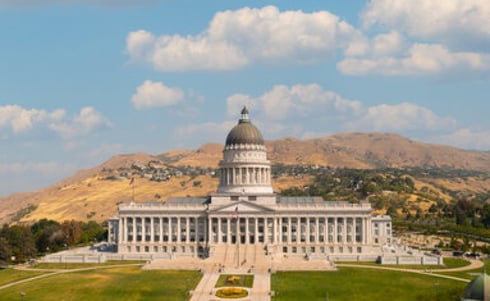
“While many of us expected a difficult election nationally, I don’t think anyone — myself included — anticipated the extent to which that wave would reach and impact Utah, particularly in our state legislative races.” - Spencer Cox, Governor of Utah, at his Nov. 9, 2026, news conference.
The 2026 midterm elections resulted in historic shake-ups in the Utah Legislature. At the federal level, it is common for midterm elections to result in significant losses for the President’s own party, and many predicted a “blue wave” would sweep Congress. However, as Governor Cox indicated, few would have predicted the projected loss of 16 Republican seats in the Utah House of Representatives and the loss of a Republican supermajority in the State House for the first time in more than three decades. In the Senate, Republicans are poised to lose two seats to Democrats and pick up one seat previously held by a Forward Party member. Additionally, there is new leadership in the Senate, as Senate President Stuart Adams lost his primary race in June, and Senate Majority Leader Kirk Cullimore recently conceded his general race. The results of the election are likely to have far-reaching impacts on the state and its business community.
Why does this matter to Utah businesses and the business community?
There is a chance your company’s representatives have changed. If so, right now is a great time to get to know your newly elected official(s) and discuss the issues that matter most to your company. Our citizen legislature thrives when the business community actively engages with policymakers and equips them with the information and insights needed to enact thoughtful, balanced policy.
For the business community, this creates an opportunity. A third of the House and a quarter of the Senate will be new to their chambers, and many will be forming their views and policy priorities ahead of the 2027 General Session. Before the Session begins in January, consider the following:
- Find your legislators. Use the “Find My Legislator” tool at le.utah.gov to find the House and Senate districts for your business, facilities, and employees, and cross-reference the midterm election results to confirm whether your House or Senate representatives have changed. For reference, we have included an overview of changes to membership in the House and Senate at the end of this article.
- Make an introduction. Reach out to request a meeting before the Session begins on January 19, 2027. Dorsey is likewise always happy to facilitate introductions.
- Provide background on your company. Share a brief overview of your company’s history, operations, contributions to the regional and state economy, and the policy issues that matter most to your operations.
- Watch leadership and committee changes. New leaders have been elected in both chambers, and committee chairs and assignments will shift. These decisions will shape policy priorities, which bills move, and how quickly. Senate Republicans chose Sen. Evan Vickers (R-Cedar City) to succeed Sen. Adams as Senate President and Sen. Chris Wilson (R-Logan) to serve as Senate Majority Leader. House Republicans re-elected Rep. Mike Schultz (R-Hooper) to serve as Speaker and elected Rep. Cal Roberts (R-Draper) to serve in leadership as Majority Assistant Whip.
Beyond new faces, there are several practical reasons the election results matter for your business:
Unfinished business will return to a different Legislature. Several closely watched bills from the 2026 General Session did not pass, and some are likely to return. Legislation limiting noncompete agreements (HB 203) was pulled for further negotiation with the business community. Property tax amendments (HB 161), tort reform proposals (SB 211 and SB 280), consumer pricing and “hidden fee” disclosure bills (SB 293, SB 177, and HB 29), and AI transparency legislation were also left on the table. If these issues return in 2027, they will be debated by a body with significantly different membership.
Institutional knowledge is walking out the door. Many departing members were longtime legislators who chaired influential committees, sponsored key business legislation, and led on complex issues such as tax policy, liability, and workforce policy over the years. Members familiar with your industry and key issues may not be returning, and the context your company and industry associations have spent time establishing may need to be rebuilt from scratch.
Big projects are likely to face a higher bar for transparency. The backlash over the data center in Box Elder County signaled that Utahns expect a voice in major development decisions. In May 2026, Governor Cox issued Executive Order 2026-03 creating a statewide data center framework that coordinates state agencies, sets a higher bar for protecting water, air quality, and ratepayers, and commits to advancing both economic strength and environmental stewardship. In the aftermath of the data center debates, companies planning large energy, industrial, or critical minerals projects should plan for earlier community engagement and prepare for more questions regarding the effects on water, energy, and other natural resources.
Affordability will frame priorities. Voters sent a message about how they feel about the status quo, and new members will judge proposals by whether they change it. Legislators will consider all avenues to lower the cost of living for Utahns. Expect continued pressure on property tax relief for homeowners, which could shift more of the burden to commercial property. Budget and tax decisions will also be weighed carefully after a tight revenue year. Businesses that can clearly demonstrate how their priorities support jobs, wages, and affordability (or how proposals may adversely impact those same issues) may find a more receptive audience.
By the Numbers
Utah House of Representatives
The Utah House is made up of 75 members representing every area of the state, elected to two-year terms. Utah’s House went into the election with 61 Republicans and 14 Democrats, a Republican supermajority. Based on current election results:
- The 2027 House will be made up of 45 Republicans, 28 Democrats, and 2 unaffiliated members.
- 25 seats (33% of the House) will have a new member.
- 16 seats are on track to flip from Republican control: 14 to Democrats and 2 to unaffiliated members.
- 7 Republican seats will be filled by new Republican members and 2 open Democratic seats by new Democratic members.
Utah State Senate
The Utah Senate consists of 29 senators elected to staggered four-year terms. Fifteen Senate seats were on the ballot this year. Going into the election, the Senate had 22 Republicans, 6 Democrats, and 1 Forward Party member. If current results hold, Senate Republicans will retain a narrow supermajority with 21 of 29 seats, while Democrats increase from 6 to 8 seats. Seven senators will be new to the chamber, including the winners of three open seats, two seats where incumbents lost their primaries, and two seats where incumbents lost in the general election.
Race-by-Race Reference
A comprehensive list of the results for open seats and flipped seats in both chambers is included below, for reference. (Note: results are unofficial until the state canvass is completed on November 23.)
Changes in the Utah House
- House District 3, Patrick Belmont (Unaffiliated) defeated Rep. Jason Thompson (R-River Heights), 58.3% to 41.7%.
- House District 4, Zane Woolstenhulme (D) leads Rep. Tiara Auxier (R-Morgan) by 565 votes, 51.5% to 48.5%.
- House District 8, Kim James (D) leads Rep. Jason Kyle (R-Huntsville) by 560 votes, 49.8% to 46.0% (Forward candidate Libby Shelton has 4.2%).
- House District 9, Angela Choberka (D) defeated Rep. Jake Sawyer (R-West Haven), 53.7% to 46.3%.
- House District 10, previously held by Rep. Jill Koford (R); Rosemary Lesser (D) defeated Jim Alvey (R), 62.2% to 37.8%.
- House District 13, previously held by Rep. Karen M. Peterson (R); Erik Craythorne (R) defeated Jeffrey Anderson (D), 53.7% to 39.3%.
- House District 14, previously held by Rep. Karianne Lisonbee (R); John Taylor (R) defeated Brandon Young (D), 56.0% to 44.0%.
- House District 16, previously held by Rep. Trevor Lee (R); Bob Stevenson (R) defeated Abigail Treasure (D), 52.1% to 47.9%.
- House District 17, previously held by Rep. Stewart Barlow (R); Lili Bitner (R) defeated Eric Last (D), 59.7% to 40.3%.
- House District 20, Phil Graves (D) leads Rep. Melissa Ballard (R-North Salt Lake) by 184 votes, 50.7% to 49.3%.
- House District 21, previously held by Rep. Sandra Hollins (D); Stephen Otterstrom (D) ran unopposed.
- House District 26, Michael Finch (D) defeated Rep. Matt MacPherson (R-West Valley City), 64.8% to 35.2%.
- House District 27, Liz Oates (D) defeated Rep. Anthony Loubet (R-West Valley City), 62.2% to 37.8%.
- House District 29, previously held by Rep. Bridger Bolinder (R); Sheldon Birch (R) won with 67.3% in a four-way race.
- House District 34, previously held by Rep. Carol S. Moss (D); Julie Jackson (D) ran unopposed.
- House District 36, Blake Townsend (D) defeated Rep. Jim Dunnigan (R-Taylorsville), 53.3% to 46.7%.
- House District 38, previously held by Rep. Cheryl Acton (R); Sergio Sotelo (Unaffiliated) defeated Chris McConnehey (R), 55.5% to 44.5%.
- House District 39, Drew Howells (D) defeated Rep. Ken Ivory (R-West Jordan), 58.1% to 41.9%.
- House District 42, Iva Williams (D) defeated Rep. Clint Okerlund (R-Sandy), 53.4% to 46.6%.
- House District 43, Ofa Matagi (D) defeated Rep. Steve Eliason (R-Sandy), 54.2% to 45.8%.
- House District 44, Jess Birtcher (D) defeated Rep. Jordan Teuscher (R-South Jordan), 52.6% to 47.4%.
- House District 48, previously held by Rep. Doug Fiefia (R); Jake Hunsaker (R) leads Benyde Walker (D) by 298 votes, 51.0% to 49.0%.
- House District 59, previously held by Rep. Mike Kohler (R); Celeste Johnson (D) leads Luke Searle (R) by 322 votes, 50.9% to 49.1%.
- House District 62, David Chappell (D) defeated Rep. Norm Thurston (R), 52.7% to 47.3%.
- House District 67, previously held by Rep. Christine Watkins (R); JR Bird (R) defeated Carl Ingwell (D), 75.5% to 24.5%.
Changes in the Utah Senate
- Senate District 5, previously held by Senator Ann Millner (R); CJ Hernandez (D) defeated Rep. Jill Koford (R), 55.8% to 44.2%.
- Senate District 6, previously held by Senator Jerry Stevenson (R); Tami Tran (R) won with 57.2% in a three-way race.
- Senate District 7, previously held by Senate President Stuart Adams (R); Stephanie Hollist (R) won with 57.3% in a three-way race.
- Senate District 11, Brooks Benson (R) leads Sen. Emily Buss (Forward) by 512 votes, 50.8% to 49.2%.
- Senate District 13, previously held by Senator Nate Blouin (D); Silvia Catten (D) won with 77.1% in a three-way race.
- Senate District 18, previously held by Senator Dan McCay (R); Rep. Doug Fiefia (R) defeated Sen. McCay in the June Republican primary and won the general election, 59.5% to 40.5%.
- Senate District 19, Shana Anderson (D) defeated Senate Majority Leader Kirk Cullimore (R-Sandy), 53.8% to 46.2%.







