.

Faisal represents clients in complex commercial litigation and international arbitration matters.

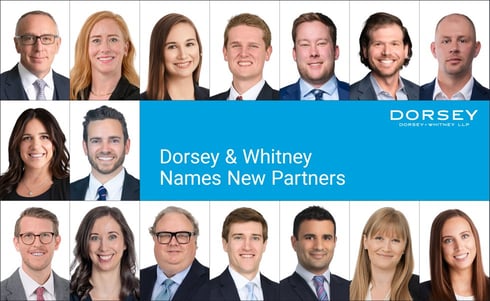
Faisal is the head of Dorsey’s Southern California office and a partner in the Trial Group who focuses on complex commercial litigation and arbitration matters.

Faisal represents a variety of clients, including public and private companies, foreign sovereign states, and state-owned entities in courts across the United States and in international arbitral fora across the world. His clients include airlines, oil & gas companies, healthcare providers and biomedical companies, banks and other financial institutions, technology, and other companies in high stakes matters. Faisal is a key member of the firm’s Healthcare and Banking Practice Groups and also serves as the head of the Aviation Practice Group at Dorsey & Whitney LLP.

In addition to being a member of the California, New York, and New Jersey bars, Faisal is also admitted to practice before the Supreme Court of the United States. He also represents clients in arbitral fora across the world, including the London Court of International Arbitration (LCIA), the International Chamber of Commerce (ICC), and the Permanent Court of Arbitration in The Hague (PCA).

Faisal has also served on the board of and volunteers as pro bono counsel for several non-profit organizations. Faisal co-led Dorsey’s representation of several individuals challenging the constitutionality of their non-unanimous jury convictions through the Promise for Justice Initiative Jim Crow Juries Project.

Prior to joining the Southern California office of Dorsey & Whitney LLP, Faisal worked on the East Coast for K&L Gates LLP.

Recent Litigation Success

  • Falck Northern California Corp. v. SG Collaborative LLC, 25 F. 4th 763 (9th Cir. 2022), Obtained the dismissal of an appeal challenging the Court’s denial of an anti-SLAPP motion in conjunction with a business interference and contractual dispute on behalf of plaintiff emergency medical provider.
  • General and Vascular Surgery of Long Island et al. v. Paul Millsap, Brooklyn NETS, et al., New York Supreme Court, Nassau County, Case No. 612659/2021 (Mar. 16, 2022).  Obtained dismissal of all claims against defendant financial institution in relation to NBA salary futures investments.
  • Liberty City Movie LLC v. U.S. Bank, N.A., 824 Fed. Appx. 505 (9th Cir. 2020). Obtained dismissal and appellate court decision affirming dismissal of all claims in relation to a complex film financing arrangement.
  • Page v. Minnesota Life Insurance Company, et. al., United States District Court for the Central District of California, Case No. 18-cv-01208-AG-KES (Mar. 11, 2019). Obtained dismissal of all claims against defendant IRA Custodian on jurisdictional grounds.
  • Randolph Roth IRA v. GoldStar Trust Company, et. al., Superior Court of California, Madera County, Case No. MCV069874 (June 27, 2019). Obtained dismissal of class action claims brought against defendant indenture trustee by bondholders, and secured the cancellation of the underlying indenture of trust agreements in a related bankruptcy court proceeding.
  • AmeriCare MedServices, Inc. v. City of Anaheim and Care Ambulance Service, Inc., Case No. 17-55565 (9th Cir., Aug. 27, 2018). Obtained dismissal and appellate court decision affirming dismissal of all claims against the private party defendant in eight related antitrust actions seeking $31 million in damages.
  • London Court of International Arbitration. Obtained a substantial arbitration award from the London Court of International Arbitration in a confidential aircraft leasing dispute on behalf of an international airline client who originally started off as the respondent.
  • Stereoscope, LLC v. U.S. Bank Nat. Ass’n, et al., Case No. 15-55370 (9th Cir., Jan. 12, 2017). Obtained dismissal and appellate court decision affirming dismissal of claims seeking nearly $10 million in damages in an important decision that affirms the limited nature of duties owed by an escrow agent.
  • Virtualpoint, Inc. v. Poarch Band of Creek Indians and National Arbitration Forum, Inc., 15CV02025 (C.D. Cal., June 6, 2016). Obtained the dismissal of all claims asserted against the National Arbitration Forum in the first holding of its kind that extends the doctrine of arbitral immunity to Uniform Domain-Name Registration Disputes.
  • Sanho Corporation v. Wooblue, Inc., et al., Alameda County Superior Court of California Case No. RG13668105 (Nov. 27, 2014). Obtained summary judgment on behalf of the defendants entirely disposing of all claims in a dispute regarding an innovative consumer electronics device.

Select Experience

Airline and Aircraft Litigation 

  • Faisal has extensive experience with aircraft leasing disputes, including with litigation that has arisen in the context of deliveries and redeliveries. He has litigated matters involving entitlement to deposits and release of maintenance rents, as well as, matters involving condition of engines, airframes and various other aircraft components.  Faisal represents international air carriers in the London Court of International Arbitration and United States Courts.  
  • Represented an international air carrier in the London Court of International Arbitration and United States courts in connection with a leasing dispute, obtaining a very favorable result after winning a key motion.
  • Obtained the dismissal or stay of multiple post-arbitration enforcement actions on behalf of various foreign sovereigns.
  • Representing a financial institution in connection with enforcement proceedings in the United States related to an international arbitration award.

Education

  • Cornell Law School (J.D., 2003)
    • John M. Olin Student Scholar in Law and Economics; Managing Editor, Cornell Journal of Law and Public Policy
  • University of California, Los Angeles (UCLA) (2000)
    • Boeing-McDonnell Academic Scholarship Recipient; University Honors; Dean’s List

Bar Admissions

  • California
  • New Jersey
  • New York

Court Admissions

  • U.S. District Court for the Central District of California
  • U.S. District Court for the Southern District of California
  • U.S. District Court of the Northern District of California
  • U.S. District Court for the District of New Jersey
  • U.S. Court of Appeals for the Ninth Circuit
  • U.S. Supreme Court
  • London Court of International Arbitration

Professional Affiliations

  • American Bar Association, Advisory Panel
  • ABA Business Law Section, International Coordinating Committee Director   
  • International Society of Transport Aircraft Trading, Member
  • Orange County 211, Board Member
  • Orange County Bar Association, Member

Accolades

  • Contributed more than 50 Diversity & Inclusion hours, 2022-2024
  • Dorsey & Whitney – Scales of Justice Individual Award, 2021

Insights

Client Alert

The California Supreme Court (and Court of Appeal) - October 16 - October 20, 2023

November 10, 2023

The California Court of Appeal, Fourth District, Division One, issued the following decision on October 17, 2023: FCM Investments, LLC v. Grove Pham, LLC, et al., Case No. D080801: Though an agreement to privately arbitrate is an agreement to limited judicial review, California Code of Civil Procedure section 1286.2, subdivision (a)(3) nevertheless enables courts to vacate arbitration awards for arbitrator misconduct. In FCM, the Court of Appeal directed the trial court to vacate an arbitration award turning on an adverse credibility finding based on a key witness’s use of an English translator, giving rise to a reasonable impression of arbitrator bias. FCM signed an agreement to purchase real property from Grove with a provision requiring the parties to mediate, and then arbitrate disputes. After FCM filed a complaint alleging Grove engaged in dilatory tactics to prevent the sale, the parties went to mediation. The parties signed a joint addendum addressing the disputed issues, but tensions rose and FCM pulled out of the deal. The parties stipulated to arbitration before a retired superior court judge. The arbitrator concluded that Grove breached the joint addendum, justifying FCM’s cancellation of escrow. The arbitrator based the award mainly on an adverse credibility finding against Grove’s owner, reasoning that the owner had “been in the country for decades” and “engaged in sophisticated business transactions,” and thus used an interpreter as a ploy to appear less sophisticated. The arbitrator awarded FCM the return of its deposit, $9.1 million in loss-of-bargain damages, interest, fees, and costs. Grove moved to vacate the award on grounds of linguistic and/or national origin bias. The trial court denied the motion and confirmed the arbitration award, which Grove appealed. The Court of Appeal reversed. The court recognized that arbitrator decisions are not generally reviewable for errors of fact or law, but noted that one of the narrow grounds for vacating an arbitration award is when a neutral arbitrator’s misconduct substantially prejudices a party’s rights. Cal. Code Civ. Proc. § 1286.2, subd. (a)(3). This includes arbitrator conduct that creates a reasonable impression of possible bias based on an objective and fact-specific test. Here, the arbitrator’s finding that Grove breached the joint addendum “rose and fell” on the adverse credibility finding against its owner, which “relied on uninformed misconceptions about English proficiency and language acquisition.” This “amply met” the “impression of possible bias” standard. Further, because California recognizes a limited statutory right to an interpreter in all civil proceedings, to allow adverse credibility inferences to be drawn from exercising that right would be against public policy. Read the full opinion.

Client Alert

The California Supreme Court (and Court of Appeal) - June 15 - July 14, 2023

July 14, 2023

The California Court of Appeal, Fourth District, Division One, issued the following published decision: McConnell et al. v. Advantest America, Inc., et al., Case No. D080532: In this decision, the Court of Appeal held that an arbitrator abused their discretion by issuing a “hearing” subpoena compelling non-parties’ document production but not their testimony. The arbitrator in a business dispute issued “hearing” subpoenas summoning non-parties to appear at a hearing “for the limited purposes of receiving documents.” The subpoenas expressly provided that after the non-parties produced the documents, the “hearing” would adjourn, and the non-parties would be summoned to testify at a later date. Rejecting the non-parties’ objections that the subpoenas improperly sought pre-hearing discovery, the arbitrator issued an order compelling compliance. The trial court declined to vacate the order, finding that the subpoenas were permissible “hearing” subpoenas under California Code of Civil Procedure section 1282.6(a), the California Arbitration Act (CAA) provision authorizing arbitrators to issue subpoenas requiring witnesses’ attendance and production of documents “at an arbitration proceeding.” (Emphasis added). The non-parties appealed the order, arguing that the trial court erred by failing to consider the subpoenas’ purpose regardless of their “hearing” labels: to end-run the restriction on pre-hearing discovery from non-parties. The Court of Appeal agreed, reversing and remanding with instructions for the trial court to vacate the arbitrator’s order. The court noted that while California courts have restricted arbitrators’ authority to compel non-party document production through “discovery” subpoenas, none addressed whether an arbitrator may issue a subpoena that calls for pre-hearing discovery in all but name. See Aixtron, Inc. v. Veeco Instruments, Inc., 52 Cal. App. 5th 360 (2020). The court clarified that to be a “hearing” subpoena under section 1282.6, the subpoena must compel a non-party to appear for the purpose of giving testimony. While section 1282.6 permits an arbitrator to issue a “hearing” subpoena that requires a non-party to produce documents at the hearing, it does not permit arbitrators to issue a “hearing” subpoena “for the purposes of” obtaining non-party discovery. Here, that the “hearing” would last only “so long as needed for the documents to be collected” from the non-parties made the subpoenas impermissible under the CAA. Read the full opinion. 

Firm Highlights

Insights

Minnesota Consumer-Fraud Enforcement: Disclaimers Won’t Cure Deception, and Penalties Can Add Up

Misleading advertising claims can lead to costly consequences. In State of Minnesota ex rel. Ellison v. Wall & Associates, Inc., No. A25-2064, 2026 WL 3118291 (Minn. App. Oct. 19, 2026), the Minnesota Court of Appeals recently affirmed a bench trial verdict against a tax-relief company and two executives for violations of the Minnesota Consumer Fraud Act (“MCFA”) and the Minnesota Deceptive Trade Practices Act (“MDTPA”). The decision, which affirmed a substantial restitution and civil penalty judgment, underscores the broad power of the Minnesota Attorney General to act against deceptive sales practices. The decision also offers practical lessons for businesses seeking to reduce liability risks in consumer-facing communications. Background Wall & Associates (“W&A”), a Virginia-based tax-relief company, marketed assistance to taxpayers seeking relief from outstanding federal and state tax liabilities, often with offers in compromise—agreements to settle tax liabilities for less than the amount owed. In its extensive advertising campaigns, W&A represented that its average client received a 90% reduction in their tax debt, that it was a local company with Minnesota offices, that it provided legal services, and that it would “Solve ALL Tax Problems.” In reality, W&A’s promises bore little resemblance to what many clients received. Most of W&A’s clients saw just a 9.5% reduction in federal tax debt and 1.2% in state tax debt. W&A had no permanent Minnesota offices. And W&A provided neither legal representation nor assistance with filing tax returns—those services required referrals to separate firms for an additional fee. All the while, W&A clients paid upfront and recurring fees, including during periods when W&A did no work on their cases. Minnesota Attorney General Keith Ellison sued W&A, its founder and owner Ernest Kenneth Wall, and its president and CEO Patrick Mark Yates, alleging violations of, among other laws, the MCFA and the MDTPA. Following a 12-day bench trial, the district court determined that W&A violated the MCFA and MDTPA through its false and embellished advertising. The district court also held Wall and Yates individually liable for those violations because they directed, participated in, and acquiesced in the violations. The district court ordered injunctive relief, $2.7 million in restitution (with Wall and Yates jointly and severally liable for $1.3 million), and civil penalties of $786,517 against W&A, $415,500 against Wall, and $207,750 against Yates. The district court also awarded over $2.5 million in attorneys’ fees and costs to the state. W&A, Wall, and Yates appealed to the Minnesota Court of Appeals, which affirmed the district court’s decision on October 19, 2026. Although W&A, Wall, and Yates challenged the judgment on numerous grounds, several highlights of the decision provide important takeaways for consumer-facing businesses. Individual Reliance Is Not Required for Statutory Liability W&A argued that Attorney General Ellison had to prove a causal nexus between each violation of the MCFA and MDTPA and the injury to a particular consumer to establish liability. In W&A’s view, this required proof that each injured consumer had personally relied on W&A’s false representation. The Court of Appeals rejected this argument based on the MCFA’s and MDTPA’s plain language, which requires no proof of actual deception or confusion by consumers. The Court of Appeals finally pointed to the Minnesota Supreme Court’s decision in State v. Minnesota School of Business, Inc., which held that when a defendant’s misrepresentations are directed at and affected “a broad group of consumers, proof of direct individual reliance is not required to establish a causal nexus between MCFA violations and the harm suffered by consumers.” 935 N.W.2d 124, 135 (Minn. 2019). The Court of Appeals affirmed, however, that a causal nexus is necessary to support an award of damages under the MCFA and MDTPA. In making that determination, district courts look to various factors, including whether the misrepresentations were “longstanding, pervasive, and widespread in communications directed to consumers,” whether the seller intended and understood that consumers would rely on the misrepresentations, and whether the information was of a kind on which consumers would typically rely. The Court of Appeals’ decision continues Minnesota School of Business’s broad interpretation of liability under the MCFA and the MDTPA. Coordinated marketing campaigns to a “broad group of consumers” may expose businesses to MCFA and MDTPA liability without customer-by-customer proof of injury. That said, a causal nexus remains an element of an MCFA and MDTPA claim, and businesses involved in litigation should build a clear record at trial and on appeal showing how each of the relevant factors bears on the causal-nexus inquiry. Contractual Disclaimers Are Not an Automatic Defense to a Misleading Pitch W&A next argued that disclaimers in its client contracts prevented consumers from claiming they had been misled by its advertising. Reiterating that individual reliance is not required under the MCFA and MDTPA, the Court of Appeals held that a contractual disclaimer does not necessarily defeat a claim based on a conflicting oral representation. And on the facts of this case, the Court of Appeals agreed with the district court that W&A’s contractual disclaimers were insufficient given the extensive misrepresentations by W&A and the unequal bargaining power between it and its customers. This holding confirms that contractual disclaimers are not a cure-all for misleading advertising or sales practices. Businesses should review the entire customer journey, including pre-contract representations, as those representations may survive a contractual disclaimer to the contrary. And if faced with litigation, businesses should build a strong record, both at trial and on appeal, showing why any disclaimer is effective in context. The State Has Broad Authority to Seek Restitution W&A also challenged Attorney General Ellison’s authority to seek restitution under the state’s parens patriae authority to protect residents’ collective interests, arguing that injury to only 228 Minnesotans did not affect a sufficiently substantial segment of the population. The Court of Appeals rejected a simple headcount approach, instead explaining that the state had a legitimate interest in protecting residents’ economic well-being as a whole. In any event, the Court of Appeals held that if restitution was not appropriate under the state’s parens patriae authority, then it would still be appropriate under the Attorney General’s enforcement powers under Minn. Stat. § 8.31. The decision reinforces that the broader and more sustained the deceptive advertising, the stronger the case for restitution to protect Minnesotans’ economic interests. Civil Penalties Accrue Per Violation, Not Per Defendant The Court of Appeals finally rejected W&A’s claim that the Attorney General’s enforcement powers under Minn. Stat. § 8.31 permit only civil penalties of up to $25,000 for each defendant. Rather, the Court of Appeals explained that penalties are limited to $25,000 per violation. Multiple violations can therefore produce substantially greater penalties. The Court of Appeals also rejected the argument that restitution made penalties unnecessary: repaying consumers does not eliminate the need to address gains from deceptive conduct and deter future violations. Final Takeaways Align every consumer-facing communication. Broad and extensive marketing campaigns can expose businesses to stronger enforcement standards under the MCFA and MDTPA, making it critical that consumer communications remain accurate and consistent from the first advertisement through the final sale. Plan for layered enforcement exposure. Penalties under the MCFA and MDTPA can add up quickly: W&A, Wall, and Yates ultimately faced more than $6 million in civil penalties, restitution, and attorneys’ fees. The decision continues a line of Minnesota cases recognizing the Attorney General’s broad consumer-protection authority. Details matter. Although the Attorney General’s enforcement power is broad, it is not boundless. As the Court of Appeals explained, issues of causation, the effectiveness of contractual disclaimers, and the availability of restitution and civil penalties all turn on the specific facts of the case. Effective advocacy at trial and on appeal is critical to developing the facts relevant to liability and damages.