
.

Blog Post

Trademark Abandonment – Round Up Your Trademark Use Intentions

August 13, 2018 – The TMCA

by Cathy Dahl

Download as a PDF

Share this page

A trademark will be deemed abandoned under Section 1127 of the Lanham Act when the mark’s use has been discontinued “with intent not to resume such use.” Proof of non-use for three consecutive years will give rise to a presumption of abandonment, which can be rebutted by evidence of plans to resume use of the mark.

What constitutes sufficient evidence of an intent to resume use of a trademark?    
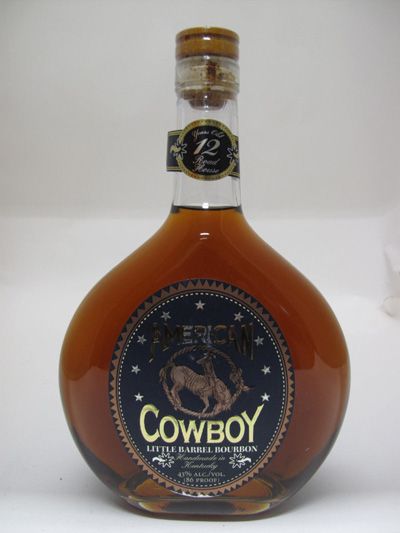
In a recent decision by the Court of Appeals for the Fifth Circuit, the owner of the trademark COWBOY LITTLE BARREL for bourbon was unsuccessful in overturning a jury verdict of abandonment due to insufficient evidence concerning the reasons for the lack of use and plans to resume use. Allied Lomar, Inc. v. Lone Star Distillery, LLC.

According to U.S. Patent and Trademark Office records, Allied claimed first use of COWBOY LITTLE BARREL in August 1995. It obtained a registration in 2003 and filed maintenance documents in 2009 and in 2013, alleging current use of the mark in commerce at those times.

In 2015, Lone Star Distillery, LLC (now doing business as Garrison Brothers Distillery), filed a cancellation proceeding against Allied’s registration at the Trademark Trial and Appeal Board, triggered by a refusal of its COWBOY BOURBON trademark application. Lone Star contended that Allied had not sold bourbon under the COWBOY LITTLE BARREL trademark since 2009 and that at least one of its maintenance filings constituted fraud on the PTO. Allied then filed suit in the Western District of Texas, asserting claims of trademark infringement, false advertising, false designation of origin and unfair competition against Garrison Brothers and its sales of liquor under its COWBOY BOURBON mark.

At trial, Allied’s president testified that it had not sold product under the mark because the company specializes in old, rare and expensive whiskeys and that a lack of sales was due to a bourbon shortage. Garrison Brothers presented evidence disputing Allied’s contention, highlighting inconsistent testimony concerning Allied’s price lists. The end result was a jury verdict in favor of Garrison Brothers. Ultimately, the Fifth Circuit upheld the jury verdict because Allied’s evidence amounted to “a vague, subjective intent to resume use of a mark at some unspecified future date.”

What would suffice as evidence of an intention to resume use of a mark? 

A 2010 decision of the Court of Appeals for the Federal Circuit addressing a similar issue comes to mind: The Crash Dummy Movie, LLC v. Mattel, Inc.

Mattel challenged an application to register CRASH DUMMIES for a line of games and playthings filed by The Crash Dummy Movie, LLC (“CDM”). Mattel based its challenge upon its common law trademark rights obtained through its predecessor-in-interest, Tyco Industries, Inc. Tyco owned several trademark registrations for CRASH DUMMIES trademarks for a variety of products, which the PTO cancelled in 2000 for failure to make required maintenance filings. Tyco sold toys under the CRASH DUMMIES marks through at least 1994 and entered into several licenses for the use of the marks for a broad range of products.

In 1995, CDM entered into an option agreement with Tyco to produce a motion picture based on the toys sold under the CRASH DUMMIES marks. That option expired in 1996 and Tyco declined to enter into another option agreement with CDM. Tyco subsequently experienced financial difficulties and began negotiations with Mattel for an acquisition. In 1997, Tyco assigned its trademark portfolio, including the CRASH DUMMIES marks, to Mattel. Due to the size of the acquisition, the two businesses did not fully integrate until late 2004 or early 2005.

Beginning in 1998, Mattel worked on developing a new line of toys under the CRASH DUMMIES marks, including researching, developing, and testing the new toys as early as 2001. It ultimately reintroduced the toys into the market in December 2003. In March 2003, CDM filed an application for CRASH DUMMIES for games and playthings, which Mattel opposed. The only issue was whether Mattel had common law trademark rights in the CRASH DUMMIES marks sufficient to challenge CDM’s application. The TTAB concluded that Mattel had rebutted the presumption of abandonment of its common law trademark rights by showing “reasonable grounds for the suspension and plans to resume use in the reasonably foreseeable future when conditions requiring suspension abate.”

Mattel was able to rebut the presumption of abandonment arising from the period of non-use through the testimony of its marketing manager and business records that demonstrated product development activities in an effort to actively retool the CRASH DUMMIES toy line.

Practical business applications:

  1. Keep careful and specific business records about market research, product development plans and relevant business negotiations pertaining to an intent to resume use of a mark if there are periods of non-use of a trademark.
  2. Make no public statements about the permanent cessation of use of any trademark unless there is an absolute intent to abandon trademark rights. If plans are uncertain or there is a possibility of resumption, better to characterize any public announcement of the discontinuance of product sales as a hiatus or otherwise temporary or interim.

Firm Highlights

Insights

Energy Law: Month in Review - September 2026

Welcome to Dorsey’s Energy Law: Month in Review. We provide this update to our clients to identify significant developments in the previous month. Please reach out to any of the authors, listed above, to discuss these issues. Regulatory Developments Massachusetts Ratchets Up State and Local Regulation of AI Data Centers In early September, Governor Maura Healey of Massachusetts signed an executive order requiring that artificial intelligence data centers secure the approval of local communities as a precondition to proceeding with a given project. According to the terms of the order, data center developers will need to secure a “community benefits agreement” as a precondition to receiving permits from numerous state agencies, including the Department of Environmental Protection, the Energy Facilities Siting Board, and the Massachusetts Environmental Policy Act Office. Beyond requiring community benefits agreements, the order also mandates that developers mitigate utility costs to consumers, prohibits the use of nondisclosure agreements, and requires various state agencies to develop measures to limit data center impacts on the environment. North Carolina Regulators Decline Approval of Duke Energy Gas Turbine On September 18, 2026, North Carolina Utilities Commission (NCUC) denied Duke Energy’s application for a certificate of public convenience and necessity required to construct a gas-fueled combustion turbine at its Smith Energy Complex in North Carolina. The NCUC objected strongly to the $584 million price tag and noted that Duke appeared to be constructing the facility “based on anticipated data center customer additions.” The NCUC rejected that anticipated growth as “insufficiently reliable for the Commission to act at this point.” In rejecting Duke’s application, the NCUC also noted that Duke had signed the White House Ratepayer Protection Pledge, in which it represented that it would not shift data center costs to consumers. The NCUC observed that the record did not demonstrate how Duke “intends to adhere to its commitments under the Ratepayer Protection Pledge with regard to the Proposed Facility.” Notably, commission staff had actually supported the construction of the turbine, citing concerns about Duke’s reserve margins. The NCUC noted that it “understands the Public Staff’s expressed concerns,” but those concerns were outweighed by the NCUC’s reservations, including questions of demand. Department of Energy Approves Funds for Grid Improvement The U.S. Department of Energy (DOE) recently announced that it would fund 31 grid-improvement projects in 26 states. The funding initiative is part of the DOE’s “SPARK” initiative. The funding will include $1.9 billion in federal funding from DOE and $3.35 billion in recipient cost-sharing funding. The funds will go to projects designed to improve grid reliability and lower electricity costs. Recipients plan to reconductor over 1,500 miles of transmission lines and will deploy grid-enhancing technologies across approximately 21,000 miles. DOE stated that this initiative will make available over 23 additional gigawatts of electricity. Texas Moderates Rules Governing Data Center Interconnection The Texas Public Utility Commission adopted new regulations governing large-load interconnections. The rules impose a flat study fee of $100,000 for all proposed interconnections, which departs from the initial proposal to impose study fees using a tiered system based on project size. Additionally, the final rule eliminates the PUC’s previous proposal to impose a non-refundable interconnection fee of $50,000 per MW of contracted peak demand. The final rule also moderates the initially proposed regulations governing Electric Reliability Council of Texas (ERCOT) notifications for large-load customers’ non-utilized capacity. The proposed rules would have required notifying ERCOT within 30 days of missing a scheduled energization milestone by six months. The final rules, however, do not require informing ERCOT unless a scheduled energization milestone is missed by 24 months. FERC Denies TransAlta 202(c) Cost-Recovery Plan The Federal Energy Regulatory Commission (FERC) recently rejected TransAlta’s plan to recover $19.9 million in expenses stemming from a DOE order in which DOE prohibited TransAlta from retiring its coal-powered Centralia power plant. TransAlta had previously intended to retire the facility at the end of 2025. TransAlta’s cost recovery plan proposed spending an additional $23 million on repairs to continue operating the unit. FERC’s main objection had to do with geographic scope. TransAlta’s recovery plan called for recovering costs from California Independent System Operator (CAISO) and the Southwest Power Pool (SPP), but the DOE’s order requiring operation of the plant was designed to ensure reliability in the Northwest assessment area (Montana, Oregon, Washington, and parts of northern California and northern Idaho). Accordingly, FERC was unwilling to allow cost recovery from CAISO and SPP when the order that precipitated the additional costs only related to the Northwest assessment area. FERC informed TransAlta that it would only approve cost recovery from load-serving entities in the Northwest assessment area. FERC’s decision comes amid a rush of DOE emergency orders requiring the continued operation of coal-fired generating units. Litigation Appeals Court Upholds Washington Hydropower Plant With Caveats In a September 21, 2026, opinion, the Washington Court of Appeals largely upheld a Clean Water Act water quality certification by the Washington Department of Ecology for the Goldendale Energy Storage Project, a proposed pumped-water storage hydropower system adjacent to, but off-stream from, the Columbia River. A nonprofit (Columbia Riverkeeper) and the Confederated Tribes and Bands of the Yakama Nation appealed the certification, contending that it failed to impose necessary conditions and monitoring requirements to protect the water quality of the Columbia River. Most saliently, the plaintiffs argued that the project had the potential to leak 100 acre-feet of water per year into tributaries of the Columbia River. The Court of Appeals broadly rejected plaintiffs’ challenge to the state’s conclusion that “the project was designed not to leak.” That said, the Court of Appeals did reverse on one narrow issue. Specifically, the court determined that the state’s conclusion that “leakage from the project’s tunnels would be monitored and reported” was not supported by the evidence because the certification “does not explicitly require monitoring and reporting to determine whether there is any leakage.” Accordingly, the court remanded the matter to the state to impose monitoring and reporting requirements but otherwise affirmed the certification. Legislative Developments California Legislates Restrictions on Data Center Energy Use and Grid Costs On September 21, 2026, California Governor Gavin Newsom signed seven bills broadly regulating data centers in the state. SB 1168 directed the California Public Utilities Commission to assess the energy used by data centers. It also requires the PUC to pass costs of transmission and distribution upgrades and load increases on to data centers, rather than customers. SB 886 and SB 887 compel data centers to pay for infrastructure upgrade and generation costs, and wildfire mitigation costs, in addition to imposing environmental review. The statutes additionally increase local oversight of data centers. AB 1577 imposes a monthly reporting requirement that requires data centers to supply energy consumption and efficiency data to the California Energy Commission. AB 2383 contains incentives for data centers to use onsite clean energy generation. Finally, AB 2469 and AB 2619 require data center developments to assess water supply and develop a water scarcity plan. The statutes also mandate statewide water reporting as a precondition to obtaining and renewing business licenses.

Insights

EPA Limits Title V Re-Litigation of NSR Permits

Overview On September 25, 2026, the U.S. Environmental Protection Agency (“EPA”) published a final rule that significantly limits the ability of third parties to use the Clean Air Act (“CAA”) Title V permitting process to revisit New Source Review (“NSR”) permitting decisions years after those decisions were made. The rule establishes that NSR permitting determinations generally must be challenged during the original permitting proceeding, thereby providing regulated sources with greater permitting certainty and finality for major capital projects. Published in the Federal Register titled Clarifying the Scope of “Applicable Requirements” Under State Operating Permit Programs and the Federal Operating Permit Program (Docket ID No. EPA-HQ-OAR-2023-0401), the rule amends 40 C.F.R. Parts 70 and 71 to codify EPA’s interpretation regarding when requirements established under other CAA programs may be reviewed, modified, or implemented through the Title V operating permit program. The rule becomes effective 30 days after publication. The rule addresses two principal issues: (1) the relationship between NSR preconstruction permitting and Title V operating permits, and (2) the treatment of the General Duty Clause under CAA section 112(r)(1). Most significantly, the rule provides greater certainty for sources navigating the NSR permitting process. EPA’s amendments are intended to ensure that NSR permitting decisions made through an approved public process are generally not revisited later through Title V permit proceedings. The rule responds to a circuit split between the U.S. Courts of Appeals for the Fifth and Tenth Circuits. In Environmental Integrity Project v. EPA, 969 F.3d 529 (5th Cir. 2020), the Fifth Circuit upheld EPA’s interpretation, concluding that it was consistent with the text, structure, and purpose of Title V. In contrast, the Tenth Circuit reached the opposite conclusion in Sierra Club v. EPA, 964 F.3d 882 (10th Cir. 2020), finding that the then-existing regulatory definition of “applicable requirement” did not support EPA’s position. By amending the regulatory language on which the Tenth Circuit relied and codifying the interpretation approved by the Fifth Circuit, EPA has established a nationwide framework governing the interaction between NSR and Title V. NSR and Title V: EPA Establishes a Uniform Nationwide Framework At the core of the rule is EPA’s effort to define the respective roles of NSR and Title V. The rule codifies the approach EPA has applied since 2017: once a source obtains an NSR permit under an EPA-approved permitting program, and that permit was issued following public notice with an opportunity for comment and judicial review, the permit establishes the NSR-related “applicable requirements” of the State Implementation Plan (“SIP”) or Federal Implementation Plan (“FIP”) for Title V purposes. Under this framework, Title V is not a vehicle for re-examining underlying NSR permitting decisions. EPA does not intend to use the Title V process to revisit applicability determinations, emissions calculations, control technology determinations, permit conditions, or other issues resolved through the NSR permitting process. This principle applies regardless of the stage of the Title V proceeding; whether the NSR permit was issued pursuant to a SIP or FIP; the type of NSR issue involved; or whether the NSR permit is incorporated into Title V sequentially or concurrently. Limited Exceptions EPA recognizes several circumstances in which NSR issues may still be reviewed through the Title V program: No NSR permit was issued at all; The permit was issued without public notice and an opportunity for comment and judicial review; or The issue involves substantive overlap between Title V and NSR requirements, such as the adequacy of monitoring provisions. As a result, the rule does not insulate unpermitted projects or foreclose review of matters that independently arise under Title V. Key Regulatory Amendments The rule revises the definition of “applicable requirement” in 40 C.F.R. §§ 70.2 and 71.2. Paragraph (1): Where an NSR permit is issued with public notice and an opportunity for comment and judicial review, the permit establishes and defines the applicable SIP or FIP requirements for Title V purposes. Paragraph (2): All NSR permit terms, including terms contained in minor NSR permits, constitute applicable requirements that must be incorporated into Title V permits. Paragraph (4): CAA section 112(r)(1) (the General Duty Clause) is expressly excluded from the definition of “applicable requirement,” while section 112(r)(7) Risk Management Program requirements remain included. EPA also amended 40 C.F.R. §§ 70.8 and 70.12 to clarify that alleged defects in requirements established outside the Title V process generally do not provide a basis for EPA objection to a Title V permit or for a Title V citizen petition. General Duty Clause Exclusion The rule also codifies EPA’s longstanding position that the General Duty Clause in CAA section 112(r)(1) is not an “applicable requirement” for Title V purposes. EPA points to several considerations supporting that conclusion, including the distinction between the General Duty Clause and Title V permit terms, the provision’s origins in the Occupational Safety and Health Act’s general duty clause, and the different enforcement structures applicable to the General Duty Clause and Title V permit requirements. Importantly, excluding section 112(r)(1) from the definition of “applicable requirement” does not eliminate EPA’s authority to enforce the General Duty Clause independently of the Title V program. The final rule instead clarifies that the General Duty Clause need not—and should not—be incorporated into Title V permits as an applicable requirement. Practical Implications for Regulated Sources Greater Finality for NSR Permits  For projects requiring PSD, nonattainment NSR, or minor NSR permits, the permitting process becomes the primary forum for resolving disputes regarding applicability determinations, emissions calculations, control technology requirements, offsets, and permit conditions. Once an NSR permit is issued through a qualifying public process, regulated sources should face substantially reduced risk that those same issues will be challenged years later through Title V permit proceedings. Reduced Risk of Collateral Permit Challenges Stakeholders have sometimes sought to use Title V permit issuance, renewal, revision, or citizen-petition proceedings to challenge underlying NSR determinations. The final rule makes clear that Title V is not the appropriate vehicle for challenging whether an applicable requirement was correctly established in the first instance. This should reduce the risk of permit delays and uncertainty associated with collateral challenges to previously issued NSR permits. The rule does not, however, eliminate all Title V challenges relating to an NSR permit. Challenges concerning the Title V permit itself—including whether it appropriately incorporates applicable requirements or contains adequate compliance provisions—remain possible. Increased Importance of the Initial NSR Proceeding Because Title V generally will not provide a second opportunity to challenge the substantive validity of an NSR determination, the administrative record developed during the NSR process becomes increasingly important. Permit applicants should ensure that applicability analyses, emissions calculations, control technology evaluations, modeling demonstrations, and supporting technical documentation are thoroughly developed during the original permitting proceeding. For significant projects, applicants may therefore have an additional incentive to identify and resolve potential permitting issues before the NSR permit is issued rather than assuming that unresolved issues can be addressed during a subsequent Title V proceeding. Potential Incentive for Broader Public Participation EPA also notes that permitting authorities may choose to provide public notice and an opportunity for comment for a broader range of NSR permits because permits issued through a qualifying public process receive the benefit of the finality framework established by the rule. Some permitting authorities may conclude that greater public participation at the NSR stage is preferable to uncertainty during subsequent Title V proceedings. Conclusion The final rule is principally a permitting-certainty measure. For sources that obtain NSR permits through a public process, EPA has substantially limited the ability of third parties to revisit underlying NSR determinations through the Title V program. As a result, regulated entities should benefit from greater finality regarding key permitting decisions, reduced risk of collateral permit challenges, and increased certainty when planning and implementing capital projects.

Insights

The Supreme Court Update - October 8, 2026

On September 29, 2026, the Supreme Court granted certiorari in one case: Department of Homeland Security v. D.V.D., No. 26-426: This case concerns the Trump Administration’s “third-country removal” procedures, where immigrants are deported to countries not listed in the removal orders. In granting certiorari, the Court granted the Government’s application to stay a lower court decision halting the practice, which will allow third-country removals to continue pending resolution of the case. The issues presented are: (1) Whether the district court had jurisdiction over respondents’ claims; (2) whether the district court had authority to enter class-wide declaratory relief and APA vacatur under 8 U.S.C. § 1252(f)(1); (3) whether the Government’s guidance on third-country removals is unlawful under 8 U.S.C. § 1231(b), the due process clause, or FARRA/CAT and its implementing regulations; and (4) such other questions that the Government determines are appropriate for the proper disposition of the case. On October 1, 2026, the Court granted certiorari in three additional cases: Rhoney v. Barbosa da Cunha, No. 26-104: Immigration officials detained Ricardo Aparecido Barbosa da Cunha—a Brazilian citizen who had lived in the United States for approximately twenty years after entering without inspection—and denied him a bond hearing under 8 U.S.C. § 1225(b)(2)(A). The Second Circuit held that his detention was instead governed by § 1226(a), which permits release on bond, because § 1225(b)(2)(A)’s mandatory-detention requirement applies only to noncitizens apprehended while entering the country or shortly thereafter. The question presented is: Whether 8 U.S.C. § 1225(b)(2)(A) mandates the detention pending removal proceedings of aliens who, like Barbosa da Cunha, are present in the United States without having been admitted. Missionaries of St. John the Baptist, Inc. v. Frederic, No. 25-113: A Catholic religious organization sought to build a shrine to the Virgin Mary on land the organization owned adjacent to its church in Park Hills, Kentucky. Local zoning restrictions prohibited the proposed construction. The question presented is: Whether a land-use regulation that prohibits a religious institution from building a religious structure on its own property constitutes a “substantial burden” on religious exercise under the Substantial Burden Provision of the Religious Land Use and Institutionalized Persons Act, 42 U.S.C. § 2000cc(a). Marschner v. Marschner, No. 25-1349: Under the Uniformed Services Former Spouses’ Protection Act (“USFSPA”), a veteran’s longevity-based retirement pay can be divided in a divorce, but retirement pay based on disability and retirement pay that was waived to receive disability pay are indivisible. The question presented is: Does the USFSPA require state courts to refuse enforcement of indemnification provisions in a divorce settlement agreement?

Insights

SEC Proposes Expansion of Investment Adviser Performance-Based Compensation Rule

On September 30, 2026, the Securities and Exchange Commission (the “SEC”) proposed amendments to Rule 205-3 under the Investment Advisers Act of 1940, as amended (the “Advisers Act”), which provides an exemption from the general prohibition under Section 205(a)(1) of the Advisers Act on registered investment advisers receiving performance-based compensation (the “Proposal”) so long as performance-based compensation is limited to “qualified clients”.1 Most notably for private fund sponsors, the Proposal would expand the definition of “qualified client” to include any investors that satisfy the “accredited investor” definition under Regulation D. The Proposal may also have implications for private fund managers that rely on exemptions from investment adviser registration under state law because certain state-level investment adviser registration exemptions incorporate or otherwise reference the federal qualified client definition. Expansion of the Qualified Client Definition Under the current Rule 205-3, an investor generally may qualify as a qualified client if, among other alternatives, the investor has at least $1.4 million under management with the adviser or has a net worth exceeding $2.7 million. These thresholds are higher than the financial thresholds applicable to many accredited investors under Regulation D. As a result, an investor may currently qualify as an accredited investor for purposes of investing in a private offering without qualifying as a qualified client for purposes of paying performance-based compensation. The Proposal would expand the qualified client definition to include any natural person or legal entity investor that satisfies the accredited investor definition under Regulation D. The Proposal would also remove the assets under management and net worth thresholds under the current Rule 205-3 qualified client test. For private funds relying on Section 3(c)(1) of the Investment Company Act of 1940, this change could reduce the need to apply a separate qualified client standard to investors that already qualify as accredited investors. Dorsey Observations and Next Steps If adopted as proposed, the expanded qualified client definition could be particularly significant for private fund managers. Most private fund offerings are already limited to accredited investors under Regulation D. However, the Proposal could expand the pool of prospective investors available to emerging private fund managers while reducing the regulatory burden associated with complying with Rule 205-3. The Proposal could also benefit advisers operating below the SEC registration threshold that rely on a state private fund adviser exemption. A number of states have adopted exemptions modeled on the North American Securities Administrators Association (“NASAA”) private fund adviser exemption, which may condition relief for advisers to certain funds relying on Section 3(c)(1) on each beneficial owner satisfying the federal qualified client definition. However, state requirements vary, and any effect of the Proposal would depend on the text of the applicable state exemption and how it incorporates Rule 205-3. Many emerging private fund managers may have a larger network of accredited investor relationships than qualified client relationships during the early stages of their investment advisory business. Currently, under Rule 205-3, private fund managers may receive performance-based compensation from investors who do not satisfy the qualified client definition if those investors were admitted to their private funds prior to registration with the SEC. Following registration with the SEC, however, managers may continue to permit investors that are not qualified clients to invest in future private funds but may not receive performance-based compensation from those investors with respect to such investments. In addition, because the net worth and assets under management thresholds for qualified client status are adjusted for inflation every five years, the pool of qualified client investors may diminish over time as previously eligible investors no longer satisfy the applicable thresholds. The Proposal could provide the dual benefit of greater flexibility for private fund managers to establish and maintain relationships with accredited investors as their businesses scale and they become registered with the SEC, and greater flexibility for certain accredited investors to participate in investment strategies that historically have been restricted to much larger institutional investors. Unless and until the Proposal is adopted, investment advisers should continue to comply with the existing qualified client requirements. If the Proposal is adopted, private fund sponsors should consider whether corresponding changes are appropriate for their subscription documents, investor questionnaires, and other offering materials. Advisers that are state-registered or rely on a state-level exemption should also consult the laws and regulations of each relevant jurisdiction before changing investor eligibility standards or performance-based compensation practices, because adoption of the federal amendments may not automatically modify state requirements. Comments on the Proposal will be due 60 days after publication in the Federal Register. 1 Investment Adviser Performance-Based Compensation Modernization, Investment Advisers Act Release No. IA-7022 (Sept. 30, 2026), available at https://www.sec.gov/rules-regulations/2026/09/s7-2026-28#33-11443proposed.
