.

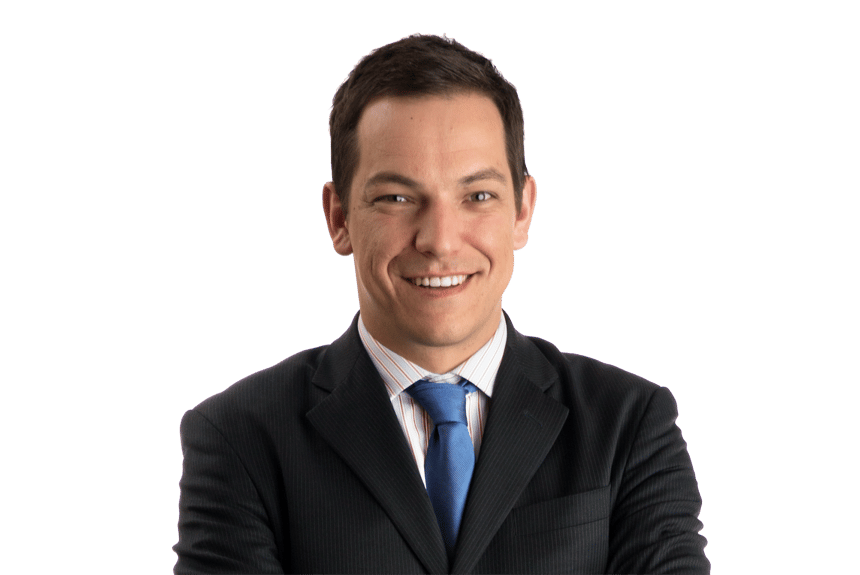
Wells helps clients acquire, finance, develop and operate mining and energy projects.

Wells represents mining and energy companies in domestic and international mergers and acquisitions and joint ventures.  His work includes the purchase and sale of public and private mining and energy companies and related projects, as well as earn-in and joint venture transactions, capital raising projects, finance, royalty and mineral streaming transactions, mineral and surface leasing, wind and solar leasing, and land transactions.

Wells represents energy developers negotiate, secure and review land leases, easements, crossing agreements and other related real property rights required in the development and operation of a solar, wind, energy storage and conventional energy projects. He works with developers in preparing and reviewing project development plans, surveys and title insurance commitments, and in performing title curative work in connection with financing and sale transactions. Wells has significant experience in the development of solar, wind and energy storage projects on public lands and in obtaining real property easements, leases and related real property interests on lands managed by the Bureau of Land Management, Forest Service and various state land management agencies.

Wells is nationally recognized by Chambers, a prestigious legal industry ranking service, with the highest ranking (Band 1) for Global USA in Energy, Mining & Metals (Transactional).  Wells serves on Dorsey’s Management Committee as a Business Group Head covering Dorsey’s Energy, Natural Resources and Environmental practices.

Select Experience

Mergers & Acquisitions – Mining

  • Represented Teck Resources Limited in a 50:50 joint venture agreement with PolyMet Mining Corporation (Glencore subsidiary) and formation of the NewRange Copper Nickel joint venture to combine PolyMet’s NorthMet Project and Teck’s Mesaba Project.
  • Represented Manara Minerals, a joint venture of Saudi Arabian Mining Company (Ma’aden) and the country’s Public Investment Fund (PIF), in its acquisition of a 10% stake in Vale Base Metals Limited, the holding entity of Value SA’s energy transition metals business. The deal is valued at approximately $3.4 billion.
  • Represented Sprott Mining in the sale of the Jerritt Canyon Mine to First Majestic Silver Corporation for $470 million.
  • Represented GoldCorp as U.S. counsel in Newmont’s $10 billion merger acquisition of Goldcorp.

Education

  • Brigham Young University, J. Reuben Clark Law School (J.D., 2006)
    • Lead Articles Editor, Brigham Young University International Law & Management Review
  • University of Utah (B.A., 2003)

Court Admissions

  • U.S. District Court for the District of Utah

Professional Affiliations

  • Utah State Bar Association; Energy, Natural Resources and Environmental Law Section
  • Rocky Mountain Mineral Law Foundation
    • Mining Chair for 2017 Annual Institute
    • Special Institutes Committee
    • Publications Committee
    • Membership Committee
    • Program Committee, Special Institute on the Nuts and Bolts of Mineral Title Examination, February 2012
  • Board Member, University of Utah Alumni Association, Young Alumni Board of Directors, 2014-2017

Bar Admissions

  • Utah

Accolades

  • Chambers Global, Energy: Mining & Metals (Transactional), USA, 2023-2026
  • Best Lawyers in America®, 2021-2026
  • Chambers USA
    • Natural Resources & Environment, Utah, 2022-2026
    • Energy: Mining & Metals (Transactional), National, 2022-2026
    • Environment, Natural Resources & Regulated Industries, 2019-2021
  • Mountain States Super Lawyers®, 2025-2026
  • Best Lawyers® Lawyer of the Year, Energy Regulatory Law, 2023, 2025
  • Mountain States Super Lawyers®, "Rising Stars," 2016-2021
  • Utah’s Legal Elite by Utah Business Magazine, Energy & Natural Resources, 2015, 2018-2021
  • “Up & Coming” by Chambers USA (Environment, Natural Resources & Regulated Industries), 2016-2017

Select Presentations

  • Planning Committee, U.S. Mining Law and Critical Minerals, Foundation for Natural Resources and Energy Law, November 2026
  • “Trends and Opportunities in the U.S. Renewables Space,” held in connection with Solar Power International, September 2019
  • “The Due Diligence Process and Its Impact on the Deal,” Rocky Mountain Mineral Law Foundation, Special Institute on Due Diligence in Oil & Gas Transactions, Denver, CO, September 2018
  • “U.S. Legal Issues in Cross-Border Mining M&A Transactions,” Rocky Mountain Mineral Law Foundation, Workshop on Cross-Border Natural Resource Transactions, June 2017 
  • “Real Property Due Diligence in Mining Transactions”, American Exploration and Mining Association, Annual Conference, Reno, NV, December 2016 
  • “Mining on Federal Lands,” Rocky Mountain Mineral Law Foundation, Special Institute on Public Land Law, Regulation, and Management, Santa Fe, NM, May 2014
  • “Mining in Difficult Markets: A Discussion of U.S. Legal Issues for Mining Companies and Advisors,” Dorsey Canada Practice Group Webinar, September 2013
  • “Ownership and Development Conflicts Between Oil & Gas and Other Minerals," Rocky Mountain Mineral Law Foundation, Special Institute on Horizontal Oil & Gas Development, Denver CO, November 2012
  • “Acquisition and Exercise of Mineral Rights on Federal Lands," Rocky Mountain Mineral Law Foundation, Mining Law Short Course, Boulder CO, May 2010
  • "Uranium Mining and Milling", Energy Law, University of Utah, S.J. Quinney College of Law, April 2008

Insights

Blog Post

D.C. Circuit Court Upholds Mill Site Claim Rule Critical to Mining Projects in the United States

September 6, 2024

Blog Post

Interagency Working Group on Mining Laws, Regulations, and Permitting Release Final Report on Proposed U.S. Mining Reforms on Public Lands

January 22, 2024

In the Fall of 2023, the Interagency Working Group on Mining Laws, Regulations, and Permitting (“IWG”) released its final report containing recommendations to reform how mining is conducted on public lands (the “Final Report”). The IWG was formed to convene experts across various agencies and receive input from the public in order to assess the adequacy of the existing regulatory scheme governing domestic hardrock mining, and to determine whether changes to that scheme were necessary to satisfy the goals set forth in the E.O. 14017 100-Day reviews. 87 Fed. Reg. 18811 (Mar. 31, 2022). The Final Report included a range of recommendations, including those which would require legislative action by Congress, those which would require Federal agencies to promulgate or amend existing regulations, and other recommendations that may be achieved by updating Federal or agency policies. Some of the key recommendations which substantially differ from current mining regulation include the following: Leasing System - The Final Report recommends replacing the current mine claim location system with a leasing system by amending the General Mining Law of 1872 to permanently end patenting of Federal lands, and developing for use a leasing system that would provide access to hardrock minerals on public lands. Id. at 99. Additionally, the IWG recommended that once a leasing system is established, a programmatic Environmental Impact Statement to incorporate mining into land use planning processes be prepared and adopted for the eleven contiguous Western states and Alaska. Id. at 97. Royalties - The Final Report recommends that Congress enact a royalty for hardrock mineral production from Federal lands, with a minimum of four percent and a maximum of eight percent. Id. at 104. The IWG is not taking a stance on whether such a royalty would apply only to new mines, expansions on existing mines, or on all new and existing mines and operations. Dirt Tax - In addition to the federal royalty approach to obtain fair compensation for taxpayers for those minerals extracted from Federal lands, the Final Report also includes a recommendation for Congress to adopt a 7-cent per ton fee on “material displaced by hardrock mining.” Id. at 105. The IWG notes that this fee could be applied in conjunction with other means of funding reclamation for abandoned mine lands. Permitting Reform - The Final Report recommends the project management process used by the Bureau of Land Management (“BLM”) Nevada state office be updated to reflect the additional recommendations made in the Final Report, and be made standard procedure nationwide for both BLM and the United States Forest Service (“USFS”). Id. at 107. The project management process as currently implemented is designed to provide consistency and coordination between the project proponent and State and Federal agencies and Tribes, and includes a number of Memorandums of Understanding between BLM and EPA, and BLM and USFS to coordinate the development of NEPA documents for proposed mining operations. Id. at 58. The Final Report also recommends the development of project schedules to be made public, and standardizing the information by BLM and USFS which is necessary for exploration plans, mine plans, and relevant permit applications and NEPA submissions. Id. at 108. Of note, the IWG does not address the additional directives for permitting reform as stated in the Infrastructure Investment and Jobs Act or in the Fiscal Responsibility Act. We will be monitoring Congressional action and regulatory proposals on the IWG recommendations and will report on further material developments.   If you have any questions or would like to learn more about the Final Report, please contact us.

Firm Highlights

Insights

Minnesota Consumer-Fraud Enforcement: Disclaimers Won’t Cure Deception, and Penalties Can Add Up

Misleading advertising claims can lead to costly consequences. In State of Minnesota ex rel. Ellison v. Wall & Associates, Inc., No. A25-2064, 2026 WL 3118291 (Minn. App. Oct. 19, 2026), the Minnesota Court of Appeals recently affirmed a bench trial verdict against a tax-relief company and two executives for violations of the Minnesota Consumer Fraud Act (“MCFA”) and the Minnesota Deceptive Trade Practices Act (“MDTPA”). The decision, which affirmed a substantial restitution and civil penalty judgment, underscores the broad power of the Minnesota Attorney General to act against deceptive sales practices. The decision also offers practical lessons for businesses seeking to reduce liability risks in consumer-facing communications. Background Wall & Associates (“W&A”), a Virginia-based tax-relief company, marketed assistance to taxpayers seeking relief from outstanding federal and state tax liabilities, often with offers in compromise—agreements to settle tax liabilities for less than the amount owed. In its extensive advertising campaigns, W&A represented that its average client received a 90% reduction in their tax debt, that it was a local company with Minnesota offices, that it provided legal services, and that it would “Solve ALL Tax Problems.” In reality, W&A’s promises bore little resemblance to what many clients received. Most of W&A’s clients saw just a 9.5% reduction in federal tax debt and 1.2% in state tax debt. W&A had no permanent Minnesota offices. And W&A provided neither legal representation nor assistance with filing tax returns—those services required referrals to separate firms for an additional fee. All the while, W&A clients paid upfront and recurring fees, including during periods when W&A did no work on their cases. Minnesota Attorney General Keith Ellison sued W&A, its founder and owner Ernest Kenneth Wall, and its president and CEO Patrick Mark Yates, alleging violations of, among other laws, the MCFA and the MDTPA. Following a 12-day bench trial, the district court determined that W&A violated the MCFA and MDTPA through its false and embellished advertising. The district court also held Wall and Yates individually liable for those violations because they directed, participated in, and acquiesced in the violations. The district court ordered injunctive relief, $2.7 million in restitution (with Wall and Yates jointly and severally liable for $1.3 million), and civil penalties of $786,517 against W&A, $415,500 against Wall, and $207,750 against Yates. The district court also awarded over $2.5 million in attorneys’ fees and costs to the state. W&A, Wall, and Yates appealed to the Minnesota Court of Appeals, which affirmed the district court’s decision on October 19, 2026. Although W&A, Wall, and Yates challenged the judgment on numerous grounds, several highlights of the decision provide important takeaways for consumer-facing businesses. Individual Reliance Is Not Required for Statutory Liability W&A argued that Attorney General Ellison had to prove a causal nexus between each violation of the MCFA and MDTPA and the injury to a particular consumer to establish liability. In W&A’s view, this required proof that each injured consumer had personally relied on W&A’s false representation. The Court of Appeals rejected this argument based on the MCFA’s and MDTPA’s plain language, which requires no proof of actual deception or confusion by consumers. The Court of Appeals finally pointed to the Minnesota Supreme Court’s decision in State v. Minnesota School of Business, Inc., which held that when a defendant’s misrepresentations are directed at and affected “a broad group of consumers, proof of direct individual reliance is not required to establish a causal nexus between MCFA violations and the harm suffered by consumers.” 935 N.W.2d 124, 135 (Minn. 2019). The Court of Appeals affirmed, however, that a causal nexus is necessary to support an award of damages under the MCFA and MDTPA. In making that determination, district courts look to various factors, including whether the misrepresentations were “longstanding, pervasive, and widespread in communications directed to consumers,” whether the seller intended and understood that consumers would rely on the misrepresentations, and whether the information was of a kind on which consumers would typically rely. The Court of Appeals’ decision continues Minnesota School of Business’s broad interpretation of liability under the MCFA and the MDTPA. Coordinated marketing campaigns to a “broad group of consumers” may expose businesses to MCFA and MDTPA liability without customer-by-customer proof of injury. That said, a causal nexus remains an element of an MCFA and MDTPA claim, and businesses involved in litigation should build a clear record at trial and on appeal showing how each of the relevant factors bears on the causal-nexus inquiry. Contractual Disclaimers Are Not an Automatic Defense to a Misleading Pitch W&A next argued that disclaimers in its client contracts prevented consumers from claiming they had been misled by its advertising. Reiterating that individual reliance is not required under the MCFA and MDTPA, the Court of Appeals held that a contractual disclaimer does not necessarily defeat a claim based on a conflicting oral representation. And on the facts of this case, the Court of Appeals agreed with the district court that W&A’s contractual disclaimers were insufficient given the extensive misrepresentations by W&A and the unequal bargaining power between it and its customers. This holding confirms that contractual disclaimers are not a cure-all for misleading advertising or sales practices. Businesses should review the entire customer journey, including pre-contract representations, as those representations may survive a contractual disclaimer to the contrary. And if faced with litigation, businesses should build a strong record, both at trial and on appeal, showing why any disclaimer is effective in context. The State Has Broad Authority to Seek Restitution W&A also challenged Attorney General Ellison’s authority to seek restitution under the state’s parens patriae authority to protect residents’ collective interests, arguing that injury to only 228 Minnesotans did not affect a sufficiently substantial segment of the population. The Court of Appeals rejected a simple headcount approach, instead explaining that the state had a legitimate interest in protecting residents’ economic well-being as a whole. In any event, the Court of Appeals held that if restitution was not appropriate under the state’s parens patriae authority, then it would still be appropriate under the Attorney General’s enforcement powers under Minn. Stat. § 8.31. The decision reinforces that the broader and more sustained the deceptive advertising, the stronger the case for restitution to protect Minnesotans’ economic interests. Civil Penalties Accrue Per Violation, Not Per Defendant The Court of Appeals finally rejected W&A’s claim that the Attorney General’s enforcement powers under Minn. Stat. § 8.31 permit only civil penalties of up to $25,000 for each defendant. Rather, the Court of Appeals explained that penalties are limited to $25,000 per violation. Multiple violations can therefore produce substantially greater penalties. The Court of Appeals also rejected the argument that restitution made penalties unnecessary: repaying consumers does not eliminate the need to address gains from deceptive conduct and deter future violations. Final Takeaways Align every consumer-facing communication. Broad and extensive marketing campaigns can expose businesses to stronger enforcement standards under the MCFA and MDTPA, making it critical that consumer communications remain accurate and consistent from the first advertisement through the final sale. Plan for layered enforcement exposure. Penalties under the MCFA and MDTPA can add up quickly: W&A, Wall, and Yates ultimately faced more than $6 million in civil penalties, restitution, and attorneys’ fees. The decision continues a line of Minnesota cases recognizing the Attorney General’s broad consumer-protection authority. Details matter. Although the Attorney General’s enforcement power is broad, it is not boundless. As the Court of Appeals explained, issues of causation, the effectiveness of contractual disclaimers, and the availability of restitution and civil penalties all turn on the specific facts of the case. Effective advocacy at trial and on appeal is critical to developing the facts relevant to liability and damages.